Digitization Is Preservation
Or: Why AI Scanning Of Old Books Is One Of Its Best Possible Uses
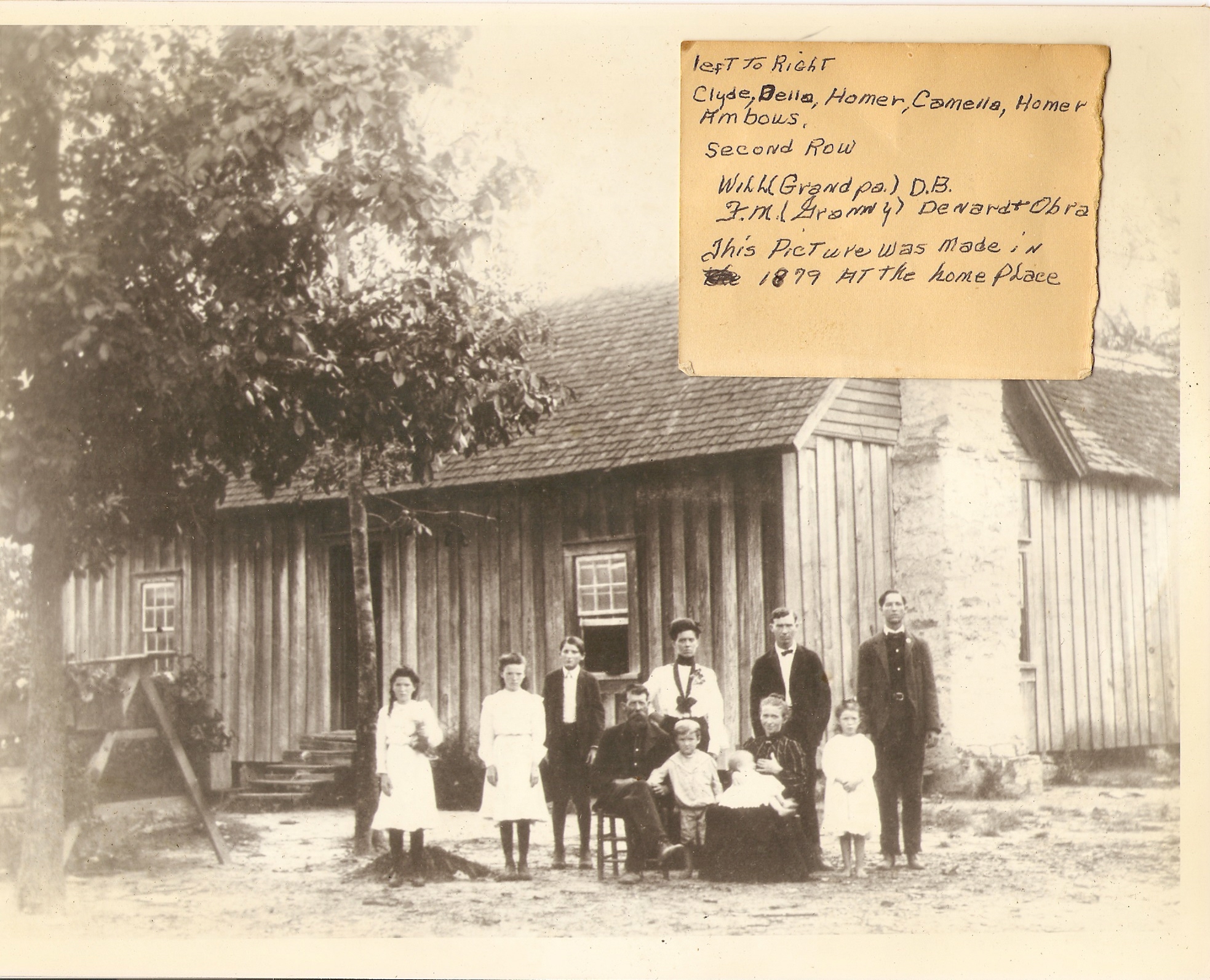
My grandmother died in April 2013. It was, to date, the worst death I’ve experienced - the last one among my grandparents, with my grandfather (her ex-husband) dying just weeks after my birth, my other grandfather dying when I was 20 yrs old (almost 20 yrs to the day after the first grandfather here!), my step grandfather (and effectively second grandfather, as far as I ever actually experienced a second grandfather in my life) dying that summer, and my other grandmother (the wife of said step grandfather for longer than I had been alive, even accounting for her death a few years after his) dying a few years later.
As we as a (rather large - she had had over half a dozen kids, most of whom had had at least three kids each) family were going through her things in the days after her death, we found a lot of pictures. Apparently, per the files where the above image came from, something around 2,000 pictures. Including pictures without any of us, particularly in her later years - happenings in her life that she had told some of us about, but we never directly saw. Except, it turned out, that she had pictures of some of it.
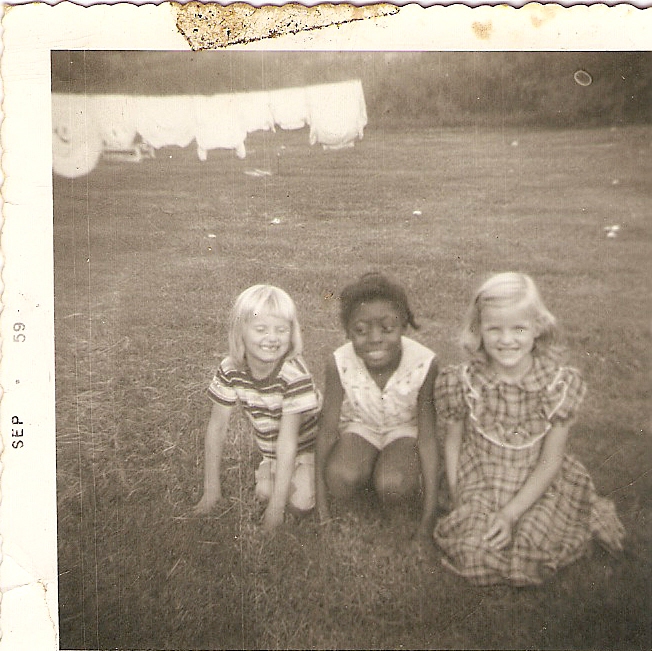
She also had a lot of other pictures, including at least a few such as the one at the top of this article, and this one as well, showing two of her daughters playing with a similarly aged black girl. In rural northwest Georgia, on ground once literally fought over by Sherman’s troops and the Confederate forces opposing him. In September 1959, when Jim Crowe was near its peak total power.
She has pictures of everything from her cat of many years (an outdoor cat that never liked people much) to my own high school graduation (just up the road from where she was living then) to weddings of both my parents and some of her other children to a picture of one of my mom’s baby showers while she was pregnant with me to just pictures she would insist on any time any of her kids and grandkids came to visit her.
And in my deepest grief in the days after she died, when I was having the worst meltdowns I have ever experienced (to date) - “reality shifting” level meltdowns where it felt like reality was literally shifting around me, almost Reality Stone level (from Thanos using that stone during Avengers: Infinity War, though this example is a few years after the events in question) - I scanned these pictures as a way of grounding myself in the moment.
I digitized them as an act of self preservation… and in the process, I made them accessible to the entire family, forever… or at least as long as I’m alive to maintain my digital files and web accounts.
This was 2013. Well before anyone had any real concept of real-world “artificial intelligence”. But also well within the time frame that Project Gutenberg, Internet Archive, and others were already actively scanning books for digital preservation. Oh, you likely weren’t aware of those projects, were you? They certainly don’t get the press of “AI IS SCANNING BOOKS!!!!!!!!!!!!!!!” that Andrea Bartz and others seek to terrify you with.
Honestly, while I had heard of Gutenberg at this point, I didn’t really know much about them beyond that they were an easy way to obtain digital files of books out of copyright protection. I wasn’t digitizing these pictures because of what anyone else was doing, I wasn’t even doing it as a way of preserving family history per se. I was doing it explicitly so that the entire family could have access to these pictures whenever they wanted them, and I even made a couple of .zip files available for more easy download of the entire collection.
But that actually gets to one of my ultimate points here: Even though I was ultimately doing this for a very specific and limited purpose with the intent of having these pictures available for just the maybe 100 or so people then living to be able to see the pictures their loved one had, that record now exists for all to benefit from, in the instances that there may be some modicum of a more public benefit from these images - if only to show at least some elements of certain aspects of life in the time and place of the events documented in the images.
Similarly, as Morlockp said on Twitter/X in the comment that directly inspired this article:
If there are 5 remaining copies of an ultra rare book, then I DEFINITELY want [ at least ] one of those cut apart, scanned, and endlessly replicated across thousands of data centers, burned into CD-ROMs, embodied in LLMs, OCRed and disseminated.
This digitization of these ultra rare books, like the digitization of these photos from my grandmother that at least to my knowledge exist literally no where else outside of whoever currently has the singular physical copies, allows all of humanity to experience this information in a far more ahem democratic ahem manner than their hoarding in some dusty library archive excessively few even know exists at all.
This is, ultimately, the best possible use of anything either AI or even computerized: To store known intelligence so that (at least in theory) all of humanity can access it going forward in a near instant.
Those who would use this to promote your fear and hatred have agendas of their own.
You should question what those agendas are and if they are ultimately preserving human capacity… or removing it.
Older generations are dying off. That is the nature of humanity. But we are currently living through one of the largest multi-generational dyings in human history, beginning with the "Silent Generation" of my own grandparents, noted in the opening paragraph here, and continuing into the coming decades as even the Alphas begin to die off and their children are projected to at best match their own size or perhaps even begin a slight slow decline in overall human population. We are going to have a lot of problems in the coming years, including, as one example I have a bit of direct knowledge with, that newer generations of programmers - including myself - have little knowledge of the COBOL programming language that continues to be at the heart of most major global banking systems. The people that truly know that language are literally in their late 50s or later, and virtually no one younger than them knows it much at all (certainly relative to how much of their own generation knew it well indeed) - if they even know the language exists at all.
Data centers can preserve this knowledge. AI parsing of the data in these data centers can help the remaining humans both access and process this knowledge.
Both will be utterly essential in the coming decades as first the Boomers, then, later, the die off of my own Millennial generation. By the time the Betas (the newest children now being born as of 2025 and through 2039 or so) are truly running things as the elder adults alive, but in smaller numbers as a generation than all of us currently alive before them, they’re going to need all the help they can get.
They’re going to need these data centers and the AIs that can help process the vast amounts of data they contain.
Current fearmongering over them is just that - fearmongering.
It is at absolute best incredibly myopic.