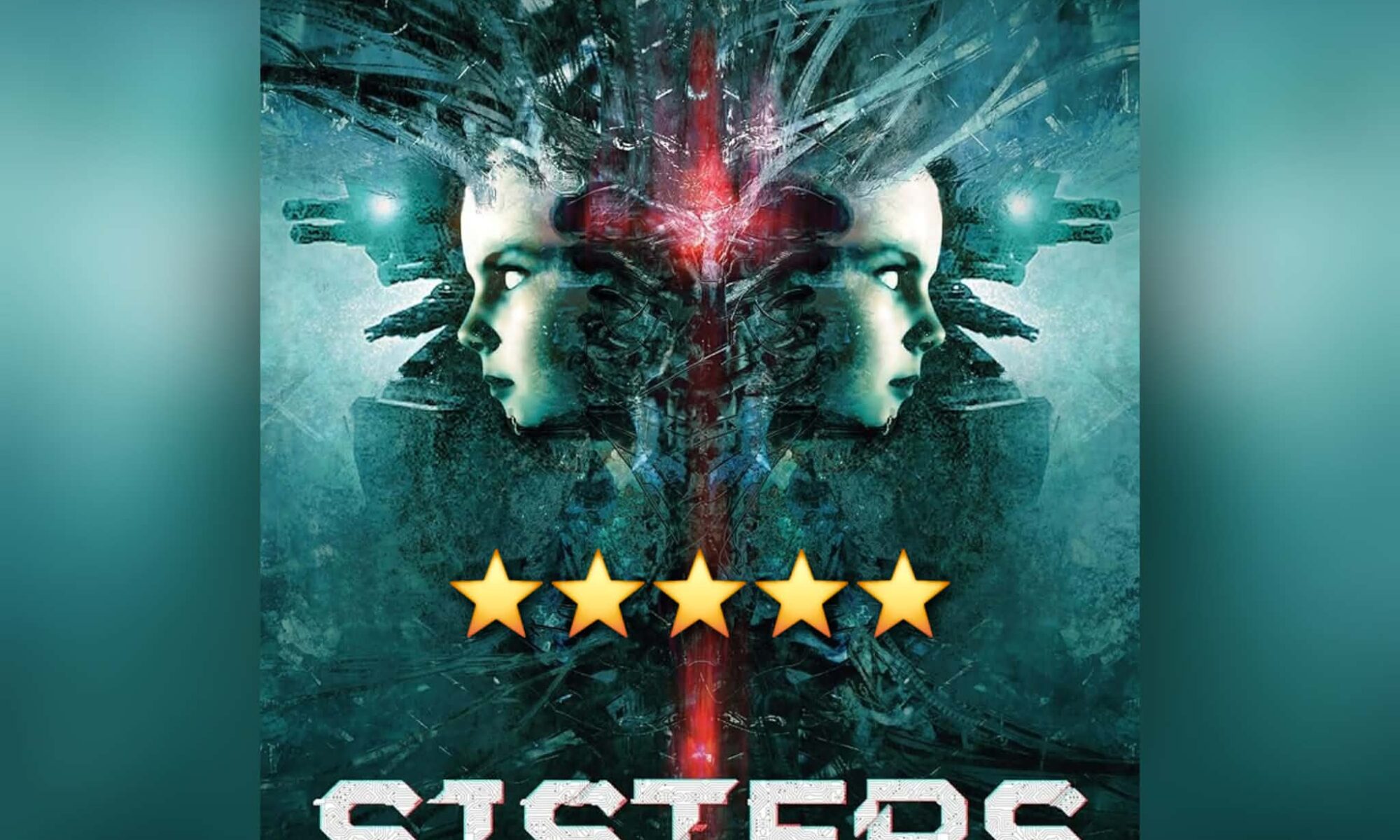
Interesting, Short, And Dark. This is one of those novellas that you can read in a couple of hours – I did. And yet there is also *so much* within this particular one. For those who try to claim that sub-100 page tales can’t really do much… this one proves you wrong. 😉
Now, I picked it up because of some controversy on Twitter wherein a couple of judges for some random “contest” got all up in arms and claimed they couldn’t handle the “zealous” religious talk or praying or even mechs in this tale. And I’m going to get to that in a moment.
But for exactly what this book is in and of itself, outside of what anyone else says about it, it really is damn solid. It thrusts you straight into its post apocalyptic world the way few books do – Jeremy Robinson’s UNITY (which, full disclosure, I literally have a tattoo of a version of the symbol that plays a major role in that particular tale) is one of few I can think of off the top of my head that do *this* good a job of putting you *right there*, *right now*. And again, given the sub-100 page nature of this book… it doesn’t have much choice there. 😉 And yet even after that introduction, Kordov manages to layer *so very much* into this tale, and in the end… well, there may yet be a dusty room or two. 😉
Now, getting back to what brought me here (and I’ll put a brief yet relevant bio as a post script to this review for those unfamiliar with me)… yes, this book has a *lot* of directly religious language. Hell, there’s more prayer in this novella than a lot of *Christian Fiction novels* I’ve read over the years! In that regard, it is quite similar to how prayer and religious language are used in other post-apocalyptic scifi IPs such as Handmaid’s Tale, Doom, or Fallout New Vegas’s Honest Hearts DLC. Which, obviously, are some quite highly praised properties!
Thus, yes, if you have a problem with religious language generally… this tale really isn’t going to be one for you. Just leave it be. There is no need for you to read it and severely mischaracterize pretty well everything about it because *you* have a problem with religious language.
As to how the religious aspects are used within the text here, again, it is more generic scifi than anything remotely real world. The closest it gets to “real world” is that after a sufficient amount of time has passed after a World War III event and human knowledge has sufficiently regressed, yes, such a society likely would return to exactly this kind of religious language to explain things that they’ve now long lost the ability to speak to more scientifically. This isn’t some crusade to “cleanse” anything remotely like our world. This isn’t a Brave New World allegory of the previous’ centuries Western European global expansion. It is a story of mechs and demons and symbiotes in a far future world and the potential for even man made creations whose explicit purpose is to kill may find that there may be things they haven’t been told about.
And again, Kordov does a truly excellent job of telling his story his way. If that way isn’t something you can stomach, well, there are other stories for you. Be well and have a nice day!
Ultimately an interesting story that serves as a seemingly solid and even tantalizing taste of Kordov’s style and this particular world (apparently this novella is set in the world of a trilogy Kordov wrote) that could well entice readers to experience the larger trilogy.
Very much recommended.
Post Script Brief Bio: I was raised in the Southern Baptist Convention, though I left it over 20 yrs ago now and now the closest religious tradition to my own specific views are some incarnations of the Anabaptists. My earliest exposures to scifi reading were actually largely Christian scifi, such as Josh McDowell’s Powerlink Chronicles and the works of Frank Peretti and Bill Myers. I became such a fan of Robinson that I eventually got a tatoo inspired by his work specifically due to his ability (displayed more earlier in his writing career than more recently) to bury deep and thought provoking allegories underneath what are ostensibily kickass scifi action tales. Indeed, Unity itself is just such an allegory, in this case of the Triune God. I also happened to grow up in the town where Lottie Moon, one of the SBC’s earliest missionaries and the person whom its annual Christmas fundraiser (“missions offering”) is named after, once lived a little over a century before my birth. My dad was a deacon for many years, and my last Pastor when I was still in the SBC eventually became a President of the Georgia Baptist Convention. My Christian education – even just via going to church at this particular church for so long, without ever having actually been to a religious-based school – was such that when Robinson first announced one cover of one book several years ago now, I immediately messaged him and told him what the allegory of that particular book was, given its title and that cover. He quickly changed the cover to make it less obvious. 😉 All that to say… yeah, religious language in a book doesn’t scare me. At all. 😉
This review of Sisters Of Mercy by Yuval Kordov was originally written on March 11, 2026.