
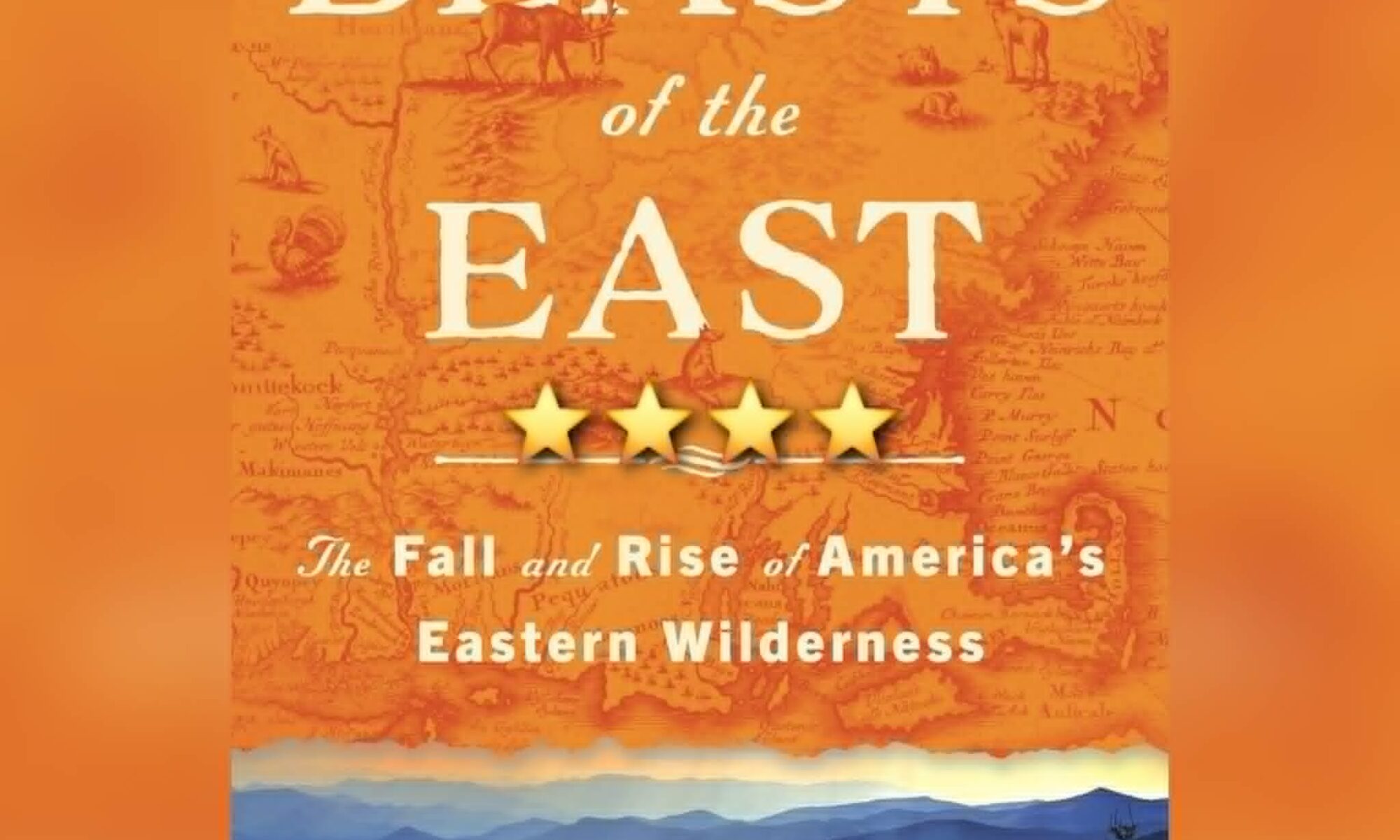
Interesting History Marred By Substandard Bibliography. This text essentially takes Cat Tale by Craig Pittman and does for elk, buffalo, and red wolves what Pittman did for the Florida panther – explain the historic ecology of the animal, how humans nearly wiped it out, and what humans are doing to try to restore it. And yes, even without directly naming Pittman in the text, the story of the Florida panther is at least briefly mentioned here, specifically as it relates to similar issues and interventions with the red wolves.
Along the way, we’re going to meet a *lot* of humans and see their roles in the fall and rise of these species, and we’re going to get a *lot* of discussion of both plant and animal ecology… and how the two different types of scientists and activists are often at odds, or at bare minimum rarely talk in the same “languages”. We’re going to see historic figures both known and not, including some in both areas who have had significant impacts on these creatures in various ways.
All of this is done in a professional journalist tone, but with a clear (if relatively mild) bent to a particular worldview common among professional journalists and scientists. Which will be annoying to some readers, but should only rise to the level of seeking the nearest window for defenestration purposes among the most extremely against this view. Point being, this isn’t a book where the author is going to inject humor or levity really at all – this simply doesn’t appear to be this author’s style, and the style he chooses to use here ultimately works to be informative without being sleep inducing, which can be a very fine line to toe at times.
Really the only actual fault here was the dearth of a bibliography, listing a “selected” bibliography of just 10% of the Advance Review Copy version of the book I read a week before publication (despite having it for several weeks before that), when a bare minimum of 15% – and more typically, particularly for books of this type, 20-30% – documentation is more standard.
Ultimately, the fate of this book will actually have a lot in common with the animals it details: Getting people to actually care about these animals will ultimately determine both their fate and the fate of this book, and indeed one would expect that both sides would help each other in common marketing here. But as a general guide from someone outside of that particular group, I would say that if you’re interested in the history of ecology and the natural North American biome, both in what it was and in how humans have been shaping it these last few hundred years in particular, this is absolutely going to be a book you’ll find interesting. If you’re looking to learn about these issues at all, this will be a solid overview of everything that has transpired through late 2024 or so. And if you’re just looking for a decent doorstop, well, at 400+ pages, eh, this could work in a pinch there too. 😉
Very much recommended.
This review of The Beasts Of The East by Andrew Moore was originally written on May 27, 2026.
