
#BookReview: Open Space by David Ariosto

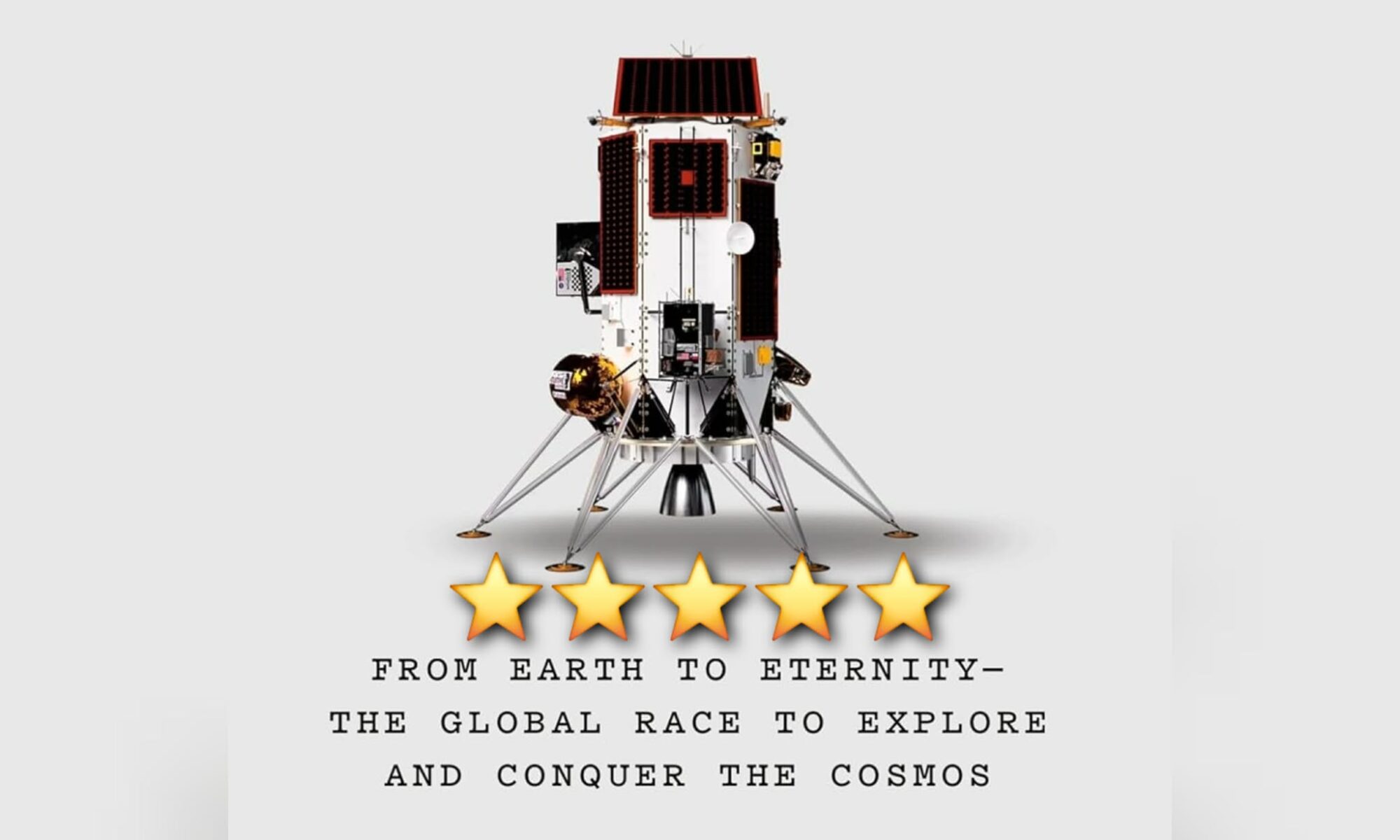
Well Documented Examination Of Space Tech Beyond Musk and Bezos. At least in the US (where both Ariosto and I are based), if you’re talking space these days you’re generally talking NASA, Elon Musk (SpaceX), or Jeff Bezos (Blue Origin). This book goes into the details of where space science and tech are *beyond* just those three entities, traveling all over the world showing how different people in different areas are contributing to pushing humanity beyond our home world – and why. While there are a lot of details here, including how nativist US policies ultimately both created China’s space program decades ago and pushed it to new heights (both literally and figuratively) more recently, this is also more of a complete overview of the entire field than a deep dive on any particular tech or event. Even as some significant ones – including the race to have the first commercial lunar lander – are more heavily detailed than other aspects. (For example, while space craft of various forms are discussed heavily, I don’t remember any mention whatsoever of space suit tech and only the barest mention of space food tech.)

Still, for all that it *does* cover, this book will actually better inform you of a lot of things that perhaps even some within the space exploration field may not be fully aware of (as I’m all too familiar with the idea even in my own field that a practitioner isn’t always fully aware of newer developments even in their own field). At 22% documentation, it is also fairly well sourced and because it is primarily reporting on current and near future tech and the histories thereof, Sagan doesn’t really apply here – making the 22% more than sufficient for this particular narrative.

Overall, this is an exploration of space exploration in its current forms that is clearly designed for mass appeal, and I do think this is one that most anyone even remotely interested in space tech and how we got where we currently are (beyond NASA, Musk, and Bezos) will find quite informative indeed.

Very much recommended.

This review of Open Space by David Ariosto was originally written on March 24, 2026.

#BookReview: Revenant-X by David Wellington

Just As Long – And *STILL* Only Tells One Part Of The Story. As the title of this review harkens back to my original review of the first book in this series, PARADISE-1, I should note that in that review I specifically proclaimed “I personally would love a sequel that picks up moments after this book leaves off”. Which is *exactly* what we get here. So yes, this is one of those series you really do need to read in order – and in this case, that means sitting down for about 1400 pages of scifi space horror.

I named a lot of different scifi franchises in that review of PARADISE-1, and while they are spot on for that book, this book feels more like a different scifi franchise, one that first released months after that book – the new (now 14 month old) STARFIELD. Players of that game will note that many of its planets are barren, rocky, and almost entirely devoid of any life at all – even humans looking for a pit stop. Which is largely the case with this book, and just as Starfield can admittedly get a touch repetitive in the “find this spot, get attacked by whatever is there, kill it, move to the next spot” mechanics… yes, that same type of storytelling comes to bear here.

Where Wellington shines, and truly helps the pacing and thus makes the read feel nowhere near as long as it actually is, is in his use of shorter chapters. There are nearly 120 chapters in this book, and thus by the time you’re in the Chapter 30 range and roughly 25-30% done with the book… you find yourself looking back and thinking you haven’t actually been reading that long. Even at Chapter 100 with another 100 pages or so left, you still don’t think it has been that long, nor do you really think there is that much longer left. Or at least this was my own experience. 🙂

And yes, this one also ends with the reader demanding to see the next book immediately, as where the first book left off at a certain point that *demanded* a sequel, here things have changed and now it is because of the specific course of events and those still to come that the reader will be desperately waiting to see what happens next.

One note here, more on my personal experience, but possibly informative for others as well: I “only” read 335 books in the 644 days between reading PARADISE-1 and REVENANT-X, and Wellington does a solid job of bringing the reader back into the fold rapidly, even if you don’t remember exact details of the prior book.

Very much recommended.

This review of Revenant-X by David Wellington was originally written on November 4, 2024.

#BookReview: The Deepest Map by Laura Trethewey

Interesting And Comprehensive Examination Marred By Leftist Ideology. If you can overlook (or if you like) the *frequent* bigotries against “males”, “white males”, and/ or “rich white males” and if you agree with Greta Thunberg re: “Climate” “Change” (or whatever the hell they’re calling it now as you read this review), you’re going to love this book. The star deduction comes specifically because of such slanted “reporting”. (I read the Audible version of this book and thus can’t comment on the length of its bibliography one way or another.)

If the above doesn’t apply to you, you should read this book anyway.

Because when it stays on subject about the efforts to map the seas and specifically the deepest parts of them, both cutting edge and throughout history, this book actually is quite good. Tretheway manages to show both the necessity of the effort and just how dangerous it can be in both academic and very real senses, along with all of the problems associated with having the data or not as well as gathering the data in the first place. Along the way we’re going to encounter quite a few legendary people, some truly globally famous even well outside their exploratory regions, others famous only within very narrow, sometimes quite niche, fields – but famous nonetheless. She manages to make the reader care about both the historic exploration and the current efforts, up to and including even using AI drones to get data humans otherwise can’t easily obtain. And all of this is quite remarkable indeed.

It is simply a shame that she had to integrate so much bigotry into this reporting – it truly could have been a truly remarkable work otherwise. And yet, the tale as written is still strong enough even with the integrated bigotry to still warrant a read by truly everyone remotely interested in the oceans for any reason.

Recommended.

This review of The Deepest Map by Laura Tretheway was originally written on July 1, 2024.