
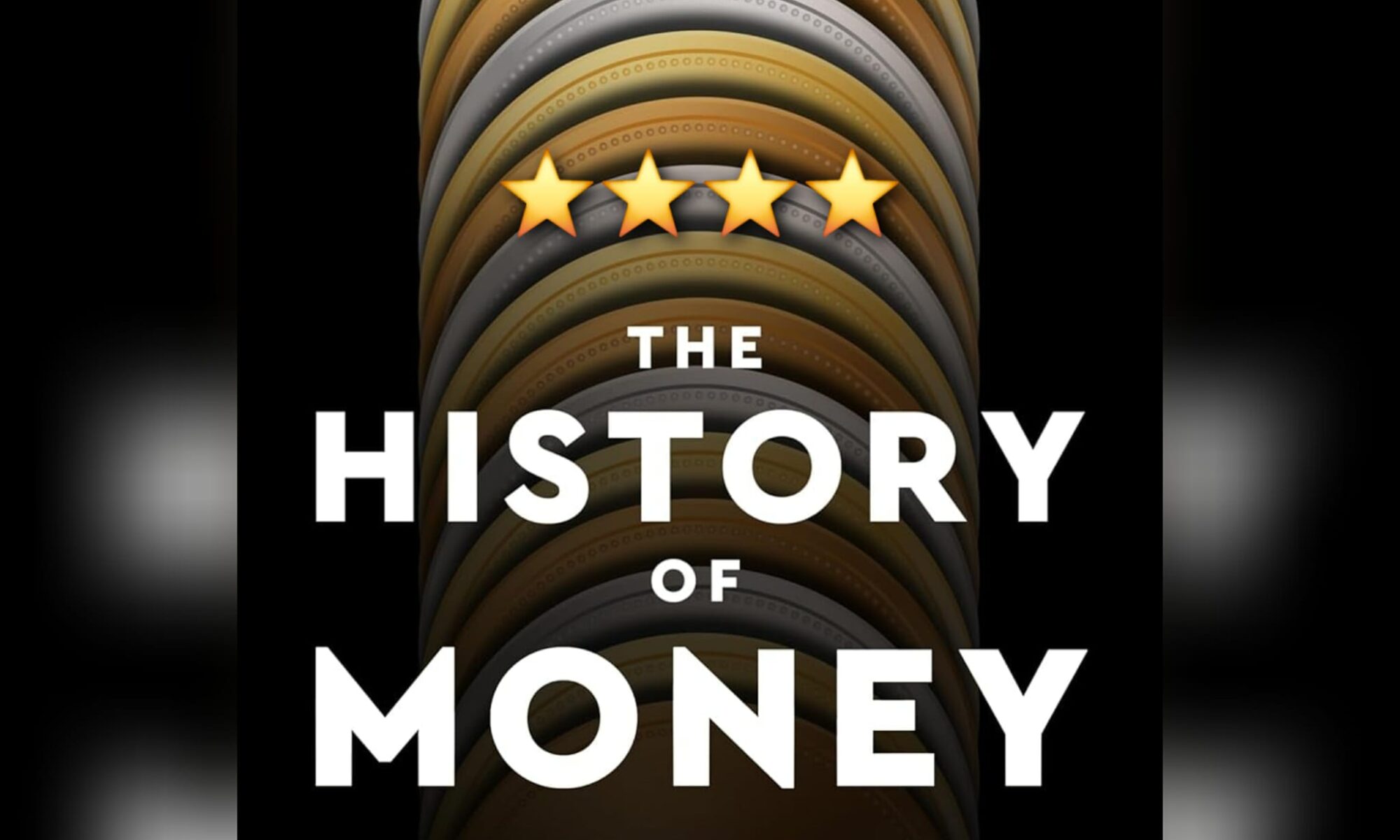
#BookReview: The History Of Money by David McWilliams

Solid Enough Primer. This is one of those “history of humanity” type books that attempts to take literally thousands of years of human history (including pre-history) and condense it into a sub-400 page narrative. (With 12% of its 403 Kindle pages being bibliography, which we’ll get to in a moment.) Human history being as complex as it actually is, none of these types of tales are going to be 100% correct in all details, as details are more often than not incredibly nuanced. But as an overall narrative, this one is at least interesting and provides a lot of solid jumping off points of “hey, did this particular bit of history *actually* happen the way McWilliams claims?”. Sometimes that answer will be “mostly”. Others, it will be “somewhat”, and still others will be “barely”. Different specialists will have different opinions at different points, and I know my friends trained more in the Austrian school of Economics (Milton Friedman, Ludwig Von Mises, Frederick Hayek, etc) will likely take quite a bit of umbrage with McWilliams’ 20th and 21st century histories in particular. Including the fact that McWilliams is obviously quite the fan of one John Maynard Keynes – the singular “economist” who has done more harm to the global economy than very likely any other in the history of humanity.

Still, like I said, as an overall primer on the history of money… this is at least entertaining and mostly informative… if you’re willing to do more research.

No, the actual star deduction isn’t for McWilliams’ adoration of Keynes or his at times gross over simplifications. Those can at least somewhat be excused as not 100% objective criticisms – even if they *are* educated criticisms. The actual star deduction here comes from the aforementioned 12% bibliography. Quite simply, a book with this much history should be cited *far* more than this, and indeed I’ve personally read books over the years covering a far more limited historical scope that had multiples of this level of documentation.

So read this book to begin to get a rough idea of the topic – and, as I’ve already pointed out to one friend and fellow book blogger since reading this, it *can* be enough to refute a few monetary policy memes/ stories floating around online. Then do even more research on the actual events portrayed here and see how accurate McWilliams truly was. Or was not.

Very much recommended.

This review of The History Of Money by David McWilliams was originally written on December 1, 2025.
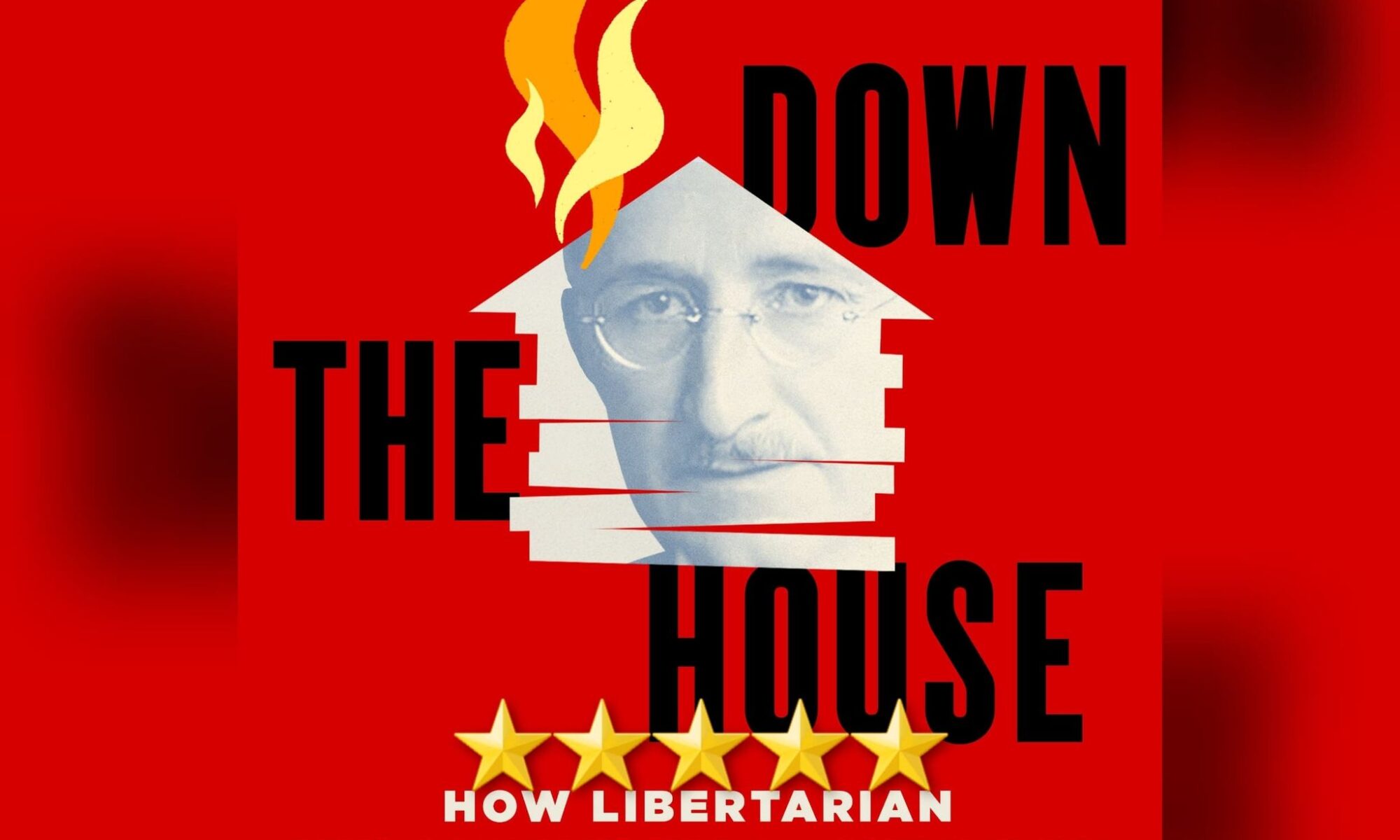
#BookReview: Burning Down The House by Andrew Koppelman

Severely Flawed Overall Reasoning Yet Good Introduction To Left Libertarianism. This is a book whose goal, as the author states near the end of Chapter 1, “is not only a critical description of libertarianism. It aims to marry what is best about libertarianism with the agenda of the left.” Thus, the author makes such radical-to-anyone-who-actually-studies-American-history-and-politics claims as that Rothbardian libertarianism has come to dominate the Republican Party, and the usual and at this point banal attacks on Charles Koch as a standard boogeyman. And yet, despite the rampant strawmen and cherry picked history and analyses, this book truly does serve as a reasonably well argued and written look into the general forms of “left libertarian” philosophy. At 36% documentation, it is actually on the strong side of well-documented (though still not the *best* I’ve ever encountered), so even with its cherry picking, at least it does in fact cite most of its arguments quite well. (Despite several of its more plebian-according-to-leftist-standards comments being undocumented.) Thus, while there is nothing of the structure of the book to hang a star deduction on, it is still one whose arguments should be considered critically and indeed, one should actively study the same philosophers and economists Koppelman often cites – from Hayek, Mises, and Friedman to Locke, Rothbard, Rand, and even Lysander Spooner. Still, for what it is and for the education it could bring (as even reading Mein Kampf is quite educational, in seeing how even the worst thinkers known to man think), this book is very much recommended.

Note exclusive to blog form of this review: While I kept this out of the Goodreads/ Amazon review above, I should probably note that I actually have quite a bit of experience with libertarian philosophy myself, having been a Libertarian Party of Georgia official at both the Statewide and local levels, as well as a former small town City Council candidate and running a libertarian political blog during the days of the Tea Party uprising circa 2009-2010. During that time, I actually had the opportunity to speak directly with at least a couple of Founding Members of the Libertarian Party, including one who happened to be from my own home County. We were never close, mere acquaintances who each knew common friends much more than we ever knew each other, but even that loose association allowed me to participate in some at times deep philosophical discussions with these truly legendary people. Despite all of this, however, I never came to libertarianism (or even volunarism, which is what I really subscribe to – what Koppelman would describe as “Rothbardian libertarianism”, though as you’ll see momentarily, I never even really knew Rothbard or his thinking) from a secular philosophical background. Instead, I came to libertarianism/ voluntarism through my studying of the Bible and Christian ethics/ thinking, ultimately arriving at voluntarism along the lines of the Anabaptist tradition within Christian history. Even here, while I’ve subsequently read *some* writings both historical and modern from such thinkers, much of my own thinking is precisely that- my own, and not necessarily tied to any one philosopher or tradition. Thus, while I intuitively *know* there are many flaws with Koppelman’s reasoning here, I also openly admit that Koppleman has quite a substantial amount of scholarly training and experience that I do not, and thus there are certainly better people to explain more fully what, exactly, Koppelman’s flaws are and offer a more complete rebuttal to them. But still, read his book, no matter your thinking on libertarianism. For what it is and what it does, it actually is quite well written and is a solid exposition from that side of thinking.

This review of Burning Down the House by Andrew Koppelman was originally written on October 13, 2022.

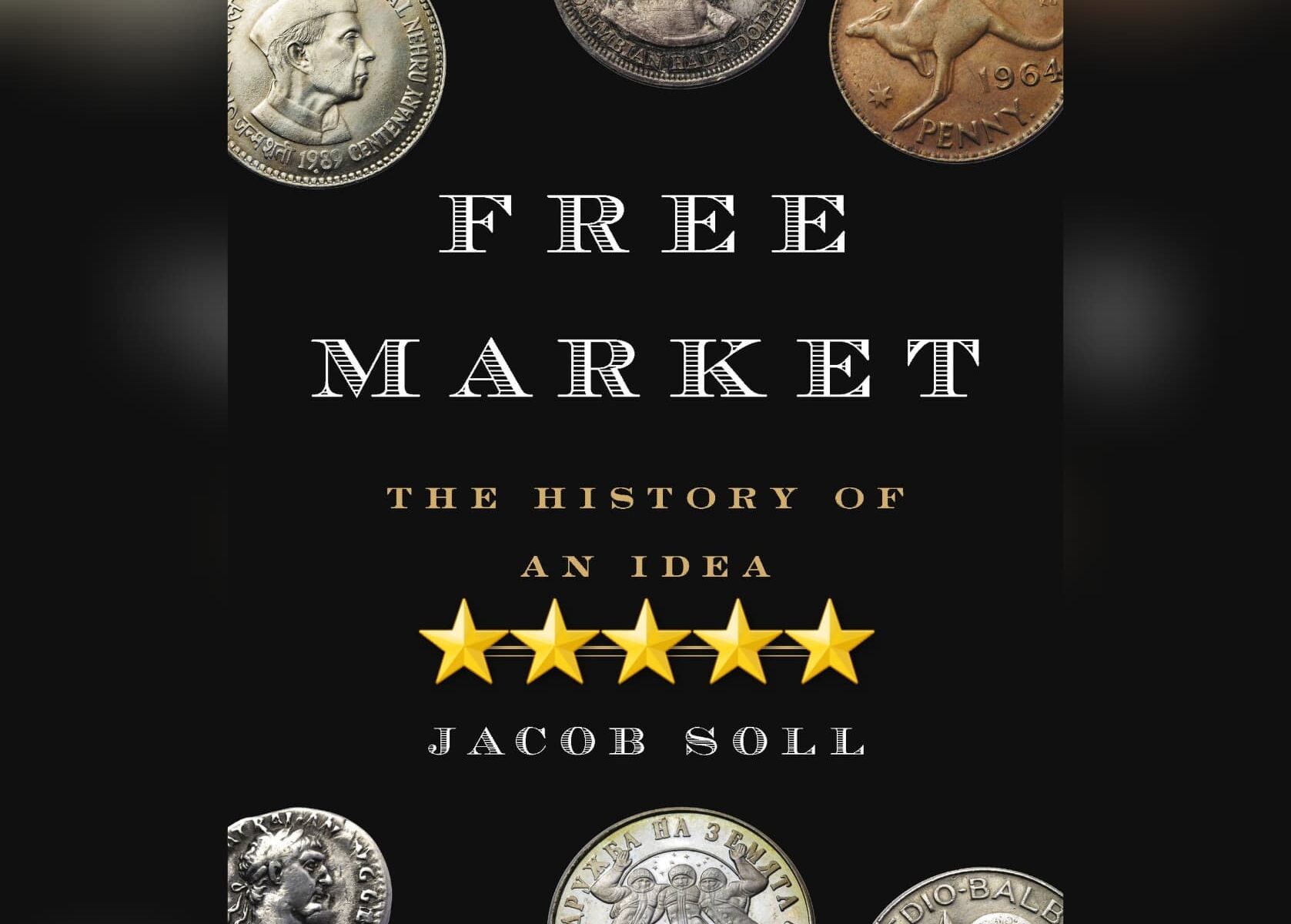
#BookReview: Free Market by Jacob Soll

Deep And Fascinating Exposition Of The History Of An Idea. Soll is a Professor of History and Accounting, and I’m just a college grad who had ECON 101 as an 18 yo HS Senior / college freshman who then went on to discuss the Austrian/ Chicago schools of economics (Friedman, Hayak, von Mises (who actually does *not* get mentioned in this book, unlike the first two), etc) with various libertarian (of both “l” and “L” levels) fellow activists and Party officials, back in the former life where I did those things.

So I’m not going to debate the specifics of Soll’s commentaries here, though I do think that there is room for those more dedicated to true pure free markets to do so – I’m just blatantly nowhere near qualified to do it. 🙂

What I *can* say about this book is that it truly is a deep and fascinating exposition of the history of economic thought regarding what a market is and how it does/ should operate. With von Mises being the only notable exception (discounting also economists who are still alive), Soll takes us on a journey from pre-history through Cicero and the beginning of the Roman Empire (and fall of the Roman Republic) to St Augustine to Machiavelli and the Italians into the rise of the Dutch and then England and France (where we eventually get… who else… Adam Smith… 😉 ) and the other Enlightenment philosophers and from there to America and eventually through the post WWII era and into Keynes, Friedman, and Hayak. Entire libraries have been filled over the centuries talking about the lives and theories of many of these men, and Soll does a good job of showing their thoughts and how at times they were shaped by the world around these men while never delving so deep as to become a treatise specifically on any one person or their contributions to the field. He also manages to avoid most academic and professional economist terms and instead writes in a manner that is more easily accessible to most any reader with so much as a middle school/ high school level of historical knowledge.

Ultimately this is a book that seems destined to become required reading for many ECON 102/ 103 ish classes, and really should be read by anyone seeking to have a general understanding of one of the most discussed foundational issues in modern economics. Very much recommended.

This review of Free Market by Jacob Soll was originally written on July 9, 2022.