#BookReview: Feed The People by Jan Dutkiewicz and Gabriel N. Rosenberg

Food – Like Reading – Is Not Political, Despite Authors’ Claims. I came into this book expecting a more science/ tech look at why industrial food is good (it is, and the authors are correct on this) and how it can be made better… and instead got a book focused almost entirely on the politics of the food industry and why the authors think that the small food/ farm to table crowd ala Michael Pollan and others is wrong. While I tend to agree with the authors in outcome, their reasoning here was extremely elitist and pro-totalitarian-government-intervention, with nearly every recommendation they make ultimately coming down to “government should dictate either specific actions or at worst the range of choices that businesses and consumers will have available to them”.

Given that one of the authors works in NYC and the other in Europe, perhaps this is understandable cultural bias, and perhaps you, the reader of my review, will agree with their reasonings as well as their outcomes. But for myself, a former Libertarian Party official who tends to agree more with the writings of Ayn Rand and Lysander Spooner… yeah, there wasn’t much here I could actually endorse myself. 😉

Ultimately, it isn’t the specific direction they chose but the sheer fact that they considered these recommendations the only possible policies and did not even allow for the possibility of other possibilities that lost a star. I love finding texts that come from different perspectives, but I expect *any* nonfiction book to at least mention other potential views and why they are more easily dismissed in the views of the author(s), and this simply wasn’t done here – making the overall text have at minimum an appearance of elitism. Again, your mileage will absolutely vary there, and I know people personally who will five star this book as among the most important food books you will ever read and people who will wish they could give this same book zero stars as utter trash that should never be read by anyone *for exactly the same reasonings* that I’m ultimately winding up in the middle of the road there.

Oh yeah, kind of gave away that there was another star deduction coming there, right? This is one long time readers of my reviews will be quite familiar with in my reviews of nonfiction books – the bibliography simply wasn’t long enough, clocking in at just 10% of the overall text here. The applicability of the Sagan Standard (“extraordinary claims require extraordinary evidence”) is perhaps debatable given the ultimate discussions of this book, but even without applying Sagan, I’ve maintained for years that in my vast reading of even Advance Review Copy nonfiction books over the years, a bare minimum – by my later expanded standards – of roughly 15% documentation is needed to get this star, and as noted, that is actually expanded , as for many years I required a bare minimum of 20%. So yeah, 10% simply isn’t going to cut it there.

Still, for all this, read this book. Seriously. You may want to defenestrate it because it openly embraces unions and calls for more of them. You may want to defenestrate it because it says openly and honestly that if we are going to provide meat for billions of people, industrialized animal farming is the only realistic way that is going to happen. But you should read it anyway, no matter your own political persuasions, because ultimately this *is* a pretty realistic book looking at exactly how we can feed the masses going forward, even if it is an extremely pro-government-mandate and anti-individual liberty view.

Oh, and I repeat the title, since the authors were so adamant in the opposing view: Food is **NOT** political.

Recommended.

This review of Feed The People by Jan Dutkiewicz and Gabriel N. Rosenberg was originally written on January 29, 2026.

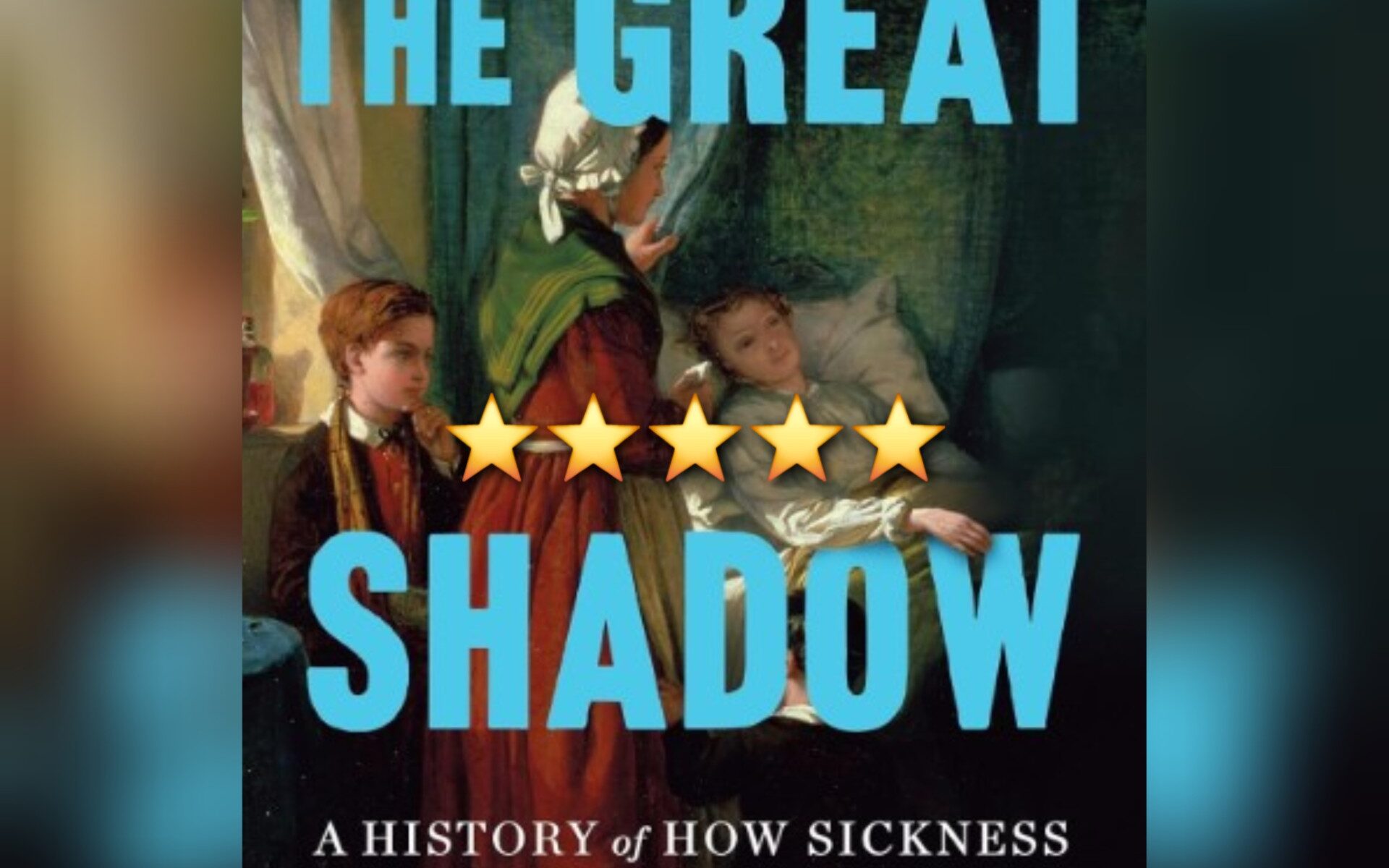
#BookReview: The Great Shadow by Susan Wise Bauer

Interesting Take On The Subject With Writing Reminiscent of Rachel Held Evans. I suspect Bauer would have admired much about the late great Evans, even if they didn’t agree on every particular. Here, Bauer approaches the history of sickness the same way Evans, particularly in the last few books before her death, did various Biblical topics – with a fair amount of creativity to give examples of a particular point followed by reasonably well reasoned analysis based on the available authoritative texts – whether those be the Bible (and Torah) in Evans’ case or what we consider to be more “objective” science and histories for Bauer.

Bauer does a truly great job here with the scenarios she creates usually at the beginning of each chapter, showing both how a “modern” (21st century ish) approach to the next topic looks – usually in a way most current readers will readily identify with or at least have heard of – and a more historical perspective would look on that same topic, with “historical perspective” here ranging from pre-history through roughly the WWII period. With these, Bauer shows herself to have almost a novelist eye for storytelling, and a fairly good novelist eye for *compelling* storytelling.

The actual histories she presents here are fairly solid and mostly reasonably known or at minimum in line with things that are reasonably known, so I don’t necessarily feel the Sagan Standard applies for this text as it exists. Which allows the 15% documentation to suffice without a star deduction, even though it *is* around the lower bound of what I expect to see from a nonfiction text.

In Bauer’s message of trying to reach those skeptical of modern medicine – which should be most anyone who actually understands its history and where it actually currently is – she actually had one particular line that stuck out to me as particularly well said:

“If you’re going to try to convince people of something that is going to deprive them of something vital (freedom, agency, control, their livelihood), anything less than an ironclad case isn’t going to do the trick.”

While this line, if I remember correctly, was specifically about trying to get docs to adopt more stringent standards in line with more current thinking, it really does apply equally well to anyone seeking any change from any other person for any reason at all. Thus, it is both quite wise and quite well spoken – and gives you a pretty solid idea of what to expect from the overall tone of the book here to boot.

Very much recommended.

This review of The Great Shadow by Susan Wise Bauer was originally written on January 18, 2026.

#BookReview: The Generation Myth by Bobby Duffy

Interesting And Well Documented Read. In this book, Duffy shows that what the media so often (and so lazily) proclaims to be “generational” divides… usually aren’t really. Yes, there is a generational component to at least some things, but time period (specifically for that “coming of age” period but also more generally throughout the individual’s life) and life progression play equally critical roles, and in many cases *more* critical roles, in showing how a particular group of people generally feel about a given issue. One of the things that makes the book a bit interesting is that even while presenting this much more balanced view of this particular field, Duffy exposes himself as a “climate” alarmist/ extremist, either not knowing about or outright denying similar work to his own in that particular field. (Ie, work showing that even though media lazily points to one thing, there are actually several different things at play and in some cases far more critical to the issue at hand. One work here on that topic similar to Duffy’s on this one is Unsettled by Stephen Koonin, released just 6 months or so prior to this book’s publication).

Still, this book is truly a remarkable work in its field (at least to someone who is *not* a fellow academic or in that field at all) and seems to be fairly comprehensive in its focus, even as its primary and secondary national emphases are the UK and the US, respectively. It looks at many, many issues from the social to the political and even to the personal, from housing to gender identity and sexual activity to political leanings and many, many more. This is also a fairly well documented text, with its bibliography clocking in at about 32% of the overall text – while not the *highest* I’ve noted in my work with advanced review copies, easily among the higher echelons there. Very much recommended.

This review of The Generation Myth by Bobby Duffy was originally written on September 14, 2021.