
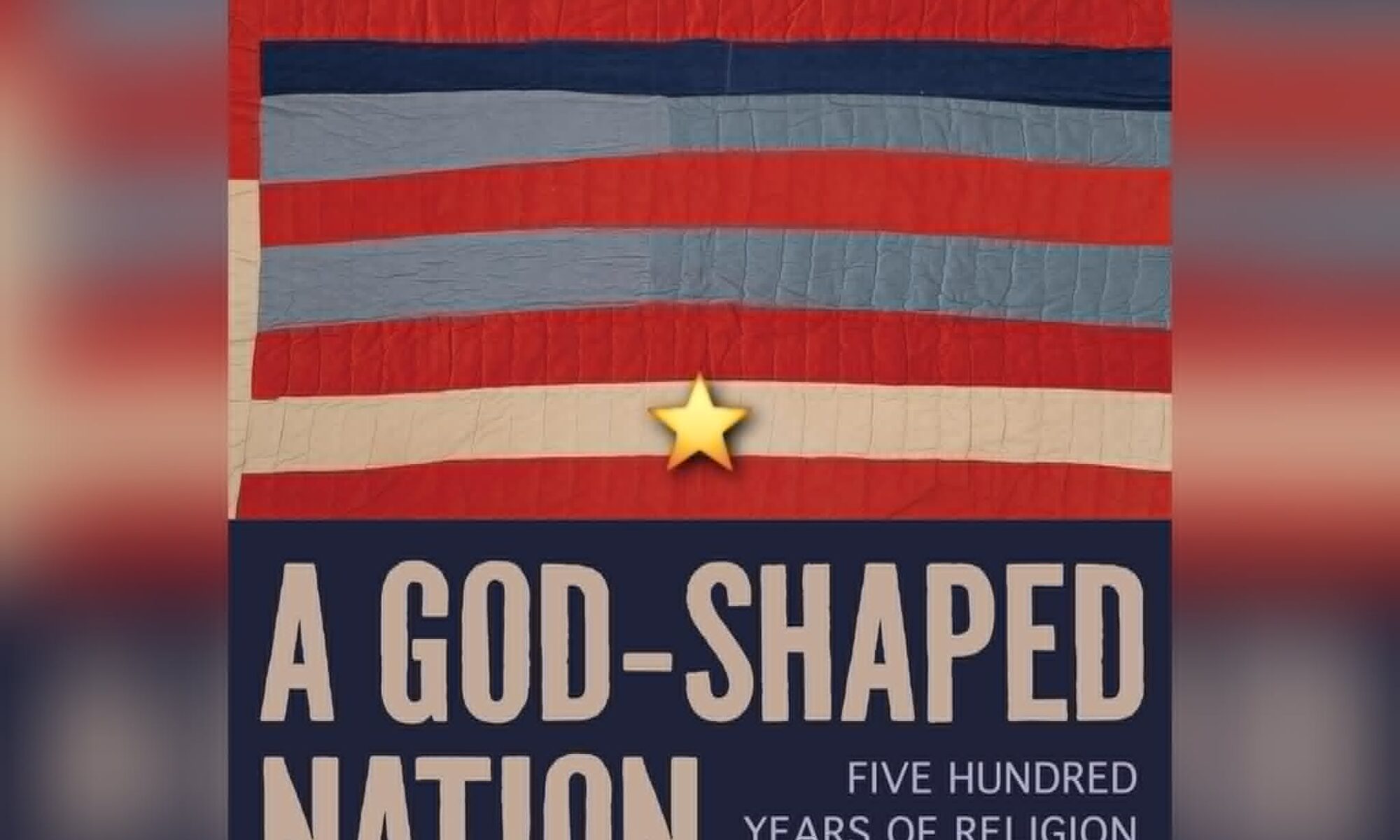
Bigoted Polemic. Just 105 days ago, I wrote of Chosen Land by Matthew Avery Sutton that “his assessment told only half the story” – and this tale tells even less in most ways, while at the same time genuinely showing more in some. Covering 500 or so years in a span of just under 700 pages (including roughly 15% bibliography, meeting at least that standard, though really there should have been even more, given some of the claims herein), there really is virtually no way to really cover “religion in America” in even a very shallow depth and do it evenly over that time period in that few pages. Yes, that few. At nearly 700 pages. So any attempt at all is to be commended at least for the undertaking.
Unfortunately that is about the only commendable thing here, as Wilensky-Lanford shows balance only in showing many different religions over that history period, rather than Sutton’s focus on Christianity in a more condensed period. (And to be clear, his text was almost exactly the same page count as Wilensky-Lanford’s, with about 2/3 the bibliography.) Devoting roughly half of the narrative of a near 700 page book purporting to cover 500 years of religious history in America to the last 80 ish years of that period is a choice. Choosing to editorialize virtually every move made my virtually anyone white and/ or Southern and/ or conservative as racist or otherwise vile is a choice – and a blatantly bigoted one. Going so far as to cast aspersions on the much revered Billy Graham long after his death is a choice, and a bigoted one. Promoting the propaganda of an “insurrection” on Jan 6, 2021 is a choice. Promoting the “Project 2025” conspiracy theory that is nothing more than a leftist version of the ultra right wing “QAnon” *that fueled the very event you claim is an “insurrection”* is a choice.
Now, for those who happen to agree with Wilensky-Lanford’s choices here… you’re going to have a better overall experience with this text. You need to read *better* and *more balanced* histories too, but you’ll enjoy reading this one. Even for those who vehemently disagree with the choices herein, you too will likely learn some things – even I hadn’t been aware of much of the Taino religious practices that Wilensky-Lanford covers in this text, and indeed even as recently in the history as the early Civil Rights period, there are indeed some events covered even I wasn’t aware of. And yet, even with these inclusions and even as flawed as it is, Sutton’s history is still a far more comprehensive one, covering many of the developments within Christianity in America Wilensky-Lanford does here in at least a *somewhat* more balanced fashion.
To be clear, the star deductions are thus for these reasons: one star lost for focusing far too much of the narrative on such a small slice of the overall time period in question, one star lost for such blatant and pervasive bigotry, one star lost for lack of coverage of even ostensibly favorable events that didn’t fit well within the bigoted perspective and even several that fit well within it (speaking to women’s movements of the late 19th and early 20th centuries among both white and colored communities in forcing some of the changes Wilensky-Lanford later highlights and even praises here), and one star deduction for losing any sense of objective historical reporting at all once the narrative moves closer to and into the 21st century.
Ultimately, I leave it to you, the reader of this review and potentially of this book. Even for all of its problems, again, there are absolutely a few flecks within this text of things that you will almost certainly genuinely learn about for the first time. Unfortunately you really do have to wade through an entire decade’s worth of industrial bovine *and* porcine excrement to find them. That isn’t a gold mine *I* would choose to dig through again. But if you do choose to read this book, please do leave a review wherever you see this one. Maybe I’m too gentle on Wilensky-Lanford here. Maybe I have no fucking clue what I’m talking about and am the world’s biggest absolute fucking moron. Feel free to call me out, should you feel the need. But please do leave that review if you choose to read this book.
Not recommended.
This review of A God-Shaped Nation by Brook Wilensky-Lanford was originally written on June 10, 2026.