
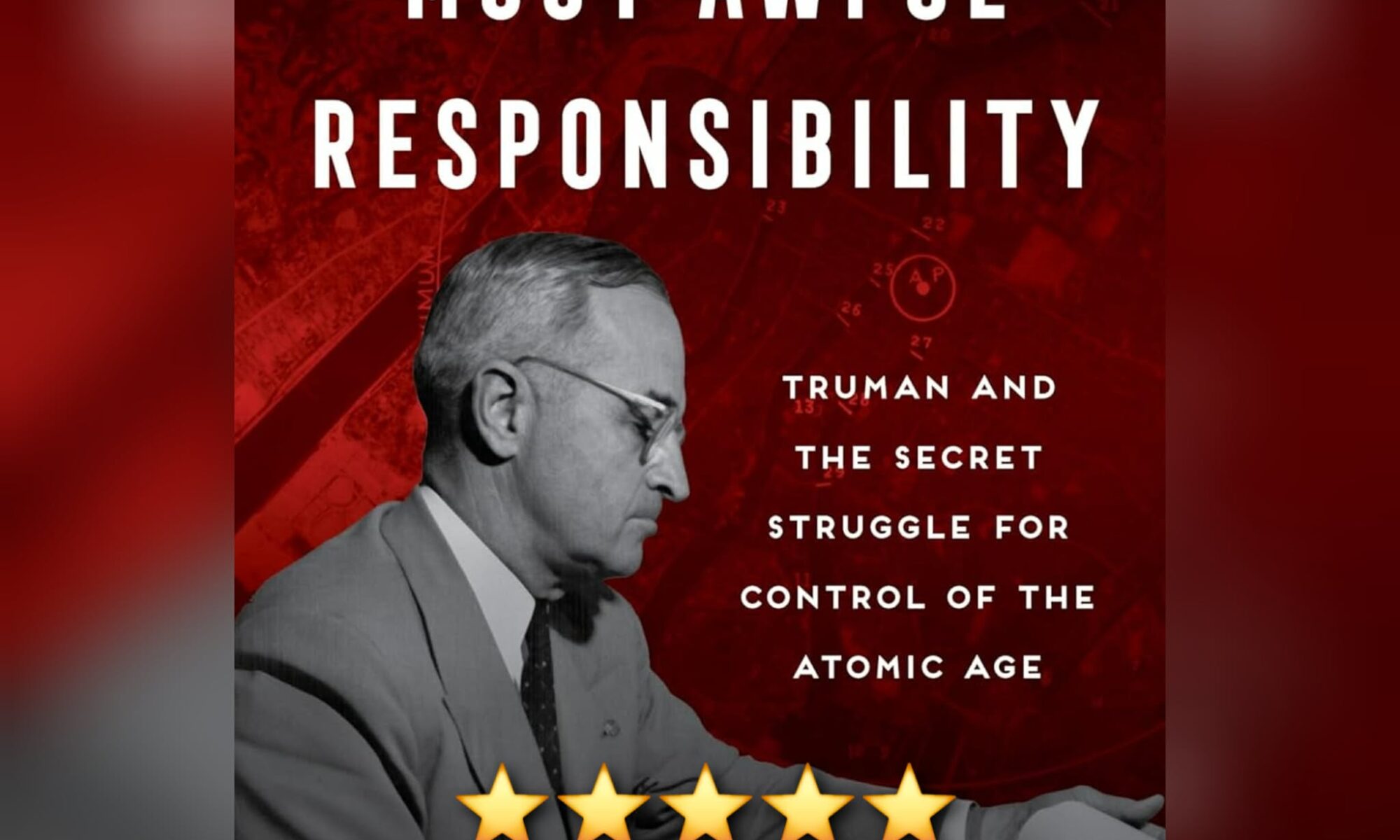
Reasonably Well Documented Book Will Force You To Rethink All You Think You Know Of The Post-WWII Era. This is one of those rare history books that actively goes in to not just point out something most people missed about an era and/ or a person, but also goes to show the reader that a lot of what you thought you knew… may not have happened quite the way you think it did.
For example, one of the main points of the early part of the text: You think President Truman ordered the dropping of the atomic bombs on Hiroshima and Nagasaki. That was what most textbooks (at least in America) teach, at least lower than say upperclassman history majors at the collegiate level. Except…. Wellerstein shows here – repeatedly – that this wasn’t exactly how that went down. Indeed, Wellerstein uses first hand sources from a few different key people – including Truman himself, where possible – to show that not only was there not one single decision to drop the bombs or where, but that Truman himself likely understood neither the weapon nor the target profile. (Which, let’s face it, both humanizes him a bit more – something Wellerstein is *great* at in this text, for what that’s worth – and should give most of us at least a touch of hope given more recent Presidents and their mental abilities.)
Then, in the period after the bombings, Truman – and the world – realize what has been done… and Truman is personally absolutely horrified. This is where and when the real struggles begin, and the “rest of the story” (as Paul Harvey famously proclaimed for so long) begins. And y’all, this part reads almost like a DC spy thriller/ court drama. High ranking people across several different realms within the US government all seeking to have their vision of the future made manifest, with Truman – and his famous “buck stops here” mantra – the focal point and the one both making decisions and seeking to establish his own preferred path.
Now, with all this lesser known history and with the entire point of the book showing a side of Truman most often ignored by history and historians, some may argue that this necessistates application of the Sagan Standard -that these are extraordinary claims that thus require extraordinary evidence. From my reading here and my understanding of both this text and the relevant histories as I know them, I don’t think this is true. This is a bit of a bombshell, yes, but is also fits pretty squarely in with known histories, it simply illuminates lesser known corners of those histories more properly. Thus, for me, the roughly 20% bibliography here sufficiently establishes a reasonable amount of documentation, and the frequent citations of the diaries and memoirs of those directly involved show the depth of research Wellerstein was able to bring to the table here.
Overall a very well written text that will completely rewrite your understanding of the post-WWII period as it relates to the use and control of atomic weapons – which seems to be Wellerstein’s very point, meaning he executed that point to near perfection.
Very much recommended.
This review of The Most Awful Responsibility by Alex Wellerstein was originally written on December 14, 2025.
