Leftist Language Will Annoy Some Readers. Read This Anyway. Straight up, Galvin Almanza is absolutely a product of her time – in this case, “her time” being 2010s Harvard and Stanford and then abolitionist activism. So the words she chooses – “latinx”, apologizing for being white, etc – are going to annoy at least some readers.
From my view (see postscript for a brief bio relevant to this discussion)… this book is right up there among the ones those new to the field should consider. Those in and around criminal justice will likely know most everything Galvin Almanza presents here – or at bare minimum have largely similar stories of people they did know more directly. Her writing style is engaging – far from the academic speak one might expect from a Stanford Law lecturer and much closer to the dynamism one would expect from a tenacious advocate of the accused during a trial. While this is far from a John Grisham or Randy Singer courtroom drama, Galvin Almanza’s overall style bends more in that direction than a desert dry academic treatise.
One weakness here was her framing of the “racist” origins of policing, but again, that’s the culture Galvin Almanza comes from. It is unclear at this time if she’s ever even heard of Radley Balko’s excellent history of policing The Rise Of The Warrior Cop, released between The New Jim Crow by Michelle Alexander (who blurbed this book, in case you, the reader of my review, missed that) and the 2013 execution of Michael Brown. Balko has a much more even handed look at the rise of policing in the American tradition, tracing it back even beyond the first “Shire Reefs” in feudal England and up through 2010 or so (with a 2020s update I’ve yet to go back and read). Even here, however, Galvin Almanza’s incorrect history of policing comes across more as a cultural/ worldview thing than an attempt to mislead the reader – she appears to genuinely not know the actual history at hand and genuinely (and uncritically) believes the constant leftist refrain.
That particular weakness aside, however, this is a particularly well documented book, clocking in at about 28% documentation on even the Advance Review Copy edition of the text I’ve had for several weeks before finally reading roughly a month before release. It is quite clear that on most of her points, Galvin Almanza both knows exactly what she’s arguing and is more than willing to show you her work – which is always appreciated (and, yes, frankly expected) in any nonfiction work.
Ultimately Galvin Almanza’s proposals – because all books of this type must end with proposals in nearly as ironclad a genre rule as RWA/ RNA types try to insist that any romance novel end in a happily ever after – all come down to variations on “more funding” and for the most part are things most that are familiar with the field have already heard of before, but Galvin Almanza does put at least enough of her own specific vision in here that the text is still worth reading to see exactly what her own brand of reasoning comes out as.
Overall this was a strong book of its type, just not an overly novel one other than in Galvin Almanza’s own particular experiences.
Very much recommended.
Brief bio of me: Hi, I’m Jeff, and I used to work for a District Attorney for a bit as their office tech guy. Even got sworn in as a witness in one particular trial, in addition to helping my bosses with an “everyman” look at the case he had in a couple of cases. Even then, I was *also* a Libertarian Party official and an anti-police-brutality activist working with an org that has long went by the wayside (at least relative to what it was) and which particularly after Michael Brown’s execution in 2013 was rarely heard from again as more prominent orgs rose up. I even, at some of the very times Galvin Almanza was being recognized as one of the most promising young lawyers in America, had a database that virtually no one knew of, but which made me *the* world’s leading expert in mass shooting, school shooting, and killed by police events – at least in terms of the data I had and was actively both collecting and analyzing.
Which is a particularly long winded way of saying that I’ve been around the block more than a few times as it relates to the subject of this book. Frequently around it, rarely directly in it, but very much close enough to know much of what was happening… from most every side.
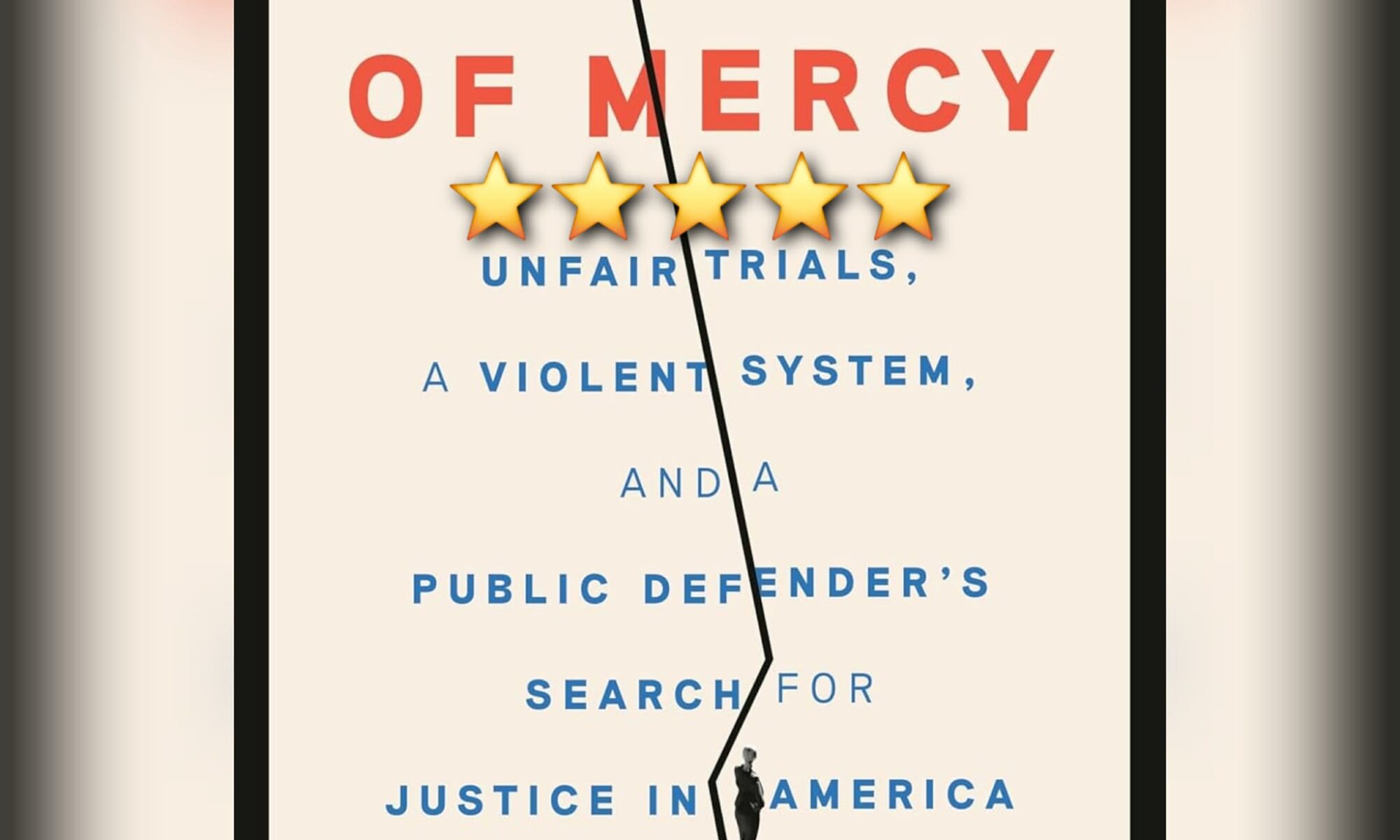
This review of The Price Of Mercy by Emily Galvin Almanza was originally written on January 19, 2026.