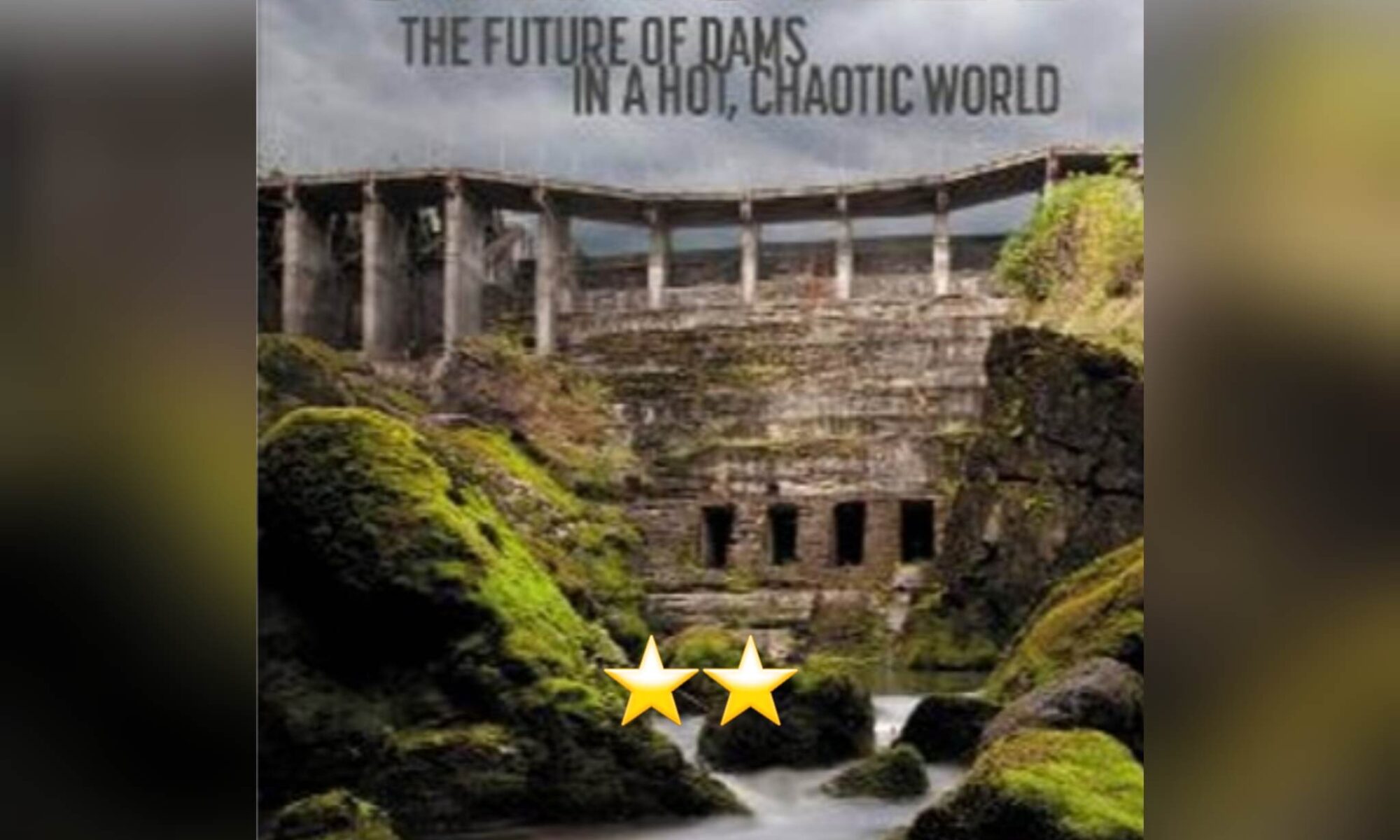
#BookReview: Cracked by Steven Hawley

Activist Polemic With Little Documentation – But The Pictures Are Stunning. Quite honestly, the description on this book as of the time I write this review roughly 10 days before publication (yes, meaning this is an advance reviewer copy with all that this entails) is quite misleading. The description makes it seem as though the reader is getting a well documented history of the history of water control and its current problems and potential solutions to those problems. Instead, this is an activist screed from the very beginning, with next to no documentation – just 7% of the text, when 20-30% is far more typical in my extensive experience.

Thus, as is very nearly always the case, one star was deducted for this lack of documentation. The second star is deducted because of the obvious slant and the strawman arguments so heavily used throughout the text. The third star is deducted for the inaccurate description provided by the publisher.

This is *a* history though, and from the activist, anti-dam perspective, a solid one in the mold of one preaching to the choir – as choirs never ask to see documentation, taking everything the preacher says on faith alone. Which is not science or journalism. 😉

And yet, the pictures provided throughout are truly stunning. Whoever took them did some truly excellent work in that space, and I can honestly recommend this book for the pictures alone. Which is why it doesn’t sink any further in the rating.

Overall a dense and blatantly biased yet still somewhat interesting read, and absolutely get this for the pictures alone. (Meaning you need a print or tablet version of this book. :D). Recommended.

This review of Cracked by Steven Hawley was originally written on April 21, 2023.

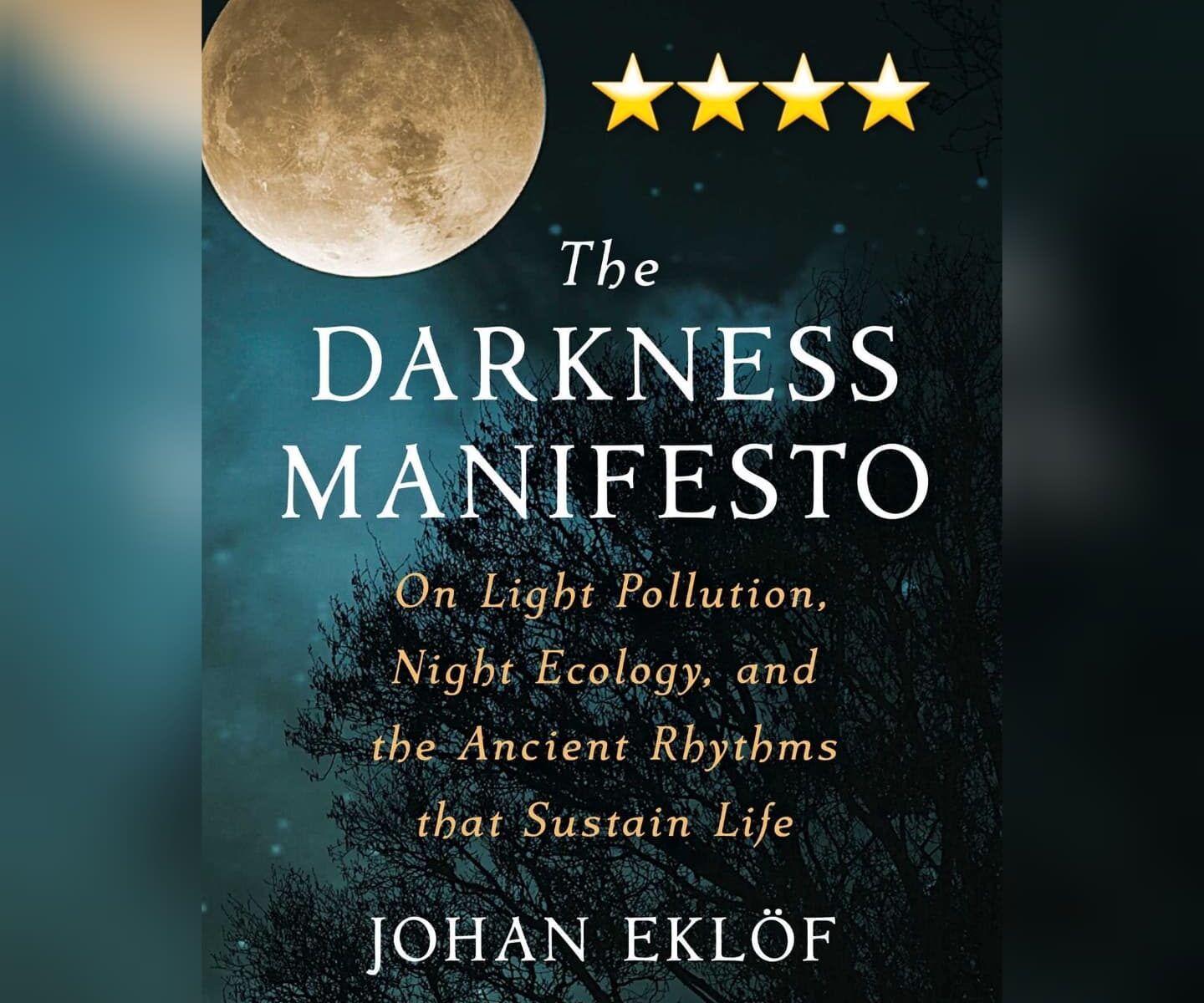
#BookReview: The Darkness Manifesto by Johan Eklof

Dark Spring. I read this book and write this review as someone who longs to see that which I’ve never seen in nearly 40 years of existence on this Earth – the Milky Way as the Ancients did. Here, Eklof makes a case as to why the light pollution that is so prevalent in so many areas of the world needs to be treated just as seriously as any other form of human-made pollution. Indeed, at least in his claims, this is as strong a book against light pollution as Rachel Carson’s Silent Spring was all those years ago.

HOWEVER, where Eklof fails a fair degree – and the reason for the star deduction here – is that while he makes a lot of strong claims, there is scant documentation of these claims – coming in at just 15% or so of the text here, when more fully documented books come in closer to 20% – 30%, and books that are particularly well documented can reach 50% or so of the overall text.

Still, as a sort of primer to these issues for those who may not be aware of them already, this is a strong book that will allow for further research after reading it. Very much recommended.

This review of The Darkness Manifesto by Johan Eklof was originally written on October 25, 2022.

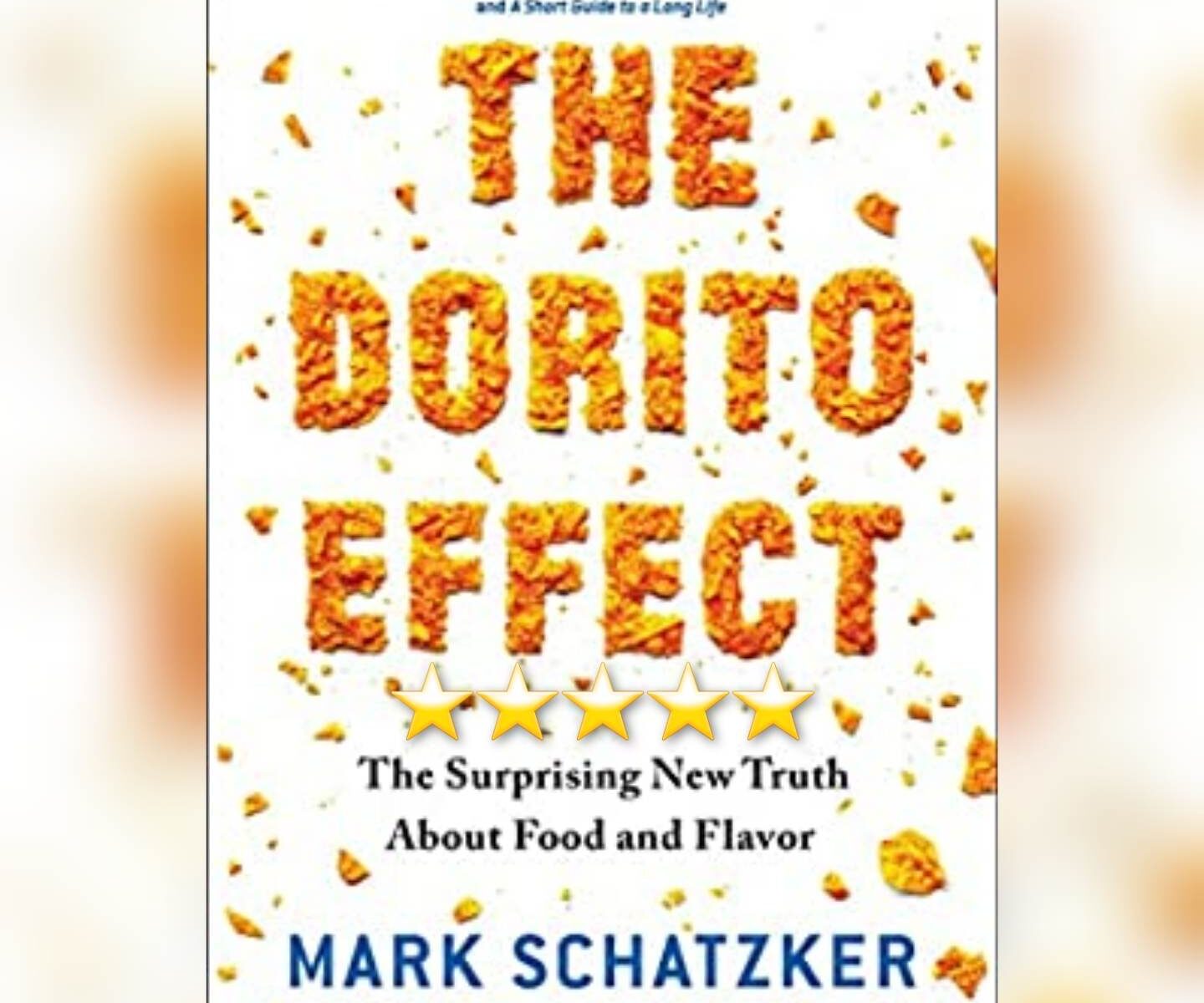
#BookReview: The Dorito Effect by Mark Schatzker

Solid Look At A Topic Few Look At – Possibly Benefits From Me Reading It In Audible Form. I’ll be upfront- this was one of my Audible books. Thus, I really have no way of knowing how extensive the bibliography is here, as Audibles never include them. And admittedly, this book *needs* an extensive one, as it makes quite a few quite remarkable claims- and remarkable claims necessitate remarkable documentation. But because I read the Audible and thus have no record of any biliiography for good or ill, I can’t base my rating on something I did not see.

What I *did* see here was a solid look at concepts most – even myself – don’t actively consider, and here Schatzker takes us on a detailed yet intriguing look behind the scenes and gets quite technical indeed… while never losing his readability (at least when having the book read to you). That alone is quite the feat for many science writers, and that he was able to pull this off so well is a mark of a stronger science writer.

Schatzker was also remarkably *balanced*, decrying Big Food and Big Ag for their efforts that led to blandness and loss of flavor over the last several decades while acknowledging that these same efforts are what has enabled humanity to continue to feed itself – and applauding these same groups’ efforts to re-introduce flavor while maintaining as much modern yields as possible. Even here though, he does note – and *arguably* seem to take a touch of glee in – the idea that flavorful, more nutritious foods will always be a few multiples more expensive than more bland, less nutritious foods. Which yes, does allow at least a potential perception of classism, though I note here that I never really felt he was being classist so much as simply a gourmand passionate about truly great food. Indeed, the final pair of chapters, structured around his efforts at a “perfect meal” of sorts, brought the entire narrative together quite well while also being quite visceral in its love of both that meal and telling the tale of it.

Overall a truly intriguing book, and one that even 8 years after initial publication, as I write this review having read this book just this month, still needs to be widely read and… digested. Very much recommended.

This review of The Dorito Effect by Mark Schatzker was originally written on January 31, 2023.

#BookReview: Where We Meet The World by Ashley Ward

Interesting, Well Written, Readable- But Needs Well-Sourced Bibliography. This book was an utterly fascinating mid-range dive into each of the human senses (even including at least one chapter on senses *other* than the “Big 5”), their biology, evolution, and overall impact on the human body and mind. It was truly well written for most anyone who can read at all to be able to understand, without too many technical or highly precise and specific terms that would require specialized knowledge. It was humorous enough to increase its readability, while still being serious about its subjects and discussions. Really the only flaw, at least in this Advance Reader Copy form, was the lack of a bibliography at all (where 20-30% is more common in my experience), and I also want to call out the inclusion of a page listing a “selected further readings to come” or some such, indicating that the final version of the book would only have a limited bibliography. To my mind, this would be a mistake, and I hope the publisher sees this with enough lead time to hopefully correct that direction before publication. This dearth of a bibliography was the sole reason for the star deduction here. Still, if nothing else changes about this book at all from the time I read it nearly three months before publication and for decades following publication, this is truly a strong book giving the reader a complete overview of the human senses as we currently understand them. Very much recommended.

This review of Where We Meet The World by Ashley Ward was originally written on January 2, 2023.

#BookReview: Worlds Without End by Chris Impey

Solid Exposition Of The Topic. There really isn’t much more to say about this particular book. If you’re interested in the future of humanity at all, particularly our future as a space faring / multi-planet species, you need to read this book. If you’re interested in the potential for finding or communicating with non-Earth lifeforms, you need to read this book. In both of these arenas, Impey does a solid job of explaining the history of the relevant sciences, where they have been recently, where they are projected to be within the next generation or so, and what it would take to actually get or communicate with… much of anywhere, really. While exoplanets – planets beyond our local solar system and even beyond our own galaxy – are the main discussion, there are some discussions of the possibilities of life beyond Earth even within our local system that are also quite realistic, even including potential timeframes for when this could happen. Wow, I’ve actually said more about this book than I thought I would. 🙂 In short, read this book and learn a thing or two. Unless you happen to be an astrophysicist specializing in exoplanets already. 😉 Very much recommended.

This review of Worlds Without End by Chris Impey was originally written on December 9, 2022.

#BookReview: Never Out Of Season by Rob Dunn

Interesting Yet Only Tangentially Related To Title. This is a book primarily about plant pathogens and the history of the study of plants and specifically their pathogens, mostly centering on the roughly 200 ish years between the beginnings of the Irish Potato Famine in the mid 19th century to the bleeding edge research being done by Dunn and other scientists in the later early 21st century. Dunn bemoans the fact that the food supply of the world basically comes down to a dozen or so key varieties of key species in the beginning… while later backdoor praising that very same thing as saving the world from certain pathogens, at least – as Dunn claims- “temporarily”. Overall the book, at least in the Audible form I consumed it in, was engaging and thought provoking, and despite being vaguely familiar with farming due to where and when I grew up, Dunn highlights quite a bit here that I was never aware of. Things that adventure authors like David Wood, Rick Chesler, or Matt Williams could use as inspiration for some of their stories – but also other real world events that could serve as inspiration to Soraya M. Lane and other WWII era historical fiction authors. Ultimately the book becomes quite a bit self-serving, highlighting work done by Dunn and his colleagues and friends in the years preceding writing the books. And yet, again at least in Audible form, there was nothing truly objective-ish wrong here to hang a star deduction on, and thus it maintains its 5* rating. Recommended.

This review of Never Out Of Season by Rob Dunn was originally written on November 28, 2022.

#BookReview: The Battle For Your Brain by Nita A Farahany

Well Documented Examination And Discussion. This book is, quite simply, one of the best documented books I’ve ever come across – 48% of the text of the ARC I read months before publication was documentation. Within the narrative itself, Farahany does a great job of using the principles espoused in John Stuart Mill’s 1859 book On Liberty as a recurring touch point on the need for liberty of the mind and brain – the last bastion of true privacy left in this increasingly interconnected world of multiple overlapping surveillance systems. Farahany does an excellent job of showing both the biological and the social side of what is happening when, and the various implications it can have for everything from criminal prosecution to employment, and many other topics as well. Written from a decidedly libertarian, pro-freedom perspective, this is absolutely a book that everyone will need to read and contemplate. Very much recommended.

This review of The Battle For Your Brain by Nita A. Farahany was originally written on October 1, 2022.

#BookReview: Force by Henry Petroski

Solid Exposition Of Applied Physics. This book truly is one of the better written, more approachable books on applied physics for the “layman” that I’ve come across. It takes most every easily observed physical force, from a simple push to gravitational to magnetic to torque and beyond, and explains the basics of the known history and science behind them all, and it does this in a very conversational and even, at times, humorous tone. Truly, a great book on the subject for those who either don’t know much or simply want an easy and lighthearted look and things they mostly already know.

The two star deductions are more of a standard form for me, and don’t actually speak to the overall nature of this book *too* harshly: The first is because of the COVID discussions in both the early and late parts of the text. *I DO NOT WANT TO READ ABOUT COVID. PERIOD.* And I am waging a one-man war against the topic everywhere I encounter it in booklandia. The single star deduction is really the only weapon I have in this war, so it is used where applicable. The other deduction is the short-ish bibliography, clocking in at just 14% of the text here when 20-30% is more normal of such texts in my experiences.

Ultimately this really was a great and engaging look at its topic, and it is very much recommended.

This review of Force by Henry Petroski was originally written on September 11, 2022.

#BookReview: Life Time by Russell Foster

Approachable Combination Of Science And Self-Help. This book is exactly what I said in the title – an approachable combination of the hard science (explained in such a way that anyone with a roughly high school education should be able to follow along reasonably well enough) and practical self-help type recommendations showing just how much sleep and the circadian rhythm affect virtually everything about the human mind and body, even down to things we may not associate with them such as cardiovascular troubles or the effectiveness of cancer treatments. It doesn’t hurt that includes one of my favorite short jokes at the beginning of one of the chapters as well. 🙂 Clocking in at around 29% bibliography, the narrative here uses a sequential numbering system for its footnotes that I distinctly remember was at least approaching – and may have surpassed – 600 individual citations. It also has an almost “FAQ” section at the end of each chapter, briefly answering common questions the author has encountered about the ideas discussed in that specific chapter. An excellent book for anyone seeking information about this topic, particularly those who may have questions about how sleep and circadian rhythms could potentially be affecting their own health. Very much recommended.

This review of Life Time by Russell Foster was originally written on August 28, 2022.

Featured New Release Of The Week: Extremophile by Rick Chesler

This week we’re looking at arguably the closest Rick Chesler has come to date of telling a tale one would nearly swear could have been written by the late great Michael Crichton. This week, we’re looking at Extremophile by Rick Chesler.

Here’s what I had to say on Goodreads:

Welcome To Our Ool. Notice There Is No “P” In It. Seriously though, after reading this book you’re never going to look at getting into a pool the same again – and certainly will be particularly careful about any sudden urges to just urinate in one. 😉 Overall a very fun, nearly Crichton-esque, adventure tale of a biotech CEO desperate to save his company and willing to go literally anywhere in the world to do so. And that ending. It won’t be for everyone, but dayum I loved it. Great, fun near future scifi adventure and a relatively short read at 230 ish pages. Perfect for a bit of summer thrills and escapism. Very much recommended.