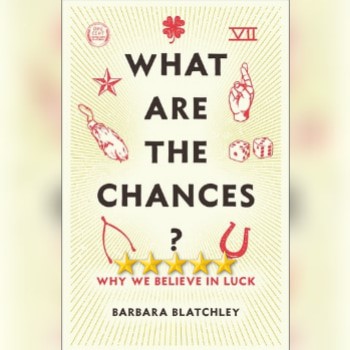
#BookReview: What Are The Chances by Barbara Blatchley

The Chances Are Good That This Is A Solid Book. Blatchley does an excellent job of looking at the various reasons why we believe in luck, from the societal to the social to the psychological and even the biological. And she does it with enough precision to do justice to the mathematics involved, but with enough generality to be enjoyable to a non-mathematics-oriented public. Overall an excellent “popular science” level look at the subject at hand, and very much recommended.

This review of What Are The Chances by Barbara Blatchley was originally written on March 10, 2021.

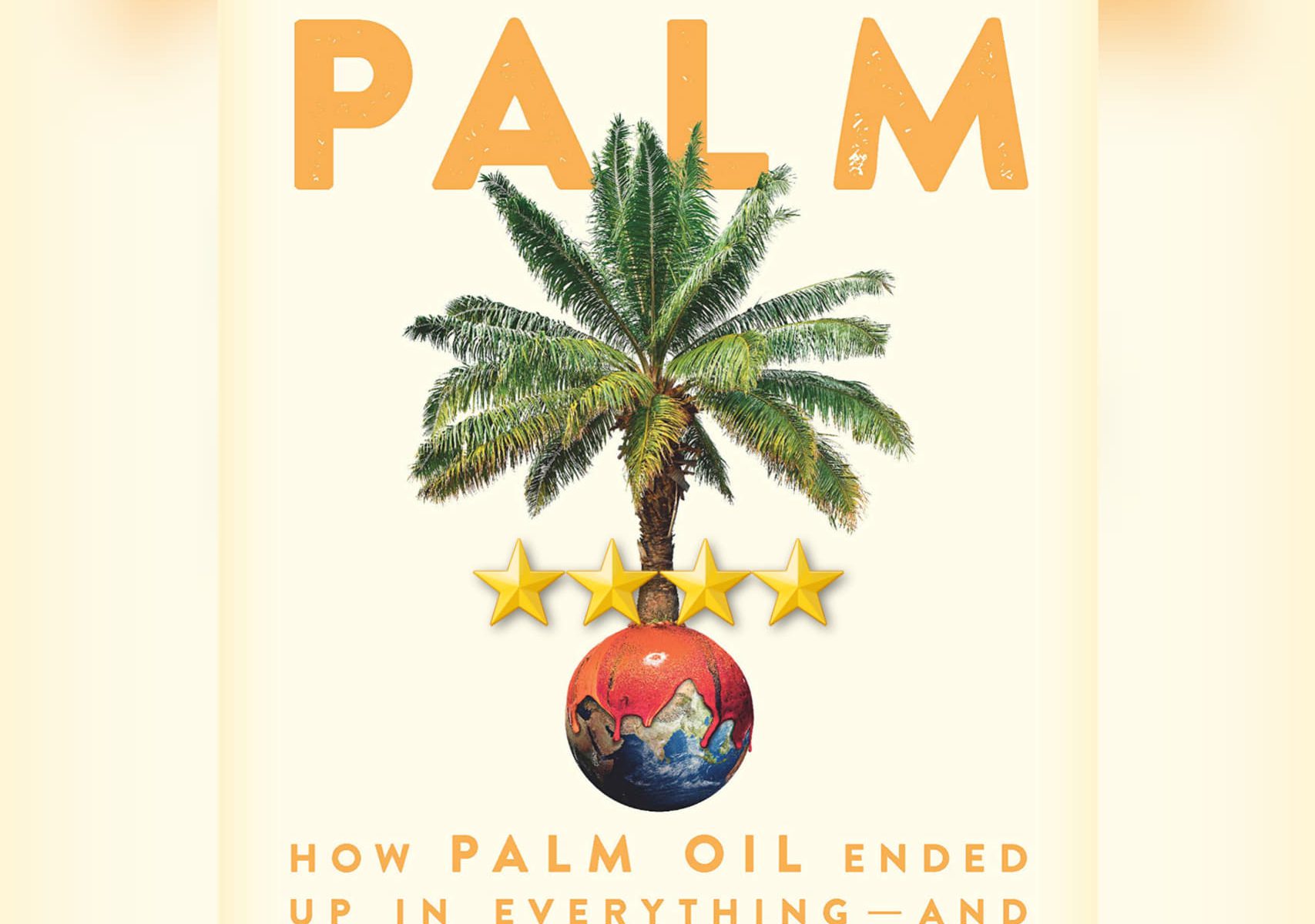
#BookReview: Planet Palm by Jocelyn C Zuckerman

Eye Opening, Yet Problematic Itself. This is a well documented work – roughly 30% of the text was bibliography, even if much of it wasn’t actually referenced in the text of the advance reader copy I read. (Perhaps that will be corrected before actual publication, so if you’re reading a fully published version circa June 2021 or later, please comment and let me know. :D) It does a tremendous job of showing the development of palm oil from regional subsistence level agriculture to today’s modern arguably Big Palm level industry, and how it spread from regional staple to in seemingly every home in the “developed” world, at minimum. It is here that the book is truly eye opening, and truly shows some areas that perhaps still need some work.

HOWEVER, the book also often lauds communists and eco-terrorists, among other less than savory characters, for the “efforts” to “combat” this scourge – and this is something that is both pervasive throughout the text and a bit heavy handed, particularly when praising a team of Greenpeace pirates who tried to illegally board a cargo ship a few years ago.

Still, even with the aforementioned pervasive praise of people who arguably truly shouldn’t be, the fact that the text does such a solid job of explaining the various issues and histories at hand alone merits its consideration. Recommended.

This review of Planet Palm by Jocelyn C Zuckerman was originally written on March 7, 2021.

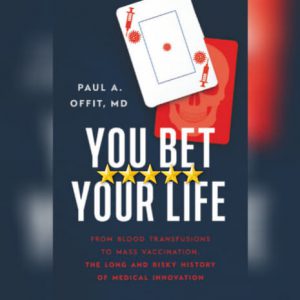
#BookReview: You Bet Your Life by Paul A Offit

Startling Look At (Mostly Relatively Recent) Medical History. I consider myself a fairly well-read guy who is fairly knowledgeable about a *very* wide range of topics. Here, Offit shares stories of medical breakthroughs – including several which are now literally every day occurrences – and how the initial days of these breakthroughs weren’t always so routine. Indeed, many of the stories Offit shares about these breakthroughs – some of which were still being litigated within the last decade – are quite horrific, both from the practitioners really not understanding what they were doing and in some cases when they *did* know what they were doing – and did it anyway. Including one tale in particular about the (now) famous Jonas Salk himself that was quite disturbing to read. In the end, the book does exactly what it sets out to do – shows that there is always inherent risk in any medical procedure, particularly novel ones, and that often times it is those whose lives will be cut short with or without the procedure that take the risks that ultimately reduce those risks for later people and indeed enhance the lives of people they will never know many years down the line. And yes, all of this is wrapped around the current debate over the COVID-19 vaccines – though while these are discussed, they are not actually a core component of the text itself. The discussion here is current circa early November 2020 and is slightly outdated even as I read the text in early February 2021 – and certainly will have advanced even further by the time of the book’s actual publication in mid September 2021. Ultimately a truly fascinating read that is equally disturbing and enlightening, this book is very much recommended.

This review of You Bet Your Life by Paul A Offit was originally written on February 8, 2021.

#BookReview: Animal Vegetable Junk by Mark Bittman

Mostly Junk, Barely Any Meat. This anti-capitalist, anti-European, anti-agriculture screed is little more than a run down of a leftist view of world history (with concentrations in the post-Industrial Revolution world) as it relates to food . It often points to old and out-dated research in support of its claims, and its bibliography is both scant – barely 1/3 the size of similar nonfiction titles – and not cited in the text at all. (Instead, it uses a system of referring to a particular phrase on a particular page number inside the bibliography itself, rather than having a notation in the text of the narrative. Which is obfuscation intended to hide the text’s lack of scholarly merit, clearly.) For those who know no better, it perhaps offers an argument that will at least confirm their own biases. But for anyone who has studied any of the several areas it touches in any depth at all, its analysis is flawed due to the very premises it originates from. All of this to say, this is a very sad thing. Based on the description of the book, I genuinely had high hopes for it, as food and its history and future is something that truly fascinates me and this could have been a remarkable text. Instead, it is remarkable only for how laughable it is. Not recommended.

This review of Animal Vegetable Junk by Mark Bittman was originally written on October 15, 2020.

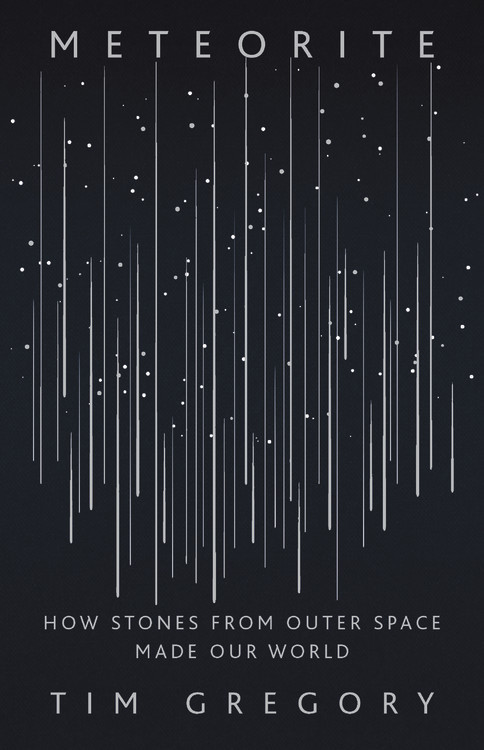
Featured New Release Of The Week: Meteorite by Tim Gregory

This week we’re looking at a science book that turns out to be both poetic and a page turner. This week, we’re looking at Meteorite by Tim Gregory.

I’ve read a lot of books in my lifetime, and over the last couple of years in particular. I’ve read light and airy books. I’ve read dense academic tomes. I’ve read even more dense philosophical treatises. But I don’t think I’ve ever encountered a book quite like this one, where the author not only truly knows his stuff, but presents it so understandably and even poetically. Here, in this book ostensibly about space rocks, Gregory manages to inform the reader of the basis of all of astrophysics and how astrophysics lead to chemistry – both organic and inorganic – as we know it. Indeed, echoing a comment I made below in the Goodreads review because it is that astounding, I learned more about chemistry from reading this book than I ever did in my high school chemistry class. (Though in my high school’s defense – to a degree – I did a weird one semester “combined” chemistry and physics class and got the credit for both.)

This was simply an excellent book all around, and a great one to read if you’re leery about science books but at least willing to *try* them. Gregory will treat you well here, and you’ll learn a lot to boot. 🙂

As always, the Goodreads review:
Continue reading “Featured New Release Of The Week: Meteorite by Tim Gregory”

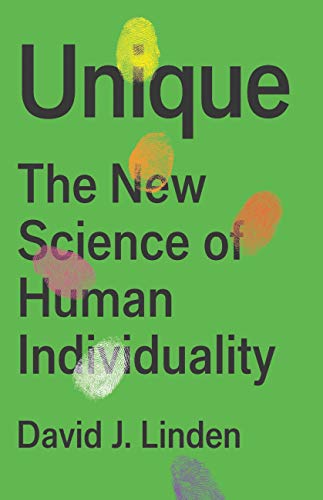
Featured New Release Of The Week: Unique by David Linden

This week we’re looking at one of the most precise science books I’ve encountered this year. This week, we’re looking at Unique by David Linden.

Given the topics Linden discusses here – among them sex, gender, sexuality, race, experience, even memory and sense – it is incredibly easy, maybe even tempting, for many authors of science books to wax at least somewhat political even while discussing the science of a given topic. Indeed, many do.

Linden does not, and that is one of the greatest strengths of this book.

Instead, Linden focuses *exactly* on where the science of the issue currently is, and says it with a fair degree of specificity. Such as instead of saying “many”, he’ll say “30%” – even if the exact number may be 27.84% or 32.16%, “30%” is close enough for those of us just trying for a general understanding of the topic at hand, and far more precise than many authors will give. Further, if the science is changing or inconclusive on a given topic, Linden notes this as well, at times even clearly noting where he himself has reviewed the research at hand.

Ultimately, the book does a truly remarkable job of explaining what we currently know about the science of human variance and how all of these combinations form to make an individual… well, an individual. Truly a remarkable read, and one that many would do well to read. 🙂 Very much recommended.

As always, the Goodreads/ BookBub review:
Continue reading “Featured New Release Of The Week: Unique by David Linden”

#BookReview: Plastic Free by Rebecca Prince-Ruiz

Strong Start, Your Mileage May Vary On Ending. I gotta admit, as an American I’d never heard of Plastic Free July before seeing this book on NetGalley. (And yes, since I am writing this review on July 21, 2020 – the day after it hit NetGalley – and it doesn’t publish until December 8, 2020, this is certainly an Advance Review Copy, with all of the things that generally entails.) But the description of how Prince-Ruiz started the organization sounded promising. And the text of the book, for the first half – two thirds or so, showed exactly that promise. Someone deciding independently to choose to do something that could make a difference and work to convince her friends and family to do the same… in the age of social media. The back part of the book, where the organization shifts from voluntary action to political action – which is ultimately *always* at the point of a sword (in Ye Olden Times) or gun (in the modern era) – is more problematic and is where the book will likely be seen as much more divisive. I try to keep my own politics out of my reviews to as much a degree as possible, so I’ll simply note that through this section the voluntary actions the author describes are commendable, and I’ve actually supported a few of them myself, but the less-than-voluntary actions… any time politics gets involved, you invite problems. Ultimately a great look at various things we all can and arguably should do, marred by its descent into politics. Recommended.

This review of Plastic Free by Rebecca Prince-Ruiz was originally written on July 21, 2020.

#BookReview: Every Life Is On Fire by Jeremy England

Prooftexting In A Science Book? This was a first- prooftexting, the technique of taking random Bible verses out of context to “prove” a point, in a science book. Here, Dr. England looks at the origins of life from a physicist’s perspective… while using the life of Moses (he of the “Pharoah, Let My People Go” fame) as the overarcing narrative. One of the more prosaic, academic oriented science books I’ve read this year, Dr. England does a decent job of explaining high order thermodynamics – literally a form of rocket science – in an easy-ish way for most to understand. He simply does it in a way that is on the harder side of the actual reading experience from other science books I’ve read over the last year or two in particular. Truly fascinating stuff though, and very illuminating on the physics side of things, particularly as they relate to the future of “smart” polymers – which is not a subject Dr. England directly addresses here. Very much recommended.

This review of Every Life Is On Fire by Jeremy England was originally written on July 20, 2020.

#BookReview: The Next Great Migration by Sonia Shah

Interesting and Applicable. This is a truly remarkable work that traces the sociological and biological impetuses for and restrictions on migration at levels from the individual through the species. Shah does a superb job of combining history and science to make her case, and even impeaches at least a few organizations currently in the headlines along the way – even while clearly having no way of knowing that she was doing so, as the book was written before they became so prominent more recently. Spanning from the guy that developed the modern taxonomic system through late breaking issues with the Trump Presidency, Shah shows a true depth to her research and builds a largely compelling case. Very much recommended.

This review of The Next Great Migration by Sonia Shah was originally written on April 10, 2020.

Featured New Release of the Week: Cat Tale by Craig Pittman

This week, we’re looking at a wild and maddening tale of the fight to save the Florida Panther. This week, we’re looking at Cat Tale by Craig Pittman.

This was a tragic story of how humans actively brought a particular sub-species to the brink of extinction, how human involvement and greed kept the sub-species at that point until it was too late to come back without dramatic human intervention, and how even that intervention nearly didn’t work due to human politics. It is yet another tale that will turn a person into an anarchist, as it shows just how inept and even corrupt government is at all levels. The narrative mostly focuses on the last 50 years or so, and indeed includes data up through 2018.

But the style of the narrative is forthright and even funny, with puns and other humor rampant, including one pun that apparently the author’s wife thought of. Overall simply a well told, compelling tale, and it is thus very much recommended.

Continue reading “Featured New Release of the Week: Cat Tale by Craig Pittman”