C.S. Lewis Warned Us About This. C.S. Lewis wrote in 1949 that “Of all tyrannies, a tyranny sincerely exercised for the good of its victims may be the most oppressive. It would be better to live under robber barons than under omnipotent moral busybodies. The robber baron’s cruelty may sometimes sleep, his cupidity may at some point be satiated; but those who torment us for our own good will torment us without end for they do so with the approval of their own conscience.” Here, we have an entire book of exactly that kind of elitist, disdainful tyranny.
Larson openly admits to being a thief in several instances within this text. Her own actions as documented within this text show her to be a hypocrite. She actively denies objective reality in claiming that FDR’s support of unionism was a good thing, when it actually and objectively extended the Great Depression nearly twice as long as it would have gone without FDR’s price-fixing policies, including his support of unions.
And yet she is *absolutely sure* she knows *exactly* what would help the very people she had to lower herself to be around because she had no other choice and had to find any possible work available to her. Truly, this is the worst part of this entire narrative, is Larson’s elitist disdain for everything and everyone around her that is positively *dripping* from these pages. She alone knows what will save these people, and she alone will force them to accept her help whether they want her involvement or not.
I’ve worked in a supermarket myself – apparently longer than Larson did, as I worked there for 2? 3? yrs at the border of HS and college, though I do admit that this was 20 yrs before Larson did and in fact was at the time one of the supermarkets best known for its customer service – a culture of customer service that was deeply ingrained in my psyche and has served me well in all professional ventures both paid and not ever since. I was a bagger at Publix back when Publix was still expanding through North Ga – indeed, my own mom had worked at another Publix store closer to Atlanta before helping open the store in my hometown, which I then worked for (under her same store manager even) a couple of years later. Interestingly, while Larson covers a bit of rival Piggly Wiggly’s history, she never once mentions Publix – despite Publix actually originating in part from Piggly Wiggly. (Publix’s founder, George Jenkins, had rapidly risen through the ranks at Piggly Wiggly before starting out on his own as the Depression was still worsening, and in fact a few of his former colleagues at Piggly Wiggly were among his very first investors.) Now, don’t get me wrong -Publix of the 2020s is doing several things “Mr. George” is very likely rolling in his grave enough to be a pretty decent fan in this Florida heat, and even then, shortly after his death, was already likely doing some things he didn’t exactly like. But the culture of absolute commitment to the highest customer service was still a thing then, and in fact prevented at least some of the issues that Larson writes about in this book. (Cart collection in particular. Was never a problem back then, because baggers were required to walk every cart out with the customer and bring it back – and were prevented upon pain of summary termination from accepting any tip for doing so. Which actually led to a fun story of my own actions in this era, where I literally chased down a car. Granted, it was in the parking lot – but it *was* moving, and I *was* able to run it down before it got to the road. They/ I had forgotten one of their bags at the cash register, and I was able to get it to them. Nearly 30 years later, I couldn’t move half as fast if I wanted to. 😉 )
If your politics align more closely with Larson’s – who claims to be one of the activists who was leading the charge for Federal student loan “forgiveness” in shifting the burden of repaying loans students voluntarily took out to every American taxpayer and thereby both raising prices for everyone and lowering their relative income via inflation – you will probably enjoy this book a lot more than I did. It still is far from a Secret Life of Groceries by Benjamin Lorr, which was a genuinely insightful look at grocery stores and how their modern incarnations came to be, but this text may in fact be something you enjoy, and it will absolutely confirm your own biases. For those more along my own lines – I literally have a tattoo of one of the subheadings within Atlas Shrugged by Ayn Rand tattooed on one of the wrists I’m using to type this review – I think I’ve made it clear here that this is a book you will more likely want to defenestrate… and really, there’s nothing actually here worth reading beyond seeing some experiences as a grocery store worker during the insanity of the global societal collapse over COVID.
And that is actually the final star deduction here – the intense (and not mentioned in the description) look at COVID. Even now these 5+ yrs later, it is a subject I do not care to read about. Ever. I’ve had a standing one star deduction for books that mention it at all ever since, and while I’ve relaxed it for passing mentions, this book uses it quite heavily and therefore still gets the deduction.
So, just to be explicit within my own rating framework, let’s make sure we detail each star deduction, shall we:
-1 star for elitism. I cannot stress enough how very *dripping* this text is with “I’m better than everyone around me, why don’t they know this?”
-1 star for open hypocrisy – even while praising unions and actively proclaiming that this store needed one, Larson also actively shows where a union would have done (as they always do in this modern era) exactly jack and shit to actually help these workers in this store.
-1 star for openly admitting to actively stealing from her own employer. I mean, kudos for the balls to openly admit something that is at least possibly still within any relevant statute of limitations. I’m not a lawyer at all, but I sincerely hope you had one for your jurisdiction read every word presented here. Even if legally “cleared” though, this is still a moral failing that should be resoundingly condemned.
-1 star for heavy and undisclosed discussion of COVID. This one may be the most ticky-tacky star deduction of the lot, but hell, I’m fairly certain I’ll have more people agreeing with me on this deduction than any other.
Not recommended.
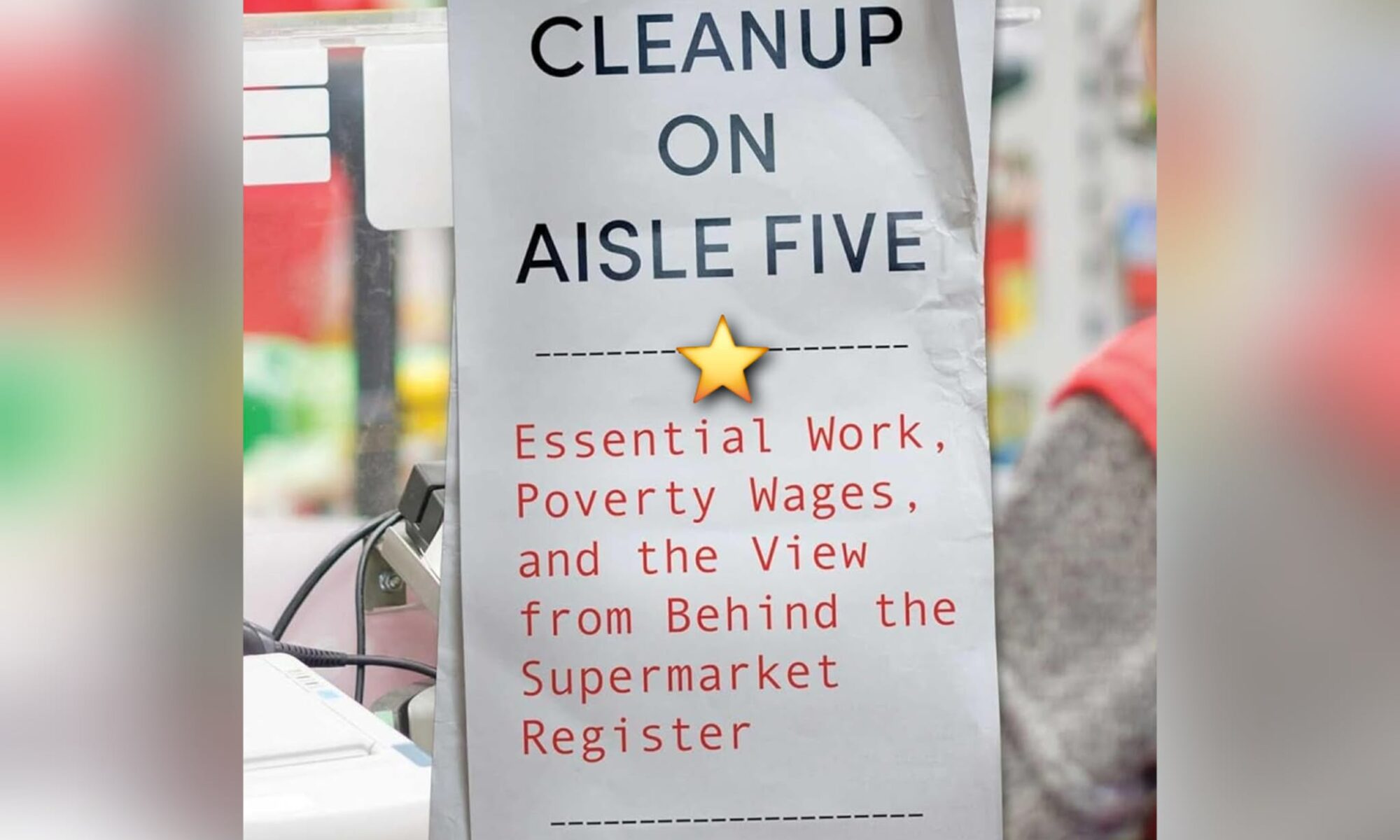
This review of Cleanup On Aisle Five by Ann Larson was originally written on June 4, 2026.