#BookReview: Chamber Divers by Rachel Lance

Reads Almost Like Fiction – And Should Give Soraya M. Lane Inspiration For A Future Novel. First, this is one of the better researched books I’ve come across in all of my Advance Review Copy reading efforts – over 1100 books since 2018 – at 45% documentation. Kudos to Lance for being so thorough there.

And she needs it – because this is one of the more fantastical nonfiction books you’re ever going to come across. A brother and sister experimenting on themselves – as their father, who also experimented on himself *even with chlorine gas*, had trained them to do – gathering a team of like minded scientists to push the limits of the human condition under extreme environments, later in a direct race to help save their country from annihilation.

Before Jacques Cousteau developed SCUBA, there were the scientists working to discover what, exactly, humans could survive under water. What, exactly, happened as the human body was compressed to ever higher pressures? What happened as that pressure was relaxed – either suddenly or gradually? How could we allow humans to survive at ever increasing pressures, and what, exactly, were the limits?

And then… Normandy.

It had already been tried once, and failed miserably – because the soldiers didn’t have the data these very scientists were racing to obtain. Could they get it in time for the next invasion attempt?

They could… and they would change the face of warfare (and, to be honest, some entertainment and other scientific pursuits) forever when they did.

This is their story, told for seemingly the very first time.

Very much recommended. And please tag Soraya Lane and beg her to bring this story to actual fiction.

This review of Chamber Divers by Rachel Lance was originally written on April 10, 2024.

#BookReview: I Will Tell No War Stories by Howard Mansfield

Father. Grandfather. Farmer. Engineer. Clerk. WWII Badass. Wait. What? While this book focuses more on the air war over Britain and Europe, it does in fact get to the heart of what so many of us born in the post WWII era have only been learning over the last 20-30 yrs or so: Our fathers (in the case of Boomers/ maybe Gen Xers) or grandfathers (for Millenials and Zoomers) that we knew as just that (+ whatever occupation they may have had as we knew them) had experiences during WWII that most of the rest of us can never imagine. For Mansfield’s dad and his dad’s fellow Airmen, Mansfield does a fairly thorough job of combining the personal and the global, of showing both where his dad was and when and also what was going on in the overall war effort – at least as it related to the air war over Europe and what the fliers encountered up there.

Personally, as the grandson of a pair of Infantrymen who both survived the Battle of the Bulge (and one of whom became a legit hero during its mop-up, earning a Silver Star and Purple Heart, while the other became one of the first to liberate the concentration camps on the American side of the war), I was hoping for more of a general look at this entire phenomena, of our fathers and grandfathers choosing to remain silent about their experiences during this pivotal time in human history, rather than the far more personal and specific look we get here – but that is more my own fault than the author’s. My own pre-conceptions and desires, rather than any fault of the author’s motivations or writing skills.

Indeed, the only actual fault vis a vis the writing itself is the dearth of a bibliography, despite the author clearly doing quite a bit of research. So that was the star deduction right there, simply for that. Beyond the lack of bibliography though, this really was an excellent look at the Air War in the European Theater as it was felt by the people flying as crew in the bombers themselves.

Truly an excellent book anyone remotely interested in that era and in particular that facet of that era will very much enjoy and may find quite informative. Very much recommended.

This review of I Will Tell No War Stories by Howard Mansfield was originally written on April 4, 2024.

#BookReview: The Berlin Sisters by Soraya M. Lane

Soraya Lane Goes *There*. Particularly in the current era of American politics, with “both” sides (rightfully, in certain aspects) comparing each other to the Third Reich, I don’t think you’re going to find an American author with the balls to take a high ranking Nazi official’s family – in Joseph Goebbel’s inner circle, no less! – and make them a sympathetic and even heroic unit.

Enter New Zealander Soraya M. Lane.

Lane, whose last WWII historical novel – The Secret Midwife – tackled the horrors of Auschwitz directly, now takes an entirely different tack and places us in the political intrigue of 1944 Berlin, when the only Jews left in the city were in hiding and SS officials – along with their Fuhrer – were becoming ever more suspicious of everyone. When the White Rose was openly defying the Reich and Sophie Scholl and others paid the ultimate price for this defiance – an event that is discussed among our characters here. When other resisters inside Germany were actively looking for – and ultimately attempting an ill-fated attempt at – a way to assassinate the very Fuhrer in question and attempt to restore some degree of sanity to their government. An event that plays directly into the story here.

The story here, with the real world knowledge of what was going on and what was to come, is so tense you would need a space laser to cut through it – and Lane manages to ratchet the tension up so high that you’re going to be afraid of giving yourself a heart attack reading this tale.

Yet ultimately this *is* a tale of hope and survival. That even in the darkest, most desperate times, when survival for anyone is in doubt and the smallest misstep could get you and everyone you know or who knows of you at all killed, there are still those willing to take those risks to do what is right. That no matter how evil a group may be, this does not mean that every single member of that group is equally evil. That no matter how vile you think someone is because of some aspect you’ve been taught to believe about what you think they believe, there are still those within that out group that are truly *noble* and truly trying to do the right thing, even in the most difficult of circumstances.

Indeed, with all of the fighting in America today noted at the top of this review, this may be one of the more interesting and essential fictional tales for Americans to read leading into the 2024 Presidential election that will be in a period of less activity when this book releases in mid May.

Truly one of Lane’s strongest works to date, and very much recommended.

This review of The Berlin Sisters by Soraya M. Lane was originally written on March 9, 2024.

#BlogTour: The Last Day In Paris by Suzanne Kelman

For this blog tour, we’re looking at one of those WWII Paris tales that is familiar in that it has been done so often before, yet also very tense and very real because this particular entry into that space is done so well. For this blog tour, we’re looking at The Last Day In Paris by Suzanne Kelman.

Here’s what I had to say on the review sites (TheStoryGraph, BookHype, Goodreads):

Tense Yet All Too Real. “Book 0” of this series, The Paris Orphans, does a much better job of setting up the overall series than this particular book does – and yet this particular book actually does a far better job of showing what we’re in for with the rest of the series. Here, we get an all too real world in both WWII era Paris and 2010s era England. Yes, this is a dual timeline, and yes there are the usual linkages there. There are also multiple character perspectives, but both timelines and perspectives are switched well. The tension throughout both timelines, though wildly divergent (and appropriate for the given timeline) is done quite well, with brief moments of reprieve sprinkled throughout the story before the tension is ratcheted up even higher. The setup for Book 2 is sprinkled in later in the text here, but the Epilogue is essentially a stinger to make you want to pre-order Book 2 immediately. (Which I don’t even think is possible as I write this review on release day.)

Overall a solid tale of its type, with an intriguing twist of the idea of having s linked series of sisters and their tales during the war (along with, presumably, a post-war dual timeline of some form). Very much recommended.

After the jump, an excerpt from the book followed by the “publisher details” – book description, author bio, and social media and buy links.
Continue reading “#BlogTour: The Last Day In Paris by Suzanne Kelman”

#BookReview: The Paris Orphans by Suzanne Kelman

Short Story Effectively Sets Up Larger Series. This is one of those series introduction novella/ short story kind of tales where there is a touch of a semblance of a plot, but the larger target is introducing the world and the major players of the overall series. The ending is a bit abrupt and clearly designed to be picked back up at some later point in the series, but the larger emphasis is truly on establishing that there are several different sisters each with distinct interests and each hoping to be able to use those interests in particular ways in this particular setting.

Having now also read Book 1, The Last Day In Paris, it becomes clear that this particular tale isn’t *as* critical, yet that one *does* have aspects that are revealed in this tale that would be missed if this tale is missed.

Overall a quick introduction to an intriguing series, and a fairly quick read to boot. Very much recommended.

This review of The Paris Orphans by Suzanne Kelman was originally written on March 1, 2024.

#BookReview: When We Were Enemies by Emily Bleeker

Strong Growth All Around. While this book is no WRECKAGE – Bleeker’s debut that was also her most gut-wrenching to date – as someone recently said on social media, authors have an entire lifetime to craft a debut novel – and then the lucky ones are expected to crank out a new one every year thereafter (or even more often).

Here, Bleeker actually shows remarkable growth in her writing even from her previous, also dual-timeline, tale. While yes, her direct family still plays a role in even this tale (which I suspected while reading certain parts of this tale, and Bleeker confirms in the author’s note), here it is a bit more oblique, with lots of extra research thrown in. And speaking of the research – Bleeker manages to bring forth both the era of the book remarkably well *and* the particulars of a particular section of WWII that most outside of the town Bleeker set this tale in are likely unaware of. Specifically, the treatment of Italian POWs in prison camps within the US prior to Italy’s defeat and switching sides late in WWII. In both her treatment of these characters and in her detailed view of the world they live in, Bleeker shows here that she can do full historical fiction with the best in that space – and combined with her sense of drama, arguably better than many within it.

But Bleeker’s growth as a storyteller isn’t the only story here – indeed, it is more of an “long timer” view that even really allows one to see that particular story. No, the actual story here shows remarkable growth within two key characters the book uses as its endpoints – grandmother Vivian in 1943 (when my own eldest uncle was born, adding a touch of the truly “real” for this particular reader) and granddaughter Elsie in more present-day times. Both live fully in their worlds with all of their relevant struggles, but both show how those struggles can be overcome – and how essential friends are, no matter the period you find yourself living in.

Overall truly a remarkable work, and a truly easy Amazon First Reads selection, for those so inclined to participate in that program. Very much recommended.

This review of When We Were Enemies by Emily Bleeker was originally written on November 1, 2023.

#BookReview: The Golden Gate by Amy Chua

More Noir Than Thriller. This is a *great* detective story set in pre-D-Day 1944 San Francisco that truly reads as more of a noir than an actual thriller. There is quite a bit of mystery and intrigue, but very few murders or even action sequences and really a rather lot of mind games and misdirection. So while it has bone-chilling moments, I really wouldn’t market this thing as a “thriller”. Beyond that, though, truly a superb book that combines history that many likely didn’t know (I know *I* didn’t, and American History is one of my stronger non-degree-oriented knowledge sets) with a *just* real enough story that you could believe it could have actually happened, if you were not 100% aware as you’re reading it that it is, in fact, historical fiction. Thus, it actually ranks as one of the *stronger* historical fiction tales around – and particularly noteworthy for a debut (in fiction anyway) author. While there is an element of “white guy bad” here, there is also a crucial *good* white guy, which brings enough of a balance to avoid any allegations of *blatant* racism, even as both the story itself and the author’s note at the back reveal that there is quite a bit of anti-white animus animating the story. But as this is primarily a story of non-white characters and their struggles during the Japanese Internment Camp era of US History, along with a dose of international intrigue with the addition of several more non-white characters from another prominent region outside of the US but significant during the era (and since), it isn’t so truly blatant or pervasive as to really mar the story at all. Indeed, it is only after finishing the book, and particularly while reading the author’s note, that the anti-white sentiment is *really* noticeable. So yet again, kudos for hiding in plain site with that one. Overall, this is truly a rather strong (fiction) debut, and it will be interesting to see what the author can do in this space with any sophomore effort. Very much recommended.

This review of The Golden Gate by Amy Chua was originally written on October 5, 2023.

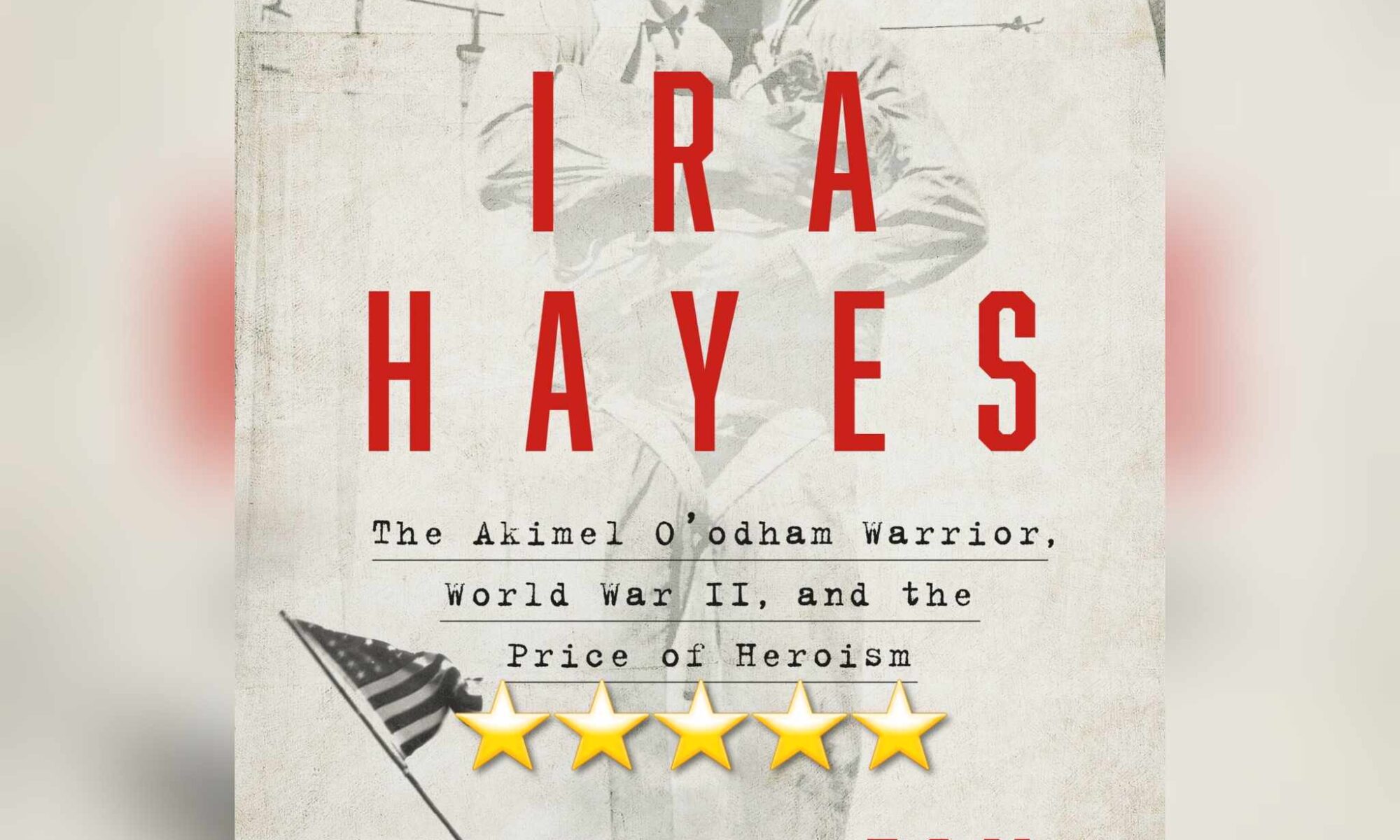
#BookReview: Ira Hayes by Tom Holm

Johnny Cash Was (At Least Partly) Wrong! Admittedly, the title of this review is mostly click-bait. But it *is* an accurate summary of this text – and yes, the text does at least briefly examine the song itself as well. Holm does a remarkable job of showing the history that created Ira Hayes, one of the six men immortalized forever in “The Photograph” of the American flag raising at Mt. Suribachi on Iwo Jima during the WWII battle which became the basis of so many memorials… including a not-small one in Washington, DC. As with the better history books, Holm shows the relevant histories that lead into the famous events at hand- and the biography and histories of the fallout of the events, including the various impacts to both the man Ira Hayes and the cultural icon/ touchstone Ira Hayes. Yes, including the various movies, the various incarnations of The Ballad of Ira Hayes (including the Man in Black’s), and even discussing the book The Flags of Our Fathers and its movie incarnation as well. At 22% documentation, it is reasonably well documented, and there are no overly startling revelations here – though there is perhaps much new knowledge, depending on one’s own knowledge set when coming into this book. For example, the histories of the Akimel and Apache wars and interactions, and even how they waged war (both the weapons involved and the tactics and ceremonies) was new knowledge to me – and utterly fascinating.

Overall a well told and well examined history with no obvious flaws or even any overt political diatribes, this is a book that anyone interested in a more complete tale of Ira Hayes will enjoy. Very much recommended.

This review of Ira Hayes by Tom Holm was originally written on July 28, 2023.

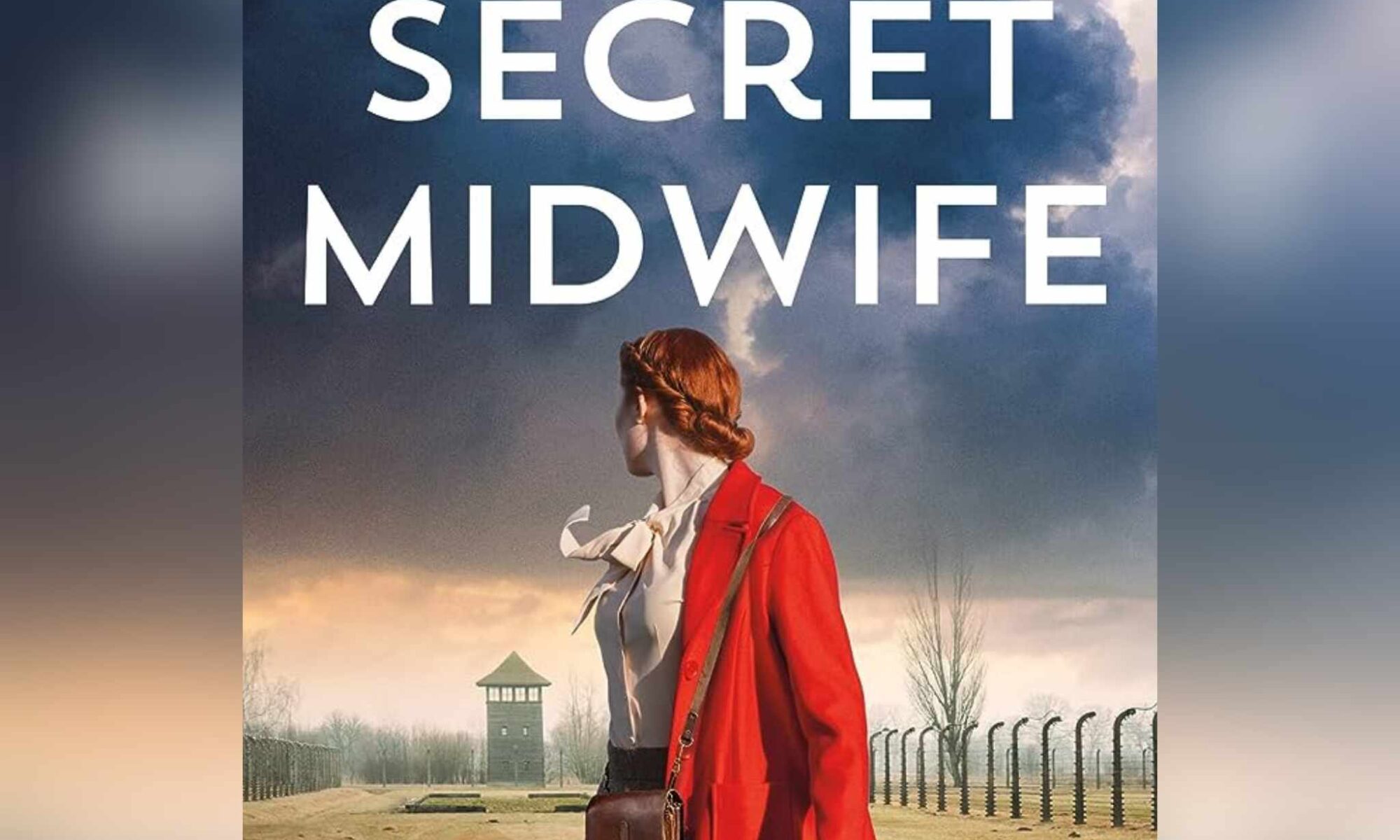
#BookReview: The Secret Midwife by Soraya M. Lane

Soraya Lane Takes On Auschwitz. How can you be a historical fiction writer who mostly focuses on the European theater of WWII… and *not*, at some point, do a story about Auschwitz? Well, the answer here is… you can’t, and this is Lane’s take on it.

Now, how can you be an amateur historian, with large amounts of knowledge about large amounts of things – and familial ties to the liberation of concentration camps during WWII to boot – and *want* to read a story about Auschwitz, knowing all too well the very real horrors there, among the worst humanity has ever inflicted upon humanity? (Arguably worse than the Imperial Japanese military’s Unit 731 in overall scale, though it seems that Unit 731 may have been even more horrific – if such a thing is possible.) My answer is… I didn’t and don’t, but I’ve read many of Lane’s books and trust *her*.

As it turns out, my trust is well placed. Lane manages to craft an Auschwitz tale that never shirks from discussing the horrors of that facility – while never showing them in brutal, sadistic detail the way an author with a more horror-genre nature might. Instead, Lane takes a page from Titanic (and a school assignment I once had that I’m fairly certain predates that movie, and which I’m coming to realize ever more that I had really done the way I want to now as an adult when it was possible as a child) in creating a dual timeline (shocker, I know, for long time fans of Lane) tale of hope and survival against the most brutal and desolate backdrop possible in Europe during that particular period. Taking inspiration from a variety of real life people who really did a lot of the things Lane has her characters doing to help people survive, Lane manages to show the goodness of some people and the willingness to risk their own lives in order to do the right thing, even in the very heart of the place doing so many very wrong things. Indeed, even the Angel of Death, Josef Mengele is a recurring character throughout the tale – though to be clear, while always being clear about the horrors he was responsible for while never directly showing them “on screen”.

Longtime fans of Lane will note her usual stylings are completely in play here, as is her usual historical accuracy to a relatively high degree, while still taking the occasional artistic liberty where necessary to tell the story she is telling in the manner in which she wanted to tell it. Even here, the liberties are more subtle than jarring, almost to the point of being indetectable.

The horrors of Auschwitz in particular are some of the most well known brutalities of the Jewish Holocaust of WWII, at least in the West. (I’m told they still aren’t as well known in certain Eastern circles? But I have no real way of knowing, having never lived outside the southern US.) At on that level, perhaps some might argue that an author like Lane should instead pursue her “normal” focus and tell the *other*, far lesser known, stories. To that, I point out that among the first books I read from her was about perhaps *the* most famous event of WWII in the American zeitgeist at minimum (*arguably* more famous than even the events of D-Day nearly three years later), the Japanese attack on Pearl Harbor. In between these two well known events, Lane *has* been writing about lesser known events, indeed some that even this amateur historian had never heard of and had to learn about in more detail after reading one of Lane’s books. (Which I absolutely encourage all of her readers to do.) I also point out that just because a particular thing is well known, doesn’t mean it can’t or shouldn’t continue to be explored – even as I readily encourage exploration of the lesser known topics as well, which again = Lane also does.

Overall, this is an appropriately sober and stark tale about one of the darkest stories in all of WWII, while still shining a light on the very real lives women lived in the period and events in question and still showing the goodness of humanity and the light of hope even in the darkest of situations, as Lane tries to do in all of her tales. Very much recommended.

This review of The Secret Midwife by Soraya M. Lane was originally written on July 27, 2023.
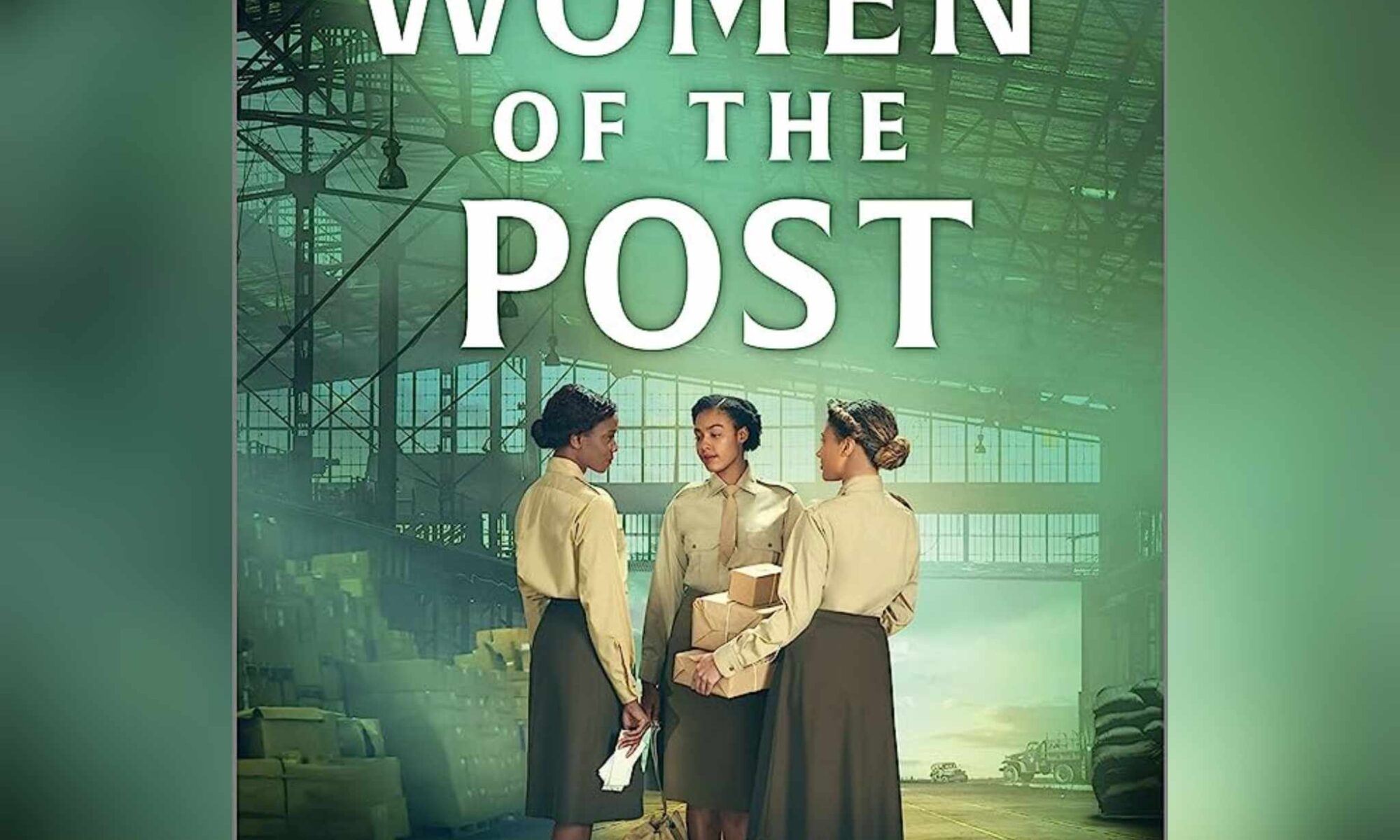
#BlogTour: Women Of The Post by Joshunda Sanders

For this blog tour, we’re looking at a great work that shows the complex yet all too real lives of some WWII veterans you’ve likely never heard of. For this blog tour, we’re looking at Women Of The Post by Joshunda Sanders.

Here’s what I had to say about it on Goodreads:

Well Told Story Based On Real Unit/ People. This is a story probably unlike most any other you’ve encountered in historical fiction of WWII. Even if you’ve read about mail carrriers (there are a few such books out that I’m aware of, and likely more that I’m not), you likely haven’t read about *these* mail clerks. Even if you’ve read about African American servicemembers during the war, you likely haven’t read about *these* African American servicemembers during the war. Even if you’ve read about LGBT people during the war… you get the idea.

One thing that became interesting to me as I read this was thinking of the grandmother I don’t often think of much, my mom’s mom. But this was the grandmother that was married during WWII, and who bore her first child – my oldest uncle – just months before D-Day. Her husband at the time, my grandfather, I’ve spoken of a fair amount in reviews of WWII books, including his Silver Star and Purple Heart for his actions during the Battle of the Bulge. But here, the connection is with his wife, back home in Georgia alone (presumably with family around) with their infant son. You see, even when I knew her almost 40 years later, during the dawn of the Personal Computer era and as the Net was coming online (she would die a few years after the Dot Com Bust of the mid 2000s, having outlived both of her husbands and sharing this earth for over 23 years with me)… that woman always *loved* writing and receiving letters. Actual, handwritten, long form, letters. As with my grandfathers and their experiences in WWII, I can’t *know* what she went through living through that era – I never once asked her about it. But seeing how letters and morale were stressed so dearly in this tale here, and knowing her own situation at the time, I can maybe make some assumptions about how *I* would feel in similar situations, and it brings another level of depth to both this tale and my memories of her life.

Even if you don’t have a personal connection, however tenuous, to the subject here though, this really is an interesting and clearly at least somewhat well researched tale showing a “based on” level tale of real people who really lived and did and likely experienced these very things during that period, up to and including the Klan burning crosses in their front yards and the active discrimination that was so rampant even after the war, even well after supposed “integration”.

About the only suspect detail here is the idea that lesbians could live more comfortably in post-war Ohio than in South Carolina, but that is perhaps explained away as being able to get to an area where neither person is known by anyone, and thus be able to craft your own identity and reputation away from those who have ever known anything but what you tell and present to them. Which, one could argue (and build a genuinely solid case for) is simply no longer possible in today’s hyper-connected world.

Overall truly a great work that shows the complex yet all too real lives of some WWII veterans you’ve likely never heard of. Very much recommended.

After the jump, an excerpt from the book followed by the “publisher details” – book description, author bio, and social media and buy links.
Continue reading “#BlogTour: Women Of The Post by Joshunda Sanders”