
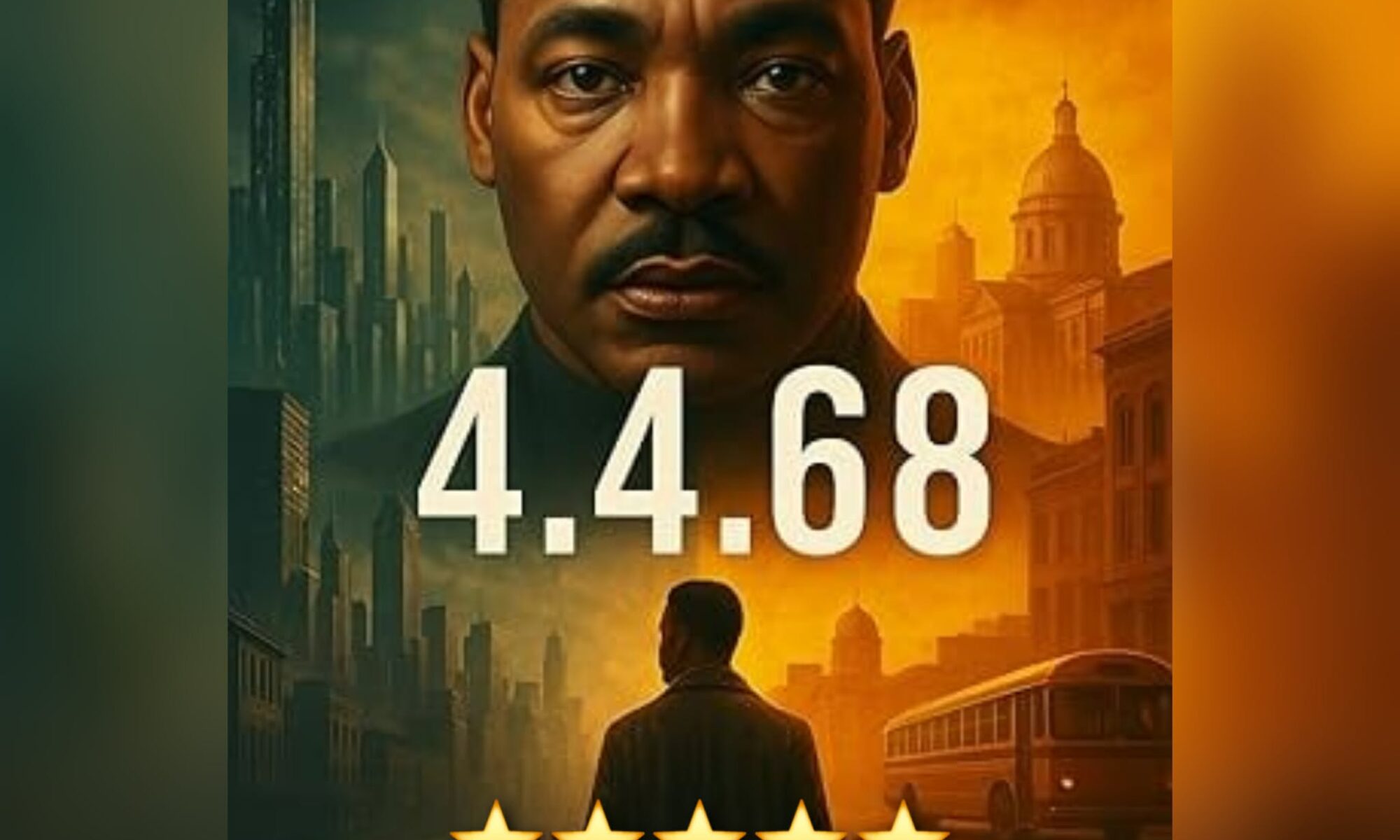
#BookReview: 4.4.68 by Desmond T. Lewis

Interesting Scifi Alt History With An Atypical Subject. I’ve read a couple of truly phenomenal alt-history/ time travel books over the years where someone in the present (or in this case, future) is sent back in time to one specific era or event to try to save someone or stop someone else who is trying to harm that person. Specifically, books like Randall Ingermanson’s City of God trilogy (wherein time travel is developed in an attempt to go back and murder the Apostle Paul before he can begin his missionary journeys that ultimately spread Christianity beyond the Israel/ Palestine region) and Jeremy Robinson’s The Didymus Contingency (wherein time travel is developed specifically to attempt to disprove the Gospels and which was the very first book from Robinson I ever read and created a lifelong fan that has now followed him for nearly 100 books). Also TV shows that tend to get cancelled far too early such as *UPN*’s (now we’re getting *really* old!) 7 Days or the more recent Timeless from NBC. (Though the TV shows, by their very nature, were less focused on a specific person or event in the past.)

So those references, assuming you’ve ever heard of them (and most likely, sadly, you haven’t), give you an idea of what to expect here. Here, time travel has been developed and is apparently being used for at least some other purposes at times, but the specific mission of the book is singular: Prevent Dr. Martin Luther King Jr’s assassination that in our world happened on the titular date.

The scifi elements of a future near dystopian state are done well, as are the later similar elements I’ll not discuss because they veer more into spoiler territory. Similarly, the alt history elements here really bring the real historical elements to life in ways that those who still remember this era will likely appreciate. This is the point where this book is *most* similar to Ingermanson and Robinson’s works, as this is also where those books truly shine.

The difference here, particularly as a native of the borderlands between Appalachia and Atlanta who was born several years after the real-world assassination of King but even whose parents remember it, is that there are many people with actual living memories of the period in question and even at least some who were either directly there or nearby at that moment. Such people could speak to how this book handles that era even better than I can, but again, from my own perspective, this book really does bring its subject period and the real-world people it tells fictional tales of to light in ways that the actual factual historical books never quite can.

The *one* problem someone with a fairly balanced view of history will have, that others may not share depending on their particular circumstances, is that MLK is pretty heavily deified in this book, actively proclaiming him as the most important figure in US history. I’m not going to downplay his significance at all – he truly was *a* great and important figure in US history. But he was also a human, and all humans are ultimately flawed creatures that make greater and lesser mistakes. Here, the book could likely have been at least a touch stronger had it deified King less and humanized him more, similar to its treatment of King’s close friend Ralph David Abernathy – who plays at least as large a role in this tale as MLK himself does.

Ultimately though, this is truly a strong tale of its type, one that works well in pretty well all facets of the tale. While I suspect it could be one that becomes perennially discussed more in February (Black History Month) than year round, I could absolutely see it being discussed then the way David McAfee’s vampire books (beginning with 33AD and being another scifi/ alt history, but without the time travel element) are so perennially mentioned (by me at least 😉 ) around Halloween.

Very much recommended.

This review of 4.4.68 by Desmond T. Lewis was originally written on March 10, 2026.
#BookReview: The Soul Of Civility by Alexandra Hudson

Exceptional Bordering On Transcendental, With A Few Flaws. If you, like me, read David French’s 2020 book Divided We Fall and were utterly *terrified* of just how real its scenarios sounded (particularly given that one of them later began to become true)… you need to read this book. If you, like me, read James A. Morone’s 2020 book (indeed, published just days before French’s) Republic of Wrath and saw that despite the paranoia and fearmongering of today’s media, punditry, and even citizenry, the US has always had a great deal of heat and vitriol in its civil discourse (and in fact was far worse in earlier periods of our shared history) – but that doesn’t mean our particular era isn’t pretty damn bad itself… you need to read this book. If you, like me, simply observe and even discuss politics with a “pox on all your houses” attitude as an independent thinker aligned with no particular group… you need to read this book. And if you, like me, genuinely wish for a return to a more civil era – if there ever actually was one, in fact rather than in nostalgia – … you need to read this book.

Quite simply, Hudson here does for the topic of civility what Morone did for overall vitriol in American politics or Radley Balko did for the rise of the Police State in America in his 2012 book Rise of the Warrior Cop – and that is, bring a relatively full historical examination of the topic, beginning with the most ancient of texts known to humanity and bringing it all the way to the exact context we see as this book is released to the public in the next few days after I write this review. She even manages to look at the topic *globally*, incorporating thoughts on civility from several different major and influential civilizations over the course of history – and not just Western, but also at least some Eastern thinking as well. Along the way, we do in fact see some of the “usual suspects” such as perhaps Erasmus, St. Augustine, Voltaire, CS Lewis, MLK Jr, and Gandhi. But we even see other thinkers such as Thoreau, Emerson, and many others – including cutting edge thinkers such as Scott Alexander of SlateStarCodex.com. It is within this particular examination of the entire breadth of history, along with (mostly) strong applications of each, that this particular text truly stands out from the pack.

And yet, there are in fact a couple of issues, which may or may not be particularly *big* issues, but one of which was at minimum enough to deduct a star, at least based on my own “subtractive method” / “objective-ish” reasoning I strive to maintain within my own reviews. The star deduction coming from the overall dearth of a bibliography, despite such deep and wide examinations and despite having so many references it almost seemed as though there were a popup with some relevant quote on nearly every page! While Hudson has already disagreed with me on this on Twitter/X at the time I write this review, I maintain that for nonfiction works, particularly works such as this that reference oh so much, I expect to see a much larger bibliography. Even with the discussion in other recent reviews of perhaps revising my target down closer to 20% rather than 25-30%, the fact that this book contains less than 10% bibliography is still rather disappointing.

The other issue is nearly one more of style, but also raises a potential allegation of bigotry: Hudson’s emphasis that civility requires looking people in the eyes. Despite Autistics in particular being well known for not really being able to do this due to our particular neurodivergence. But perhaps Hudson, despite her clear knowledge in other subjects, was not aware of this. It is possible, and I’ll not clearly condemn her as a bigot due to Hanlon’s Razor.

But again, the overall biggest point here, and the reason you *need* to read this book despite its specks of flaws: This truly is an exceptional, bordering on transcendental, examination of the history and nature of civility, with plenty of real-world applications that are sorely needed – and truly challenging for even the most committed of us. This is one of those books that is going to challenge you to be better in ways that few outside the overtly religious texts manage to do, and it is one that is largely going to leave you with a smile even as it calls you out. Very much recommended.

This review of The Soul Of Civility by Alexandra Hudson was originally written on October 7, 2023.

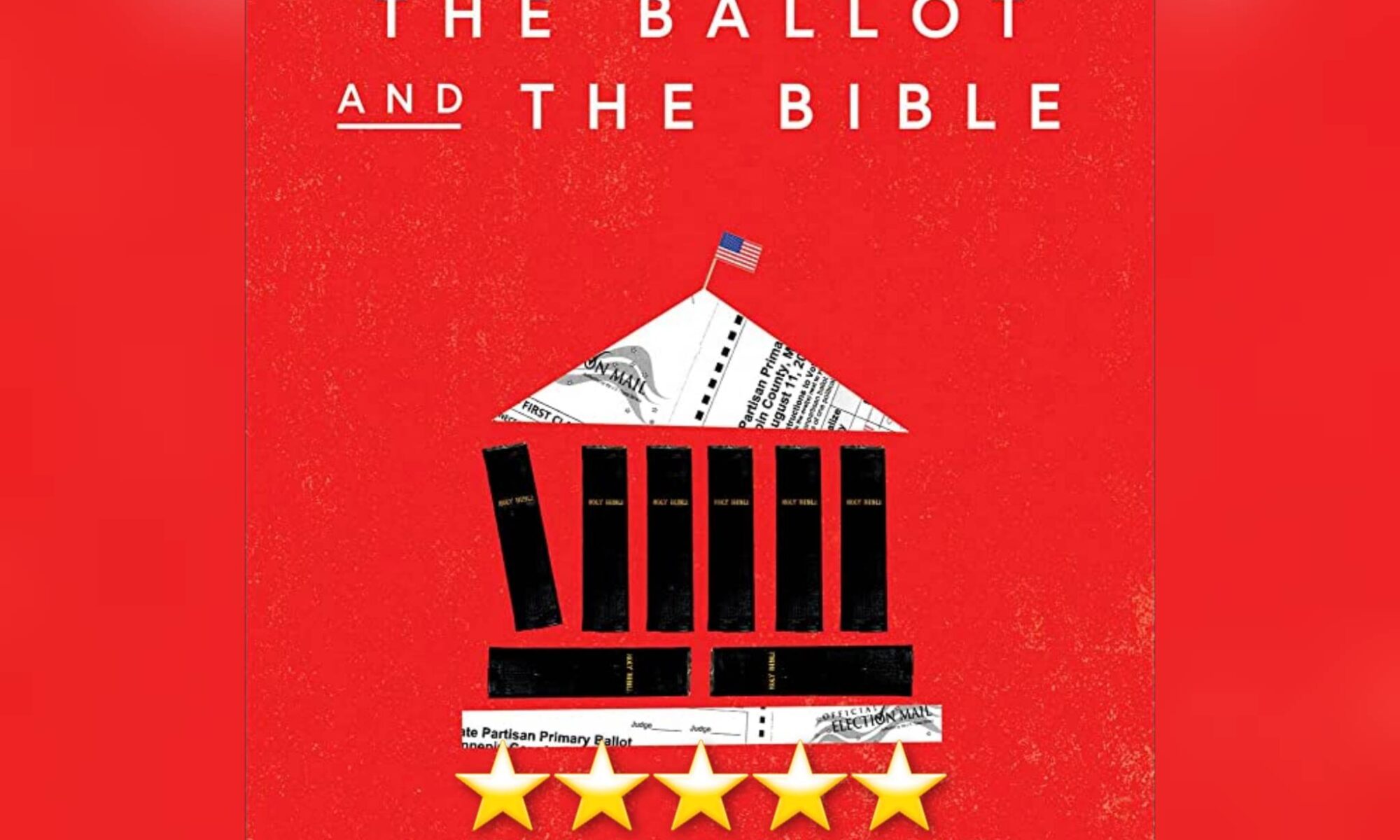
#BookReview: The Ballot And The Bible by Kaitlyn Schiess

No Matter What You Think About The Bible In American Politics – You’re Wrong. This is one of the better books I’ve ever come across in showing just how the Bible has been debated throughout American history, from its earliest days through Trump, January 6, and even into how Biden is currently using it. And it does a phenomenal job of showing just what I said in the title here – no matter what you think you know about the Bible in American politics, no matter what you personally think about how it has been applied and should currently be applied… you’re wrong. While having perhaps a slight tinge of anti-whiteness here (in that the most heavy criticism tends to land squarely on the actions of white people), Schiess really does do quite a remarkable – and remarkably even – job of showing that no one is truly “evil” or even “uneducated” about the Bible (well, specific people in specific circumstances may be), they simply have different methods of understanding and interpreting it which lead to divergent conclusions based on both the text *and those extra-text methods*. And the sides have flipped and flopped throughout even somewhat recent American history such that neither can go more than a few decades without having to explain some prior interpretation from “their” side away.

The documentation here comes in at a slightly low yet still respectable 21%, and while Bible verses are cited throughout the text, there is no actual “prooftexting” here – verses are cited not to prove a point, but to cite which elements of which passages different groups were interpreting different ways at different points in American history.

Indeed, perhaps the only real valid complaint here is that I’m fairly certain this book could be a few times is barely 200 pages… and *still* not cover the topic in true depth. And yet, the depth it does manage to pull off in these pages is still quite remarkable indeed. Very much recommended.

This review of The Ballot And The Bible by Kaitlyn Schiess was originally written on April 21, 2023.