#BookReview: Why The Innocent Plead Guilty And The Guilty Go Free by Jed S Rakoff

Excellent Examination Of US Judicial System. This is an excellent examination of the US Judicial system, from a former US District Court judge. Indeed, the *singular* outright flaw in the ARC copy I read was its lack of bibliography and citations, which I expect will be corrected in the published edition. For the most part, Judge Rakoff’s examinations and explanations ring true and he cites several well known works in the field, including Michelle Alexander’s The New Jim Crow during the discussion of the problem of mass incarceration. My only quibble – and it is just a quibble, just as the comments I am about to refer to are almost asides themselves – are a couple of points where the Judge makes comments about a couple of cases of a more political nature. (Including Bush v Gore and Citizens United, among perhaps a handful of others.) Overall one of the better examinations of the breadth of the US Judicial system, and even its acknowledged origins as a set of essays isn’t really obvious or noticeable. Very much recommended.

This review of Why The Innocent Plead Guilty And The Guilty Go Free by Jed S Rakoff was originally written on February 18, 2021.

#BookReview: The Power Of Geography by Tim Marshall

Remarkable Look At Often Unnoticed Regions. Marshall’s prior work in this space, Prisoners of Geography, was much lauded and at least a bit derided. Here, well, the exact same approaches and reasonings abound, so whatever you thought of that first text will likely be similar to your feelings about this text, where he analyzes regions that many don’t think of. The Space chapter (the final chapter) actually discusses the real-world power plays that Matthew Mather’s CyberStorm series of fiction books uses to spin some great yet fictional tales around, while other chapters such as that on Ethiopia, the Sahel, Iran, and Australia do remarkable jobs of showing both the history and current issues facing these regions. Truly an enlightening look at global issues, and one that everyone should read more as a “global politics 101” level of information, if for no other reason. Great work, and very much recommended.

This review of The Power Of Geography by Tim Marshall was originally written on February 18, 2021.

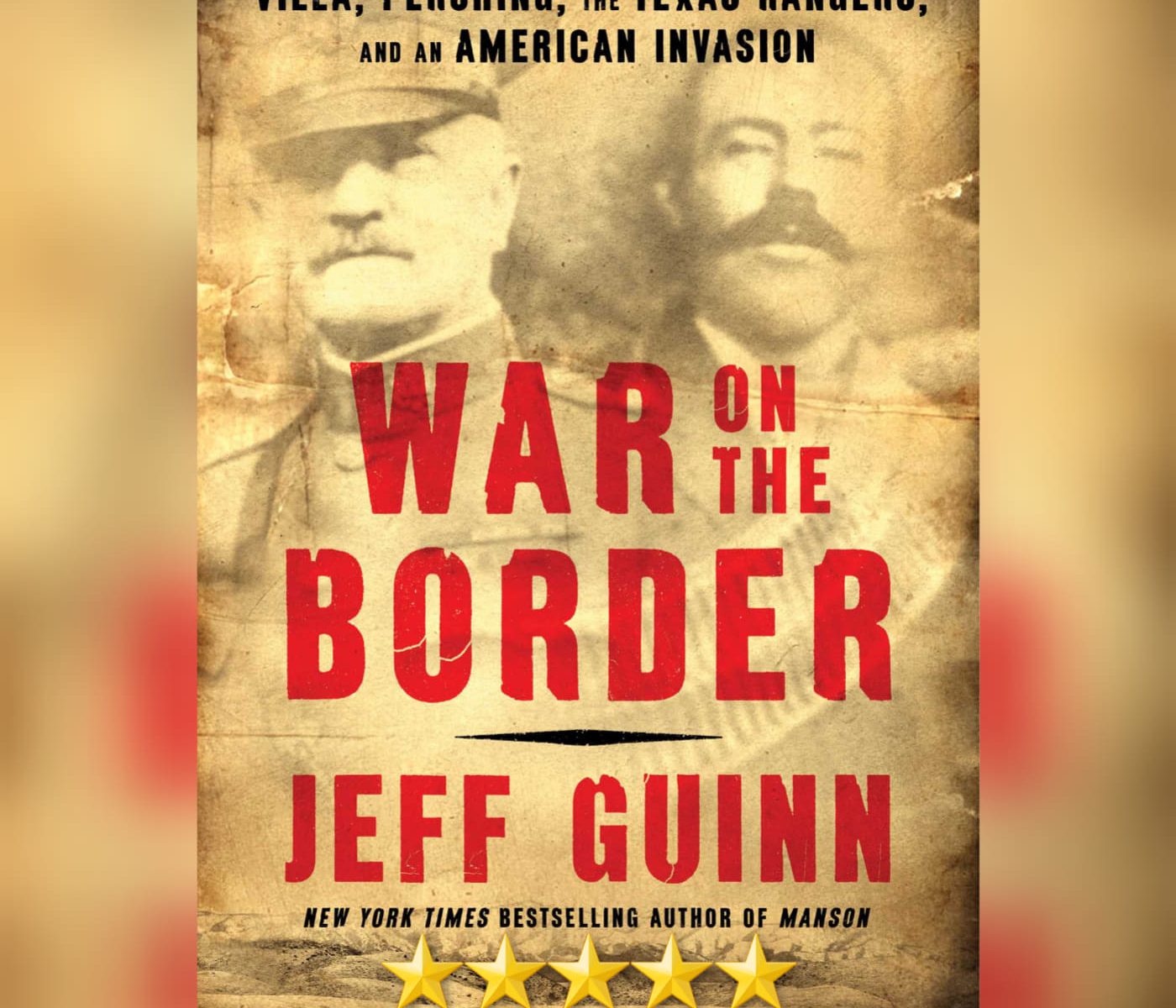
#BookReview: War On The Border by Jeff Guinn

Fascinating Read About Seemingly Forgotten History. Let’s face it, these days (and even when this elder Millenial was in school in the late 80s – early 2000s), American schools (at least, perhaps, outside the Southwest) barely even teach World War 1 itself – much less the other actions that were going on as America was trying to stay away from that war. I knew of exactly one story from the Punitive Expeditions before reading this book, and that was the story of George S Patton’s first ever motorized attack – one of the events early in his career that made him truly legendary. Here, Guinn does a truly remarkable job of setting the stage and scope of the entire situation, from its earliest beginnings (even repeatedly referencing when the Spanish first came to central America) through the fates of the key players he has spent the text explaining. If you’ve never heard of this last war on Continental US soil before, do yourself a favor and read this book. If you want to understand more context for a lot of the current simmering tensions along the US/ Mexico border… do yourself a favor and read this book. Yes, the actions themselves were now slightly over a century ago – but if you’re able to read at all, it means that it was in the time of no further from you than your great-great grandparents, and these actions still reverberate to this day in the lands and minds of those whose own great-great grandparents (or more recent) were actively involved here. Very “readable” narrative, never sounds overly “academic”, and well documented to boot. Very much recommended.

This review of War On The Border by Jeff Guinn was originally written on February 18, 2021.

#BookReview: Echoing Hope by Kurt Willems

Solid Exploration. Once one gets past the rampant (and expected) proof texting and leftist/ West Coast language barriers. Here, Willems makes a lot of really strong points about Jesus, pain, and Jesus’ humanity that many have rarely if ever considered. And thus this is truly a strong book. It drops a star due to the rampant (beginning on page 2 or so) proof texting (which was expected, he *is* a pastor, after all) and I am waging a one-man war against the practice, with my book reviews being really my only weapon. And thus, any time I see the practice in a book I am reading, it is an automatic one star deduction, no matter how strong the rest of the text is. The rest of the text, away from the prooftexting, will largely vary by the reader’s comfort level with leftist/ West Coast language, which is also rampant. To me, Willems could have adjusted the diction in these places to reflect more inclusive – see what I did there? 😉 – language and arguably made a stronger book as a whole. As it is, the book reads a bit political with its talk of privilege and context and intersectionality, among other terms, even as Willems actually repeatedly makes the point that if you’re looking to politics for solutions, you’re looking in the wrong place. So ultimately the book will likely play better in certain crowds than others, and truly YMMV with the text solely based on the diction Willems uses. But ultimately his actual points are sound no matter your own political bent, and that is the very reason this book is recommended as highly as it is. Seriously, don’t let Willems’ word choices have you throwing the book out the window in disgust, keep reading and auto-translating in your head. It was very much worth it, at least for me. Truly a strong book with a couple of quibbles, it is still very much recommended.

This review of Echoing Hope by Kurt Willems was originally written on February 16, 2021.

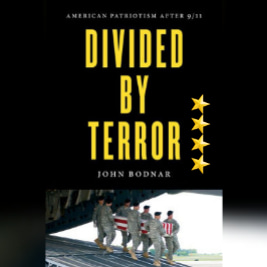
#BookReview: Divided By Terror by John Bodnar

Blatantly Biased, But Well Written Within That Bias. I gotta admit: When I picked up this ARC, I was hoping for something as transcendental as 2020’s Divided We Fall by David French, but focusing on the issue of terror and how it has divided America in the post 9/11 world. I’m someone that has been on “both” sides of that divide, growing from a conservative Evangelical Christian Republican 18yo college student born and raised between the two endpoints of the American Civil War’s Great Train Robbery to a now 38 year old anarchist professional living even further South. So this book, based on its title and description, looked promising.

Its actual text though… didn’t fulfill that promise. Not for me.

To be clear, this is a very well documented examination of much of the response to 9/11 and the War on Terror, from many divergent angles ranging from the personal and private to the governmental to the societal to the cultural. Bodnar does a tremendous job of highlighting facts that even as someone living through this history (though usually from several States away from the events he is describing at any given moment), I simply did not know and often had never heard of.

The problem is that this examination is very blatantly one sided, and even the language Bodnar chooses to use often reflects this blatant bias. Thus, for those that agree with this particular bias, this book will probably be much more well received than for those who disagree with it – and the level of one’s beliefs either direction will likely reflect how such a person feels about this book in a similar manner.

In the end, there is nothing technically wrong with this text, other than the blatant bias – and therefore the bias itself is the basis for the removal of one star. Yet even there, the bias isn’t *so* horrible as to rate the deduction of a second star, and there is a tremendous amount of needed history documented within these pages. Thus, I am satisfied at this time with the four stars I give the book. And yet, because of the bias, I cannot *highly* recommend the book and therefore it is…

Recommended.

This review of Divided By Terror by John Bodnar was originally written on February 9, 2021.

Featured New Release Of The Week: The Fight For Free Speech by Ian Rosenburg

This week we are looking at a solid look at exactly what “Free Speech” legally means in the United States. This week we are looking at The Fight For Free Speech by Ian Rosenburg.

Mostly Solid Explanation of What ‘Free Speech’ Means As Decreed By SCOTUS… And What It Does Not. This is a legal treatise that never once explicitly states the very thing it seeks to define – the particular text of the First Amendment to the US Constitution that reads “Congress shall make no law … abridging the freedom of speech, or of the press; or the right of the people peaceably to assemble, and to petition the Government for a redress of grievances.”. It also refers to a famous yet apocryphal “Ben Franklin” quote in its introduction. And yet despite these two flaws, it is still a mostly solid look at what the Supreme Court of the United States of America has decreed “the right to free speech” means over the last nearly 250 years, mostly within the last century or so. The book does a solid job of using an example usually from this Millenium (or even decade) as its starting point for each chapter’s discussion, then going into the history and actual SCOTUS decisions, what they said, and what they mean. Including showing the *rest* of the famous ruling that “you can’t yell fire in a crowded theater”. Well, you can. If there is a fire. 😉 And if you’re interested in the concept of Free Speech in the US for any reason at all, this is a book you’ll want to read. Very much recommended.

#BookReview: Identity In Action by Perry L Glanzer

Not So Excellent, But Enhances The Discussion Anyway. Up front, this book had its cool moments in that it quoted from a decently wide range of pop culture for its opening chapter quotes and even at times inside the discussion itself – you don’t usually see that in a book clearly designed for the Christian Living market. But it also lost its first star because of rampant prooftexting, a practice wherein Christian authors cite seemingly random Bible verses out of context in “proof” of their claims – and a practice which I have declared absolute war on, with my automatic star deduction being my primary review-based weapon.

The other star was lost here because this book had a potentially profound premise… that it absolutely squandered in gearing its discussion only to conservative Evangelical American Christian interests and language. Within that particular subculture, this book will likely be absolutely beloved and possibly one of those destined to be handed to new high school graduates heading to college as graduation presents every year – which can be a sales bonanza, as you’re easily talking hundreds of thousands, maybe even lowish millions, of copies every year.

But this book, with its premise of looking at Identity Politics from a new and seemingly enlightening angle, could have been *so much more*. It had the potential to be one of those books that I can take into *any* political space and urge people to read it and consider its points and make a truly persuasive case no matter the reader’s own individual politics or religious beliefs, but instead Glanzer chose to focus on what he knows and lives. Which again, isn’t an *overly* bad thing.

I can still take this into many realms and use it to talk to the moderates within them, the ones who can see past the conservative American Evangelical Christian culture this book was designed for to see the larger points Glanzer is making. And this is exactly why the book doesn’t lose any *more* stars – because once you get beyond the trappings of that particular culture, the overall points here are strong enough to deserve consideration in a much wider arena.

And ultimately, that is the saddest part of this text for this reader, that so many other readers who *could* be enlightened by it *won’t* be, specifically because of the approach entailed to discussing its overall thesis. Still, this book is recommended.

This review of Identity In Action by Perry L Glanzer was originally written on February 2, 2021.

#BookReview: An Anatomy of Pain by Abdul-Ghaaliq Lalkhen

More Memoir Than Hard Science. This was a memoir-based look at the field a man has made his career in, what the science he uses is, his thoughts on his field and his practice, and ultimately a bit of a guide on the general issues of the topic at hand. For what it is, it is very well written and easily readable. But those looking for a more “hard science”, heavily referenced examination of the topic… won’t find that here. But from a perspective of “I’ve been in this field for decades, and here is what the field is, what I’ve done in it, and where I think it should go”… yep, this book is exactly that, and a very good general overview of the field from that perspective. Very much recommended.

This review of An Anatomy of Pain by Abdul-Ghaaliq Lalkhen was originally written on October 15, 2020.

#BookReview: When They Come For You by David Kirby

Well Written. Flawed in Spots. Didn’t Live Up To Potential. This book was solid in a journalistic sense – it has quite a bibliography at the end, though it went a bit editorial at times. Does a good job of showing some of the numerous ways the US government at every level works to deny the rights of its citizens, and mostly does a good job of balancing criticism between “both” “major” US political parties. Cites the dramatically undercounted Washington Post numbers when making claims of how many people police have killed – that number counts for several years less than the number of people that are actually killed in any given year. Similarly misinformed regarding vaccines, but that one in particular shouldn’t be shocking given the author’s prior work. Overall a good primer for those who aren’t yet aware of the full breadth of the US government’s abuses, though independent research should be done after reading this book. Recommended.

This review of When They Come For You by David Kirby was originally published on May 25, 2019.

#BookReview: The Nonsense Factory by Bruce Cannon Gibney

Alarming and Yet Also Hilarious. Even as someone who was once a political activist with some fairly high level (if State, rather than Federal) access to the halls of legislative deliberation, this book was pretty shocking in revealing just how much of a mess the American legal system truly is. While the author himself is clearly in favor of some form of ideal government that works, this book just as easily makes the case that anarchy would at least be preferable to the current system. Yet throughout, the author’s acerbic wit is what makes the book such an enjoyable read – even as the critiques it makes show just how depressingly dreadful the current US legal system really is. Very much recommended reading. Just maybe try to do it in a place where plentiful alcohol is readily available. 😉

This review of The Nonsense Factory by Bruce Cannon Gibney was originally published on April 23, 2019.