#BookReview: One Nation Over God by Wes Crawford

Ipse Dixit – Bare Assertion Mars Needed (If Politically Slanted In Presentation) Call. This is one of those texts that so many American Christians are going to need to read… and yet because it *is* so politically slanted in a somewhere left-of-center/ social justice warrior direction, not enough on at least one side likely will. A more balanced presentation, perhaps referencing more right-oriented issues like being truly pro-life from conception through natural death in addition to those presented here, could have gone a long way to making the overall presentation of the arguments here that much stronger.

But that isn’t actually the star deduction here. No, the star deduction is exactly what the title noted – there is *zero* bibliography in this Advance Review Copy edition of the text I read nearly six months before publication of this book, and yes, even this far out the texts I get as an experienced reader and reviewer of such editions usually include at least some level of bibliography. Indeed, my standard *based on my experience of doing this for nearly a decade now across hundreds of similar works* is at least 15%, and more commonly somewhere in the 20-30% ish range. Less than that will get a star deduction every time, as this does here.

One thing this book, more about Christians living in the US and their behaviors than anything actually Biblical, has going for it is that it is one of the rare books about Christianity/ directed towards Christians that doesn’t actually prooftext – it never cites the Bible in any argument at all, thus is has no opportunity to selectively pick Bible verses out of their context in support or opposition to any of the points it is raising. Thus, it doesn’t lose the star here that so many similar books do, as I deduct when this technique is used in my own personal war against it.

There really is quite a bit here that *every* Christian in America needs to read and truly consider, but there’s also a decent amount here that those claiming any form of right-of-center politics are going to want to find the nearest window to defenestrate this book. Maybe not a high one, but certainly a close one. But don’t. Because you need to read this book even with its political bent. Yes, there is that much here that you really do need to consider. But those with more leftward politics *also* need to deeply consider this book, even as you find yourself agreeing with it more politically, because yes, there is going to be a fair amount of Crawford calling you out too, if in more subtle ways than he uses against those on the right.

Overall a book that is needed – but it needs a healthy bibliography to support it just as much as the American Church needs to read the arguments it presents. And perhaps a more right-of-center author could write a companion text from that perspective ultimately raising many of these same points, in a vein somewhat similar to Shaunti and Jeff Feldhan’s 20+ yr old books For Women Only and For Men Only once did for men and women and helping them understand each other.

Recommended.

This review of One Nation Over God by Wes Crawford was originally written on April 30, 2026.
#BookReview: Blue Power by Stuart Schrader

Rise Of The Political Cop. Nearly 15 yrs ago now, when Michael Brown still had almost exactly a year left in his life, Radley Balko released a seminal history of the rise of the militarized police force in the United States he titled Rise Of The Warrior Cop. In it, he traced the history of policing in the American tradition all the way from its origins as the ‘Shire Reef’ in feudal England to its then most modern incarnations. (He has also released an updated version of this book in the last couple of years.)

Here, Schrader does for police unions what Balko did for police militarization, though Shrader’s historical focus is more explicitly limited to the last century or so with only brief mentions of prior periods – including the aforementioned ‘Shire Reef’.

Detailed and decently documented, with its bibliography clocking in at a reasonable 22%, this is yet another book that anyone concerned with the amount of power police wield in modern America will want to read. Schrader does a great job of showing how we got to this point via both intentional machinations… and some sheer dumb luck for those pushing for more unionization of police. Yet despite being a Johns Hopkins professor, this doesn’t really read as an academic tome. Dense, yes, with a *lot* of facts and names and dates, but also decently readable even for those less academically inclined.

Overall a truly solid look at a facet of policing in America that some talk about yet virtually no one understands the history of, this will absolutely fill in that gap for any who care to read it. It also happens to be reasonably balanced, so while there may be annoyances here or there depending on one’s own politics, there isn’t really anything here that seemingly anyone will be looking for the highest possible window to use for defenestration purposes.

Very much recommended.

This review of Blue Power by Stuart Schrader was originally written on April 28, 2026.

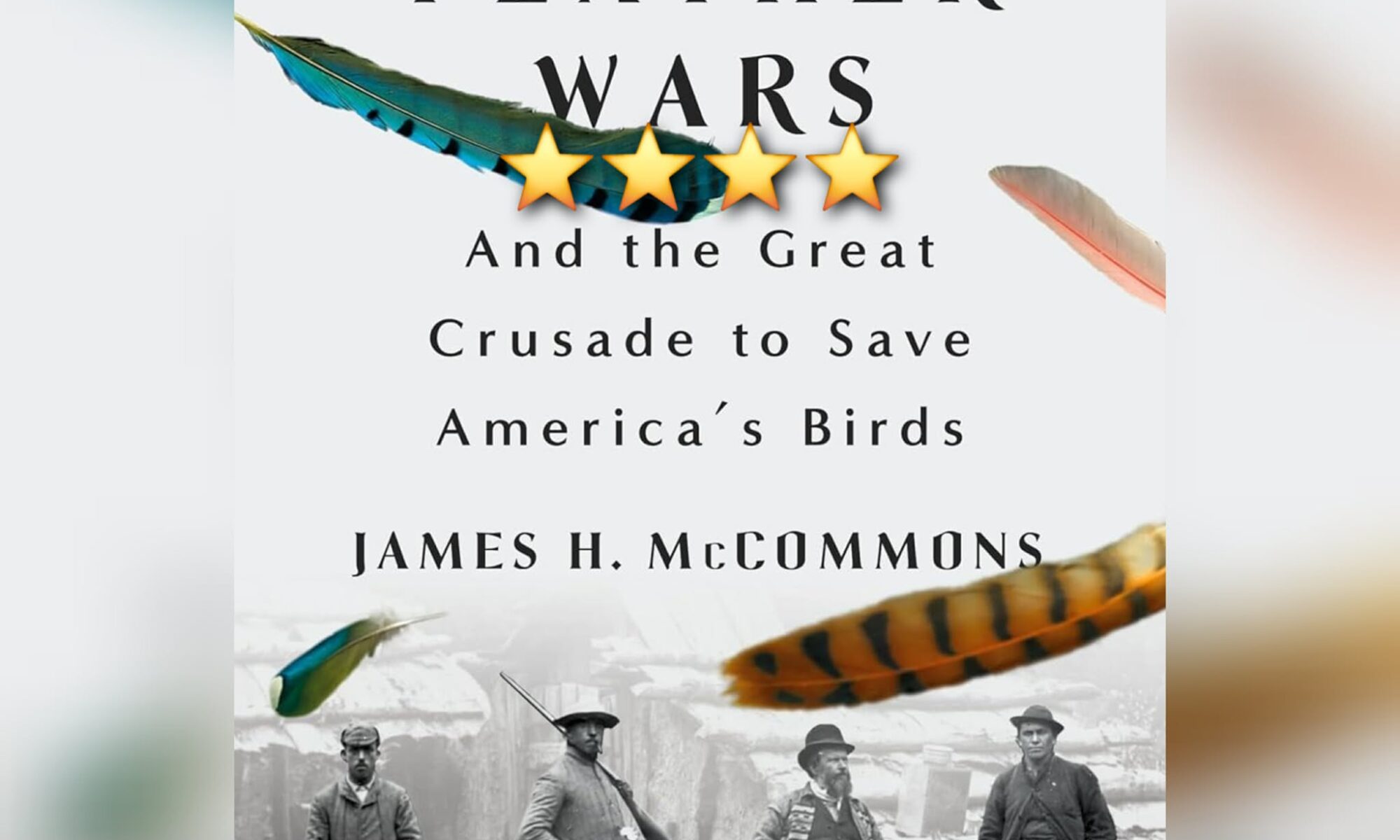
#BookReview: The Feather Wars by James H. McCommons

Dense Academic Treatise With Not Quite Enough Bibliography. The singular most important thing you need to know about this book is that it is very much written in a dry, academic, very much textbook tone. There is a *lot* of seemingly fairly comprehensive history of birding from the beginning of European settlement in the area now known as the United States – with a brief touch on histories before that period – basically up to Silent Spring. Yes, given the eras this covers, particularly in the 19th century and earlier, this means that for nature lovers in particular it may be a doubly difficult book as it goes into details about the wholesale slaughter of birds generally and even the extinction of several different specific species, including the passenger pigeon.

While at least one other reviewer does claim the book to be hyperbolic, the approach here seemed at least relatively balanced regarding birds – if slanted more in favor of conservation and government power in particular human actions and specific conservation methods. Up to and including recommending some rather extreme actions regarding pet cats, declaring that they should be regulated even more tightly than pet dogs are. Clearly, this author has never actually attempted to keep a cat even inside a covered stroller, much less walked on a leash. (Yes, I’m aware *some* cats tolerate these actions. *Some* animals – including the human animal – will tolerate nearly any physically survivable situation. This does not mean the majority do or that these conditions are good for them.)

Indeed, as with so many nonfiction books declaring policy recommendations… eh, they’re always going to be hit or miss at best depending on the reader’s personal preferences. As a cat lover and avowed Anarchist… let’s just say I personally agreed with few of them indeed, but others with different views may arrive at different conclusions there.

Overall if you can withstand the dense academic tone – and, if a nature lover, the clinical precision with which McCommons describes such wholesale and wanton slaughter of so many birds – this book will at minimum be informative, unless perhaps you are a birder yourself with a strong knowledge of the history of that hobby.

Recommended.

This review of The Feather Wars by James H. McCommons was originally written on March 19, 2026.

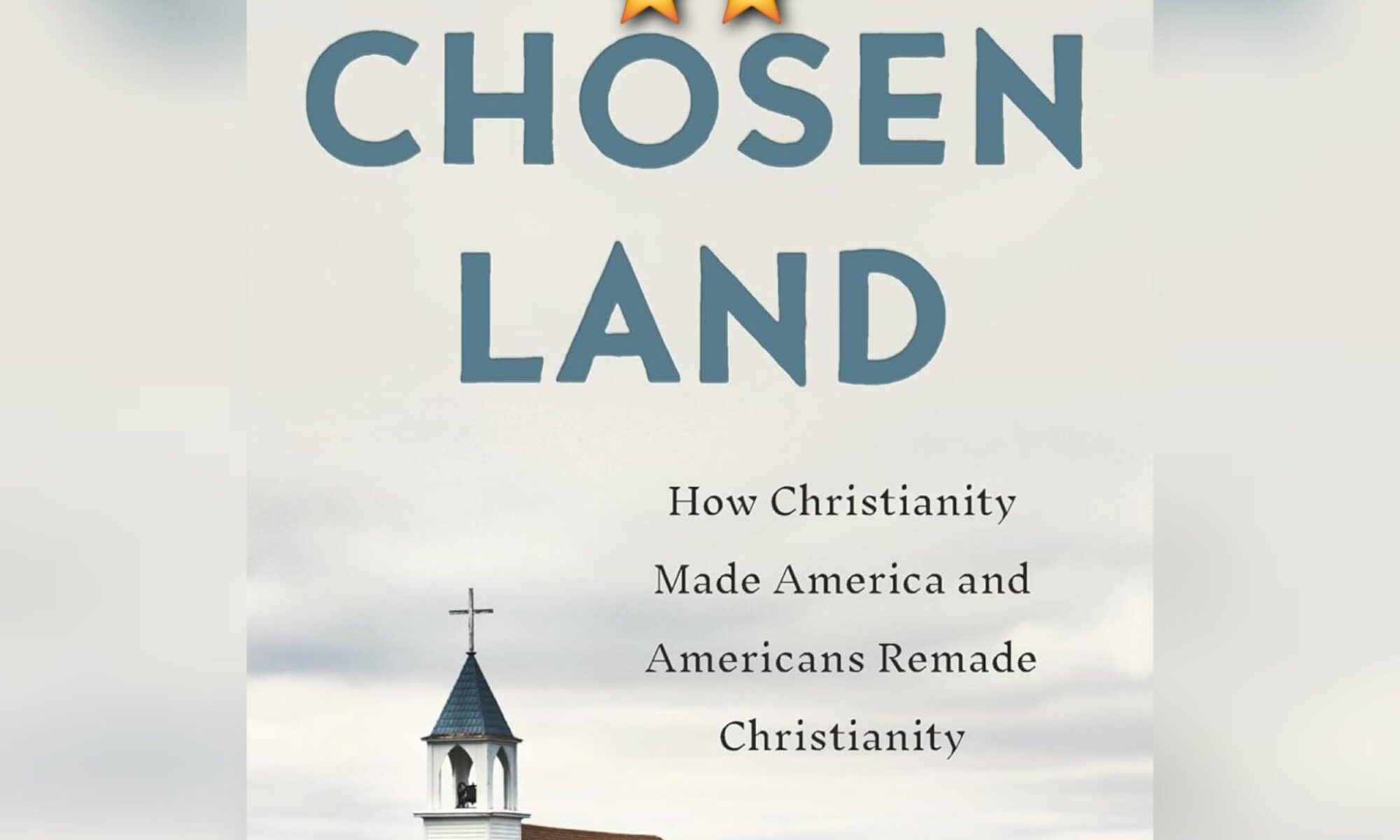
#BookReview: Chosen Land by Matthew Avery Sutton

“His Assessment Told Only Half The Story”. Yes, this is a direct quote Sutton used in this book… and also quite possibly the most succinct summary of this text available. Despite having an ambitious premise with a rather large page count to expound upon it, Sutton here still manages to omit or dismiss key figures and movements when he deems them problematic (Lottie Moon, the Student Volunteer Movement, and Annie Armstrong), fails to show moderating actions by groups he opposes (the Southern Baptist Convention in particular), and fails to show similar controversies involving those he generally supports (black prosperity gospel preachers TD Jakes and Creflo Dollar) while showing in some detail at times the controversies of those he opposes.

And yet, despite all of this – and particularly for those who align with Sutton’s progressive biases – there is enough here that you are likely to learn something, almost no matter how much you know about the history of Christianity in the United States.

For those who know no better, Sutton’s history here shows at least one version – a significantly biased one – of the history of American Christianity that largely downplays or outright omits much of the history of Christianity in the American South, including the efforts of Lottie Moon and Annie Armstrong in the era around the turn of the 19th century into the 20th in particular. Through this period, more focus is placed on the religious developments of the enslaved or formerly enslaved, even when other leading figures – such as first female US Senator and last formerly slave owning US Senator Rebecca Latimer Felton – were pivotal through this period. Further, key Southern revivalists such as Sam Jones are omitted entirely, even when similarly situated and influential black, Northern preachers are later discussed and even when discussing white Northern predecessors and successors to Jones’ style, such as Billy Sunday (the real one that the fictional character played by Robert De Niro in Men of Honor claimed no relation to) or Billy Graham.

And yet, for those who perhaps don’t know much about the history of American Christianity at all… there is truly enough here that warrants reading this book. As I noted above, you’re truly going to learn at least a little. You just also need to treat this as a biased primer and actively seek out a more complete picture, including from original sources such as Felton’s Country Life in Georgia In The Days Of My Youth or Jeff Guinn’s excellent chronicle of the siege at the Branch Davidian compound, Waco.

Ultimately, the star deductions are for a lack of bibliography, clocking in at just 10% of the overall text available in the Advance Review Copy edition of the book I read, the stark omissions that show only part of the overall premise, and the bias bordering on bigotry against anything white and/ or conservative that is so pervasive throughout this text.

One final curious note is that deep in the text, in the penultimate chapter to boot, there is a brief chronicle of one particular pastor named Doug Wilson who holds a very distinctive view of Christianity…. and who lives in and “took over” the next town down the road from Sutton’s base at Washington State University. While there is no public record of any animosity between the two, the lack of balance and clear bias towards perspectives even remotely similar to Wilson’s seems more than coincidental – though again, to be crystal clear, there is *zero* public evidence to support this. Still, that particular passage made me wonder, and I leave it to you, the reader of my review and possibly reader of Sutton’s book, to draw your own conclusions there.

Those that have a conservative lean to their politics and/ or religion are likely going to want to defenestrate this book long before completing its 600 ish pages. Don’t. There really is enough through most of this text that you’re going to learn something. Those who lean more in Sutton’s direction will likely praise this book quite highly. Again, I leave it to you, the reader of my review, to decide for yourself whether to read this book or not, and I do hope that if you decide to read it at all – even if you wind up DNFing it – that you’ll leave your own review and tell all of us what you thought of the text and why.

Recommended.

This review of Chosen Land by Matthew Avery Sutton was originally written on February 25, 2026.

#BookReview: Your Data Will Be Used Against You by Andrew Guthrie Ferguson

If You See This Review, You Should Be Terrified. I’m a Xennial. I’ve grown up with computers. The Net first became a public thing when I was 10 yrs old, and within a decade I would complete a Bachelor’s degree in Computer Science. I’ve known all along that privacy online was more theater than fact, no matter how careful you are – that if it has a computer chip, you’re safer to assume it is tracking you than not, and that someone you may not like will likely be able to access that data.

Even knowing this almost as long as I’ve known anything… Ferguson makes clear just how much worse it actually is, from a legal perspective. *Even in* the United States, where we “supposedly” have 4th, 5th, and 6th Amendments to the Constitution of the United States rights limiting government searching of our data and how it can use the results of such a search.

While Ferguson doesn’t address at all how very eroded and damn near paper thin those Amendments have become over the last 250 yrs of jurisprudence, he makes it all too crystal clear that the words on the papers haven’t kept up with the actual technical capabilities, and because of this, many of the things that once kept your written words on paper safe or even your words to certain people safe no longer protect you in this digital era *at all*. Indeed, quite the opposite – many of the exceptions to those earlier forms that actively limited what government was allowed to do are instead now the rules that give government nearly unlimited abilities to search your data without even having to get a “warrant” rubber stamped.

Indeed, another of Ferguson’s large points throughout this text is just how little privacy you have *specifically* when a warrant is signed… and he even tosses a point or two in about the “qualifications” needed to be able to sign such a warrant. (There are basically none to be a Magistrate Judge in particular.)

While all of this is utterly terrifying – and Ferguson goes to great lengths to show that this *should* be terrifying no matter your own personal political bent -, Ferguson does actually offer paths forward at every level that could at least begin to alleviate many of the concerns he details. He even goes so far as to note which ones are likely more politically palatable within the current system and which ones would do more to actually alleviate privacy concerns… but which are also far larger hauls in the current political environment.

Overall this is absolutely a book every American should read, and indeed anyone globally who thinks of America as the “land of the free”. Ferguson shows here that this “freedom” is illusory at best, particularly in the current world environment.

Very much recommended.

This review of Your Data Will Be Used Against You by Andrew Guthrie Ferguson was originally written on December 22, 2025.

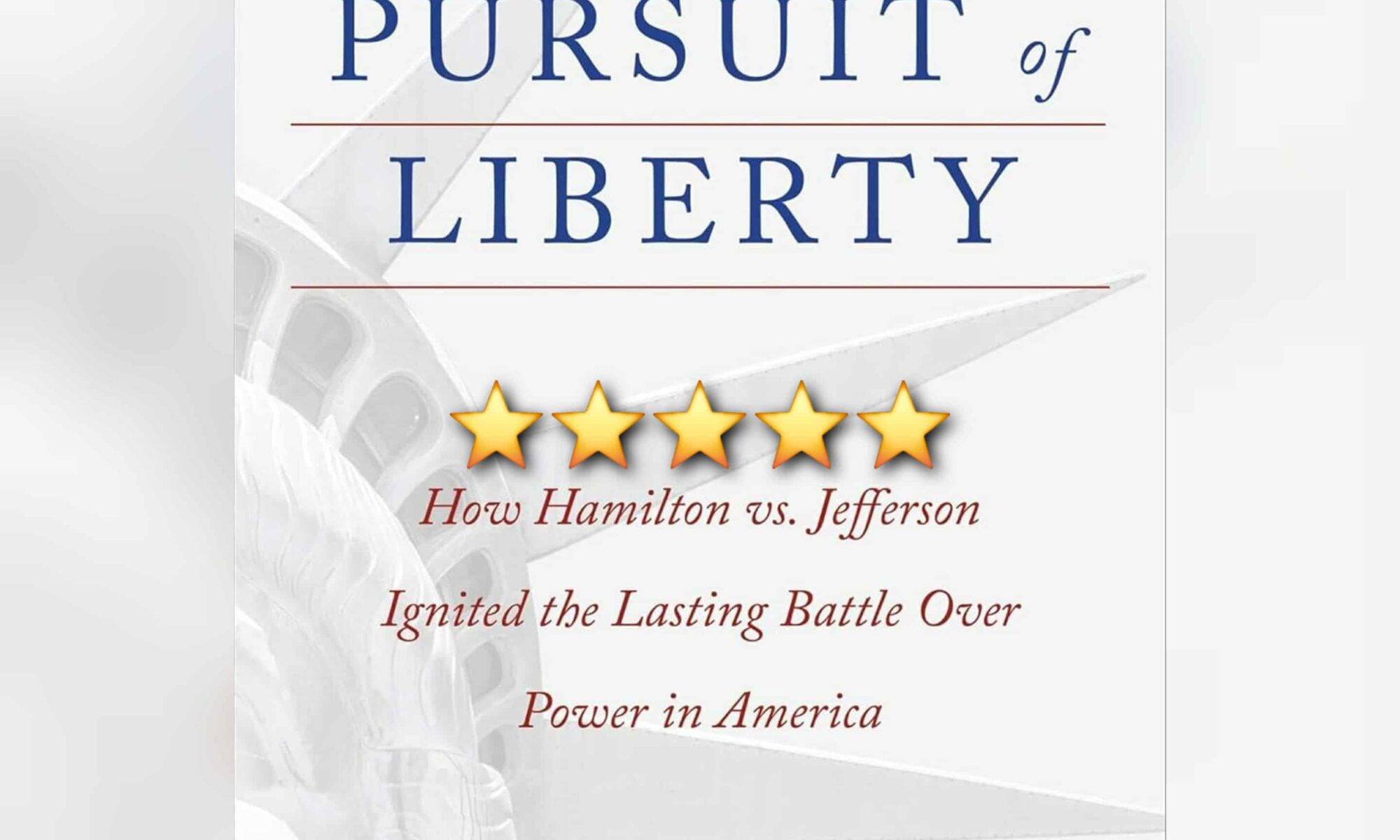
#BookReview: The Pursuit Of Liberty by Jeffrey Rosen

Intriguing Academic Analysis Of 250 Years Of American History Through One Central Lens. With about 16% bibliography, Rosen here crafts a well wriiten – if perhaps dryly academic in styling – narrative that serves as both history (particularly of the actual events while Hamilton and Jefferson were both alive) and filter to history (as American history progresses through 2024).

On the actual history end, Rosen is perhaps at his best, seemingly almost bringing us into the rooms where these discussions and their resultant divisions first happen. On the historical filter end, Rosen does a solid job of keeping his filter intact while examining different periods of American history from its earliest days and first insurrections (the Whiskey Rebellion, among others) through the Jan 6, 2021 “insurrection” (used in quotes here because even this text shows how dramatically different they were). And yes, we get stops at Jackson and his Indian Removal, the obligatory Civil War look, several other key points in American history. All through this lens of how various leaders chose to interpret the writings and philosophies of both Hamilton and Jefferson.

Overall it really is a fascinating look that both illuminates key ideas in new ways and works well with other books and their own filters to give a more complete view of both the American Founding and the resultant 250 years of American history. Thus, it is absolutely one that every American should read and consider, and it may well be something that even those outside the United States could learn valuable lessons about either their own countries or perhaps just the American mindset which frequently flips between Hamiltonian and Jeffersonian ideals.

Very much recommended.

This review of The Pursuit Of Liberty by Jeffrey Rosen was originally written on October 21, 2025.

#BookReview: The Killing Age by Clifton Crais

Flawed Premise And Weirdly Exacting Time Selection Move Interesting Premise To Garbage Narrative. This is one of those books that I *wanted* to like. I *strongly* believe, based on my own historical studies over the years, that there is a truly strong case to be made for how violence has shaped the modern world in ways that most humans alive today simply aren’t aware of. There is a case to be made for how violence and conquest shape almost literally every facet of everything we currently know, up to and including the most bleeding edge sciences all largely having their origins in military research and applications – including all of computing and very nearly everything we as humanity are doing both in astronomy and in particle physics.

Unfortunately, this book doesn’t even begin to attempt to make that case.

Instead, this is yet another anti-capitalist polemic wherein a “historian” attempts to reframe history… and yet provides a bibliography one would typically expect from a more mundane and well trod “this is what happened at this event” type history book. In other words, it is *far* from meeting the Sagan Standard of “extraordinary claims require extraordinary evidence”. And yet, at roughly 22% bibliography (in addition to several more pages of front matter listing many dozens of people and events covered in the text), this text sufficiently meets my 20-30% documentation expectations for nonfiction books generally, so actually doesn’t lose a star there. Note even here though that while there is technically enough bibliography, it is also extremely cherry picked to show exactly the narrative Crais is trying to frame without ever even hinting at other possible interpretations of the events at hand.

No, the two star deductions are distinct enough (in my mind at least) to warrant two separate deductions, but also linked in that they form the basis of how Crais approaches his entire narrative.

For one, Crais blames all of captialism’s rise on slavery… without even going into the 20th century to try to frame the various labor debates there as also slavery or even including the rise of mass incarceration or fast fashion or any other well known labor abuses as also slavery, choosing to instead end his narrative at the end of the 19th century. Thus, even though Great Britain ended slavery relatively early in the time period Crais does choose to focus on and the US fought a civil war near the end of it to force the end of slavery… Crais still blames all of capitalism’s ills on, according to him, capitalism being based on slavery and absolutely nothing else.

For another, and yes, I hinted at this above, Crais is oddly specific in his choice of time period and even areas of focus, choosing to examine only Great Britain and the United States and to begin specifically in 1750 with the publication of Adam Smith’s The Wealth of Nations and end at the end of the 19th century, well before capitalism *really* took off… and yet also before communism caused the deaths of literally millions of people itself… often via direct State violence. This odd specificity allows Crais to openly ignore other violences even within the period he chooses to examine, such as the Napoleonic Wars.

There is great promise in a book that truly and fully explores the history of human violence in its totality and shows how that violence has created and shaped our modern world as we know it.

I simply wish Crais had made even a modicum of an attempt at writing such a history. Perhaps this book would have been better with a different title and more honest and specific premise?

Not recommended.

This review of The Killing Age by Clifton Crais was originally written on September 6, 2025.

#BookReview: The Invention Of Rum by Jordan B. Smith

Solid Examination Of The Topic. I’ve read books before where when you read the publisher’s description of the book and then read the book, you wonder what whoever within the publisher actually wrote that description was smoking… and if you can get your hands on some of that clearly mind altering stuff.

This book is *not* that. Instead, here the publisher’s description as I write this review nearly three weeks before publication is truly spot on exactly what you’re getting here – all the way down to the fact that this is very clearly a 2020s Academia level book both in styling and in what it emphasizes.

The overall writing here is a touch dry and absolutely more dense than the casual reader will likely prefer, and yet it is still a very readable tome in the same way that fruitcake is technically edible and lead is great for many applications… and not so great for others.

Thus, if you’re interested in a detailed history of exactly how this particular spirit came to be and how it became such a sought-after commodity in its era (and how it helped actively create markets in said era, along with spawning at least a few idioms known even today), this is absolutely going to be a book to pick up. You’re going to learn a *lot*, and you may be a hit at Rum Trivia.

If you’re a more casual reader looking for a history of an alcohol related topic to perhaps read while sipping your favorite refreshment at the beach (because here in Florida, we truly have (nearly) Endless Summer) or perhaps while overlooking the changing fall colors (as this book will be published in mid September, when if I remember correctly some leaves in more northern areas start to turn) from your porch with a fire burning in the fireplace… this book may be a touch too dense, but certainly close enough to at least use the “Look Inside” feature on Amazon to get an idea of how the prose works for your own tastes.

Overall truly a solid and well documented (roughly 29% of the Advance Review Copy edition I read, right around the upper range of what I consider normal in that regard) look at the liquor, its history, and its impact on history, with just a few brief mentions of anything beyond the 19th century in the closing notes of the epilogue. Well worth the read for anyone, even as realistically I know it will mostly be read by actual historians and academics or perhaps others with strong professional interests or perhaps hyper-fixations on the topic.

Very much recommended.

This review of The Invention Of Rum by Jordan B. Smith was originally written on August 24, 2025.

#BookReview: The Road That Made America by James Dodson

Phenomenal Esoteric Tale of American History You’ve Likely Never Heard Of Marred By Dearth Of Bibliography.

Looking back on my own ancestry off and on over the years, I’ve traced at least some lines to within a generation or two of when Europeans were in the Americas at all, and most of those lines come from somewhere in the British Isles – mostly England and Ireland (indeed, 5 of 6 historic Counties of Ireland), with a few Rhineland region relatives tossed in at different points for good measure. The ones that I’ve traced that far, they generally showed up in the Americas in Virginia or so and ultimately worked their way along the eastern side of the Appalachian foothills until they reached its southern end in the northwest corner of Georgia, not far from the border with North Carolina and Tennessee in the region known as the Great Smoky Mountains. There, I can trace nearly every line of my family tree to that same region for the past 180 years or so – including one multiple-great grandfather who died fighting for the Union in a battle in northeastern Alabama during the Civil War.

As it turns out, there was a reason my family took the geographic path it did once it got to the region now known as the United States – apparently quite a few immigrants made their way mostly down one particular road that wound its way along this very region from Philadelphia, Pennsylvania all the way to Augusta, Georgia – where even I spent a few years living directly across the river in Aiken, South Carolina.

But what do you care about all of this?

Well… long before the Oregon Trail or the Trail of Tears or other famous trails that took Americans west from the Appalachian Mountains ultimately to the Pacific Ocean, there was the Old Wagon Road. The road that fueled expansion inland *to* the Appalachians, and along which quite a bit of American history took place from the colonial years right up through the Civil War years in particular. This book reveals a lot of that history in stories not as well known by many, even when some of them involve names known by most Americans. Names like Benjamin Franklin and Robert E. Lee and Woodrow Wilson, just to name a few you’ll hear about in this text and recognize.

The real magic here though is in the names you *don’t* recognize. The tales you’ve *never* heard of before. This is where the “real” history of America lies – the history that is rapidly being forgotten and overwritten. The so-called “esoteric” history that supposedly only matters to fanatics and those whose ancestors directly played roles in or who were directly affected by, But one could argue – and Dodson makes a truly excellent case for throughout this book – that this is the very history that builds communities and tightens bonds within them. It is the history that binds people to place and whole to piece. It is the vagaries of one man choosing one path over another – and walking into the history books (for good or ill, at differing times) because of the path he chose that night. It is the history of families and communities coming together to celebrate the great times – and mourn the bad times. It is our history as Americans, and it is my personal history – even though Dodson’s tales here don’t touch on a single name I recognize from my family tree – because it is the history of how the nation came together via the individual and community actions of those who came so long before.

Narratively, this book is both memoir and history, following one man through time and space as he travels the road – as best as he can know it – from its origins in Philadelphia to its terminus in Augusta, learning the history of each place along the way and reflecting on his experience with it.

It is a stirring narrative, both in the communal and personal histories and in Dodson’s ability to craft his words in such an evocative way. And yes, there are sections where no matter your own personal politics, Dodson is likely going to say something you don’t overly like, whether it be espousing support for the so-called “1619 Project” in one chapter or supporting the right for Confederate monuments to exist in seemingly the very next chapter. But don’t defenestrate the book, no matter how tempting iq may be in the moment. Read Dodson’s words, and carefully consider them. This is no polemic. It is a pilgrimage, and one that we’re brought along for the ride on and asked to experience for ourselves via Dodson’s narrative here.

Overall a particularly strong book about histories largely forgotten and certainly far too often ignored. And yet it is this particular strength that also leads to its one flaw: For a book that shows so much history and even references quite a few texts along the way, for the bibliography to be only a page or two is damn near criminal. While the book did contain quite a few personal and direct interviews, there is also quite a bit of history discussed, and it would serve Dodson’s readers to have a more complete bibliography so that they could read up on the same sources he used in his own research.

Very much recommended.

This review of The Road That Made America by James Dodson was originally written on July 5, 2025.

#BookReview: The Hiroshima Men by Iain MacGregor

Among The More Complete Histories Of The Nuclear Bombing Of Japan. Clocking in at nearly 450 pages, with only about 10% of that bibliography – and hence the star deduction – this account really is one of the more complete accounts of the entire event I’ve yet come across in all my years both reading books generally and studying WWII in its various facets more specifically. It was also the last of three books about the bomb and/ or the use of it that I read over the few days of US Memorial Day Weekend 2025 or in the days immediately after, the other two being Evan Thomas’ 2023 book Road To Surrender and Frank Close’s June 2025 book Destroyer Of Worlds.

Specifically, in tracking exactly who it does – including several key US personnel involved with both war planning and the Manhattan Project itself, the pilot of the bomber that dropped the bomb on Hiroshima, the reporter who really opened America’s eyes to the horrors of nuclear fallout, and even the Mayor of Hiroshima himself – this book really does give a complete all around picture of all aspects of the creation and use of the atomic bomb and the repercussions for both American leadership and Japanese civilians.

Reading almost like a Tom Clancy or perhaps Robert Ludlum war thriller at times, this text *also* manages to have the emotional heavy hitting of Hersey’s original Hiroshima report, which it covers in nearly as much detail as Lesley MM Blume’s 2020 book Fallout – which told the story of that report exclusively. Leaning more towards the American position that as horrific as this event was, it very likely saved lives – American, Japanese, and even Russian – this is one of those texts that largely doesn’t speak of the efforts in both America and Japan by several key, yet not quite highly ranked enough, leaders to at least consider trying to end the war through dialogue (ala Evan Thomas’ 2023 book Road To Surrender), but instead seeks to offer the reader a more complete understanding of the men who *were* making the decisions in these moments, from the President of the United States all the way to the commander of the airplane that actually dropped the bomb itself.

Ultimately a thorough yet sobering account, and with its release intentionally timed just barely a month before the 80th anniversary of the Hiroshima bombing, this really is one of the most complete books I’ve ever encountered on the topic, one that at least attempts to strive for a balance in understanding *all* involved in this event. Thus, all -American, Japanese, and everyone else interested in discussing the event with intelligence and facts – would do well to read this particular accounting.

Very much recommended.

This review of The Hiroshima Men by Iain MacGregor was originally written on June 1, 2025.