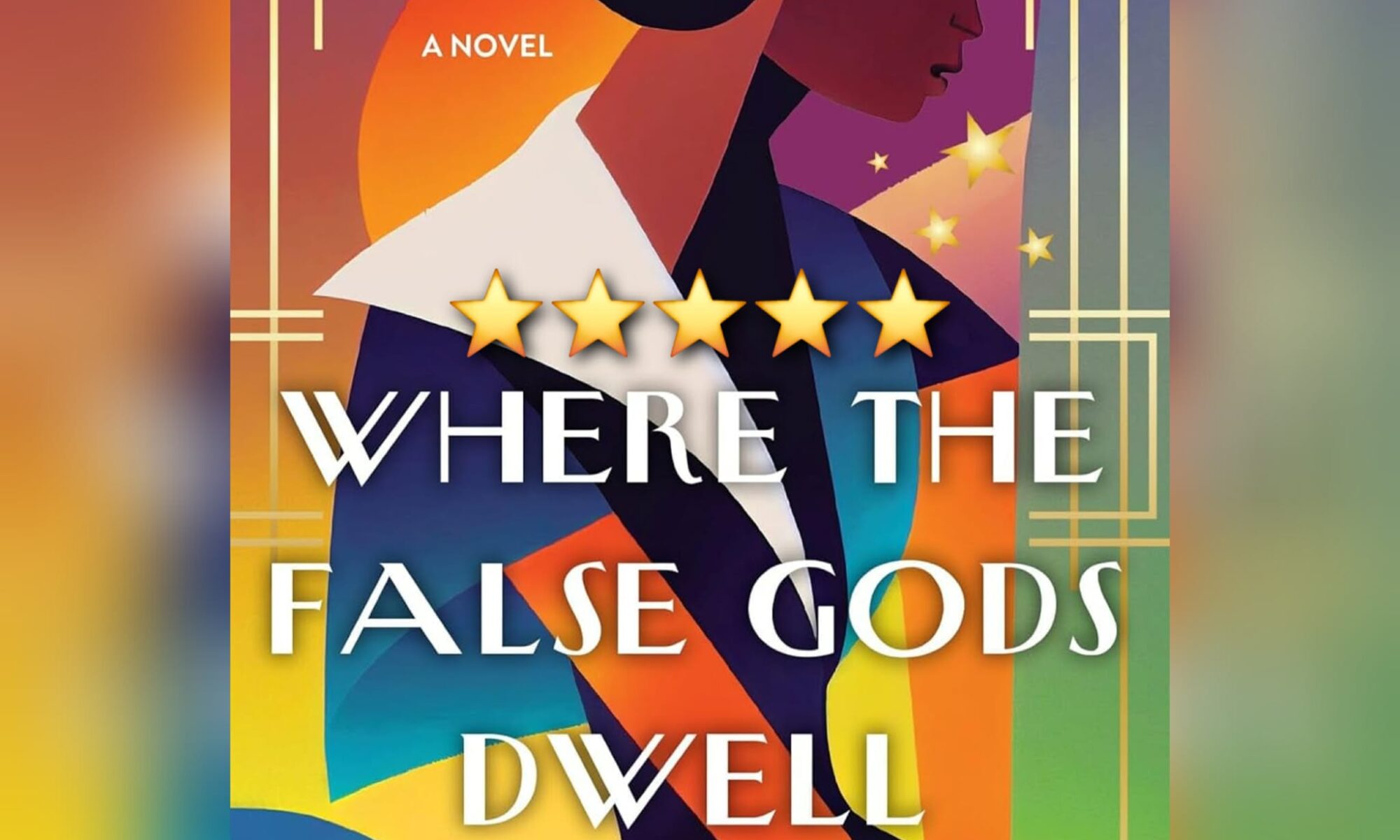
#BookReview: Where The False Gods Dwell by Denny S. Bryce

Strong (Historical) Women’s Fiction Ends As A Breathtaking Thriller. First, I got this Advance Review Copy in a somewhat unusual manner – via winning Bryce’s contest in the annual Great Big Giveaway Day 2025 hosted by the Facebook group Readers Coffeehouse, which I’ve been a member of for quite some time and actively assist the Founders (Steena Holmes, Laura Drake, Cathy Lamb, Barbara Claypole White, Kimberly Belle, and Catherine Ryan Hyde) with every year via tracking all the books and winners in all the contests along with my partner in that effort, Ann Marie McKeon Gruszkowski. This is something that I have a lot of fun with every year and find a lot of new books at every year, and I encourage all readers and authors to give it a look. On the version of this review on my blog, BookAnon.com, and my SubStack, I’ll link the document of all the participating authors and books from the 2025 contest here. So I’ve actually had this copy since September 2025, and yet because of just how many ARCs I read… I only managed to get to it the day before release. Yikes!

Now, onto the book itself: Y’all, it is *really* good. Through most of the story, it is a women’s fiction set in 1935 in the heart of the Great Depression and only shortly after Prohibition ended in the United States and it features characters that are in situations all too universally felt, allowing far too many people to relate to at least one of its central characters all too well.

Starting in both Chicago and Jamaica, this is indeed a tale with multiple character perspectives, though these are primarily just our three central characters as they begin to be set on paths that will have them meet up and then change each others’ lives forever. For those who are generally hostile towards multi-perspective dramas, this one probably won’t change your mind. Give it a shot, if you’re willing, but while this tale is done well in this style, I’m not sure that it will move the needle for those particular readers. For everyone else though, and specifically for those who *do* enjoy the multi-perspective style of storytelling, this is one tale where it is used truly effectively throughout the entire tale – including showing the same scene through different perspectives at least a couple of different times, one of which in particular was done in a manner reminiscent of the best of the Now You See Me movie sequences.

For those looking for more of a hurricane/ survival story… that comes in more at the tail end here – within the last 20% of the tale, and indeed closing out the tale before the epilogue a year later. So while it isn’t a primary focus of the book, it is foreshadowed well in a couple of places (in hindsight), and when it hits, it *hits* and is done on par with some of the best sequences I’ve ever read, particularly for women’s fiction/ historical tales to the point of the hurricane.

Now, one thing that will absolutely turn off at least some readers – to the point of defenestration likely or perhaps even imminent – is that this particular tale is *very* pro-union (the worker’s collective type, to be clear). So just know that up front, and if that is something that you just can’t handle, even in a fictional tale, eh, maybe skip this one. You’re only doing yourself a disservice there because this really is a great tale well told even with this focus, but at least if you truly have such strong opinions about that particular facet and skip it because I told you about this, maybe I can spare Bryce a scathing 1 star review because of your own hangups. 🙂

Overall truly a powerful tale solidly told, one that may well stick with some readers long after they’ve finished reading the words on these pages.

Very much recommended.

This review of Where The False Gods Dwell by Denny S. Bryce was originally written on February 24, 2026.


#BlogTour: The German Wife by Kelly Rimmer

For this blog tour, we’re looking at an excellent book where I found some of the secondary characters even more intriguing than our leads. For this blog tour, we’re looking at The German Wife by Kelly Rimmer.

Here’s what I had to say on Goodreads:

Evil Isn’t Born. It Is Created. Of all the WWII historical fiction books I’ve read over the years – and at this point, it is a decent number – this is the first to highlight one particular scenario that I’m almost positive has impacted my own life. Specifically, Rimmer does a phenomenal job with one of her characters fighting in WWII and having a particular experience that I’m nearly positive (as much as I can be, given the dearth of records) my own grandfather had a very similar one. She shows how, particularly if the soldier perhaps had already endured some level of trauma, this particular experience (and I’m being intentionally vague to avoid spoilers) could truly push them off the deep end and take them from troubled-yet-manageable to outright evil. But even there, Rimmer takes care to show that there is still hope that the person can be redeemed. Similarly, she also uses another character in a similar mold, but at a much different age and on the opposite side of the war. Rimmer does a great job with making the story hit notes not always seen in this genre, and in the process manages to humanize many types of people that are all too often dehumanized by various groups today. Truly an astounding work, and very much recommended.

After the jump, an excerpt from the book followed by the “publisher details” – book description, author bio, and social media and buy links.
Continue reading “#BlogTour: The German Wife by Kelly Rimmer”

#BookReview: Last Dance On The Starlight Pier by Sara Bird

Powerful Examination Of Oft-Ignored Areas. Know up front that there is a LOT going on in this book, and to me it absolutely warrants the 400 page length. The book begins and ends in Galveston during the Depression, when one family had absolute control of the island. In between, we see a lot: the burlesque shows of the era – including their seedier sides engaging in open pedophilia, the dance marathons that were cheap entertainment for so many in this pre=television era and the marathoners that endured so much just to stay off the streets, the politics of the era (where your mileage is absolutely going to vary, but was true to the period at minimum), the treatment of homosexuality in the era, a new surgery meant to cure so many mental health issues – including homosexuality – that was just as barbaric as described late in the text here, and so much more. For those that care about precise historical fact in their historical fiction – I personally tend to give authors at least a touch of leeway, depending on particulars including overall story – know that this surgery was real, and the details provided about both it and the doctor that originated it – Dr Walter Freeman – are real. Bird simply moved up the timeline by about 15 years or so, and used it to great effect within the confines of her story. Truly a remarkable work, and very much recommended.

Note: For those seeking more details on the real horrors of the transorbital lobotomy described in this tale, My Lobotomy by Howard Dully – which I first encountered as a late night NPR broadcast – is truly tragically horrifying.

This review of Last Dance On The Starlight Pier by Sara Bird was originally written on April 23, 2022.

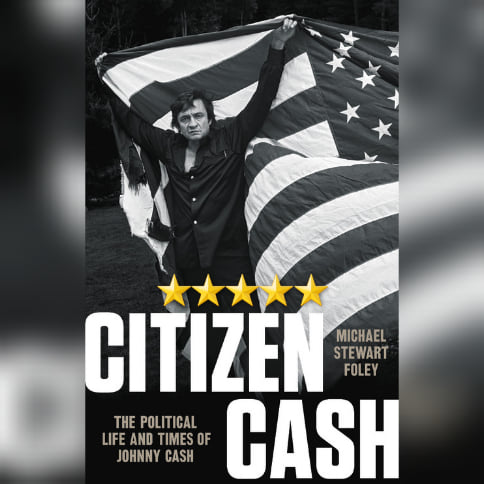
#BookReview: Citizen Cash by Michael Stewart Foley

Detailed Examination Of Forgotten Elements Of A Legend. I grew up listening to Johnny Cash, Waylon Jennings, Willie Nelson, Merle Haggard, and others of that generation via Country Gold Saturday Night on the radio in the late 80s and early 90s. My family would pile in the pickup truck, parents in the cab, myself and my two younger brothers in the back, and we would ride the backroads in the boonies of northwest Georgia between Atlanta and Chatanooga, listening to the radio and feeling the wind buffet our bodies. Honestly some of my most fond memories of the carefree era of my childhood, and Johnny Cash played a role there – a role he never knew about. And while I’ve known of him since then as a country music legend, I had never considered his politics or messages.

This book changes that.

This book, with its chapters focusing on specific elements of Cash’s political beliefs and how they developed, is less biography and more analysis of how the given message came to be espoused by this particular man and why. It shows that at his heart, Johnny Cash was a man who empathized with the low and down trodden. How his own childhood on a Depression era sharecropper farm came to shape much of how he saw the world, and how even his service in the US Air Force in Germany during the Korean War era would come to shape his views of the Vietnam War a decade later. The text does not shy away from Cash’s well known (and well documented) struggles with drugs and alcohol, even showing where Cash himself was hypocritical on the issues at times – ordering his wife never to touch alcohol, even in some letters where it is quite clear he himself is drunk while writing them. At the same time, it doesn’t spend much time on these particular facets or even his wives, the controversy surrounding how he eventually got together with June Carter, his various kids, or any other aspect an actual biography would. Instead, this text uses biography more as background and scaffolding to show how Cash came to the political positions he did and how he came to espouse them.

Truly an interesting take on a genuine legend, and very much recommended.

This review of Citizen Cash by Michael Stewart Foley was originally written on October 28, 2021.