#BookReview: War By Other Means by Daniel Akst

WWII Like You’ve Never Seen It Before. This is an account primarily of WWII and specifically a few particular people and their associates within the war – and these are people who you may have heard of, but likely never heard of their actions within the WWII period. As the description states, some of these people became quite famous indeed *after* WWII for their actions during the Vietnam / Civil Rights era – but those actions were originated when they were 20 years younger, during the trials and travails that history now knows as World War 2. As an anarchist who strives toward pacifism himself, learning of these people – several of whom I had never heard of before, and the others of whom I had never heard of this side of before – was utterly fascinating, and indeed actually eye opening, as even I had never heard of the philosophy of personalism before reading this book. Now, I intend to research it further.

The *singular* detriment to this book is that while it is clear in the narrative that the book is quite well researched indeed… the Advance Reader Copy of this text I read had barely any bibliography at all, clocking in at just 5% of the overall text when a minimum of around 20% is much more common for even barely-researched-at-all texts.

Still, even if the publisher doesn’t correct this flaw at actual publication, this is absolutely a worthy read and one that anyone who wishes to discuss the events and impacts of WWII needs to study in order to have a more complete picture of that era. Very much recommended.

This review of War By Other Means by Daniel Akst was originally written on October 20, 2022.

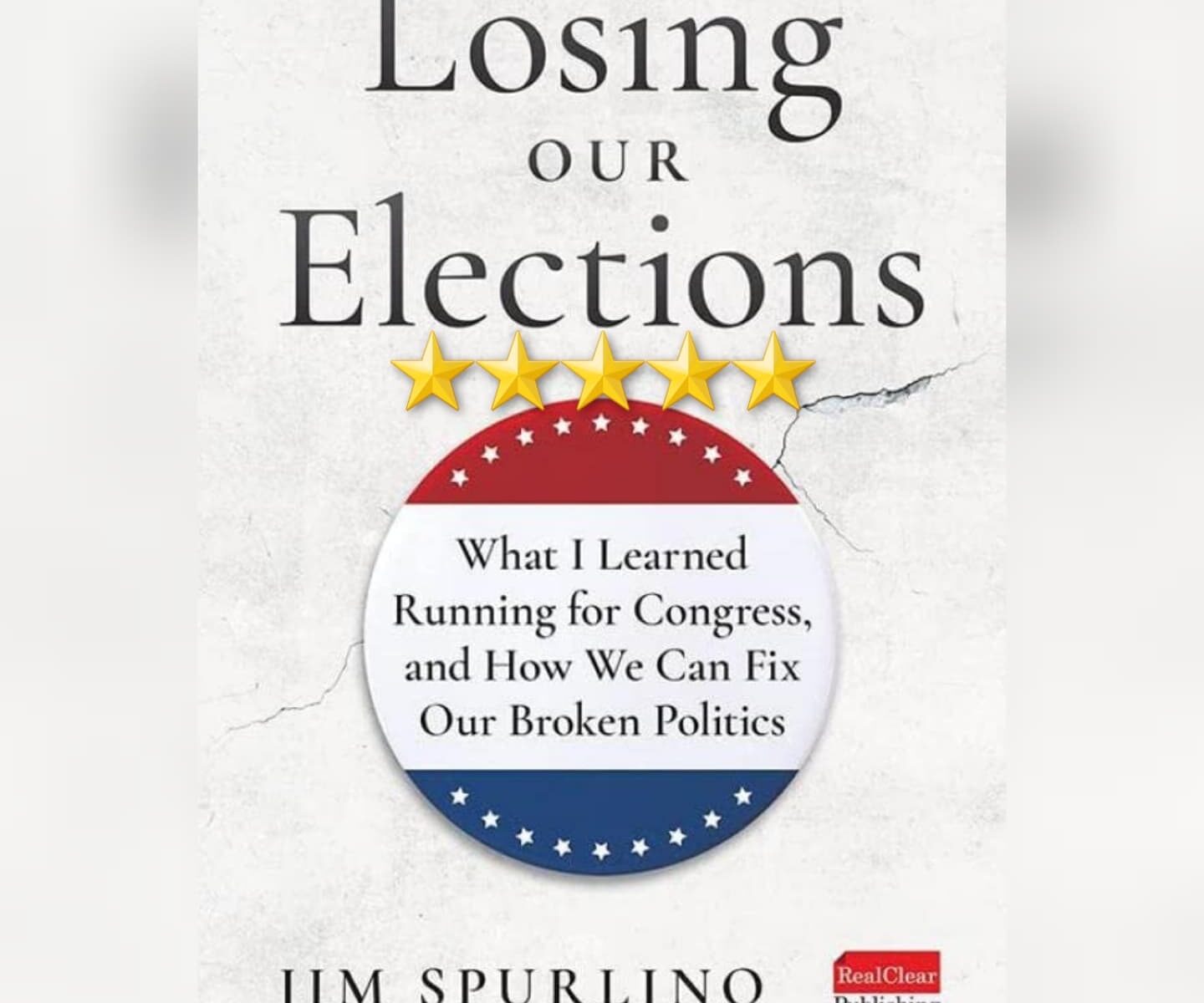
#BookReview: Losing Our Elections by Jim Spurlino

Interesting Memoir From A First Time Candidate. This is a memoir from a long time business executive who decided to make his very first (and so far only, according to the text here) campaign for public office be to seek to replace outgoing Speaker of the United States House of Representatives John Boehner when Boehner announced his resignation in 2015. Spurlino speaks with candor about what was going on when he heard the announcement, what he was looking for in a candidate, and, when he didn’t see any of that… what influenced him to run in the first place. The rest of the book is largely a deep dive into what running for US Congress is really like, from an “everyman” (ish) perspective, and through this section Spurlino shows himself to be fairly well read and reasoned, as well as very approachable. The last section of the book is a bit of a lessons learned/ future proposals look, and through this section in particular Spurlino truly shines in speaking out against the more popular populist positions of the day, including expanding the Supreme Court (he says to expand Congress instead), eliminating the Electoral College (not going to happen), and general Congressional reforms. Overall a very easy to read and short-ish at under 300 pages real-world look into what really goes on in our Congressional electoral processes in the United States, and therefore very much recommended.

This review of Losing Our Elections by Jim Spurlino was originally written on October 18, 2022.

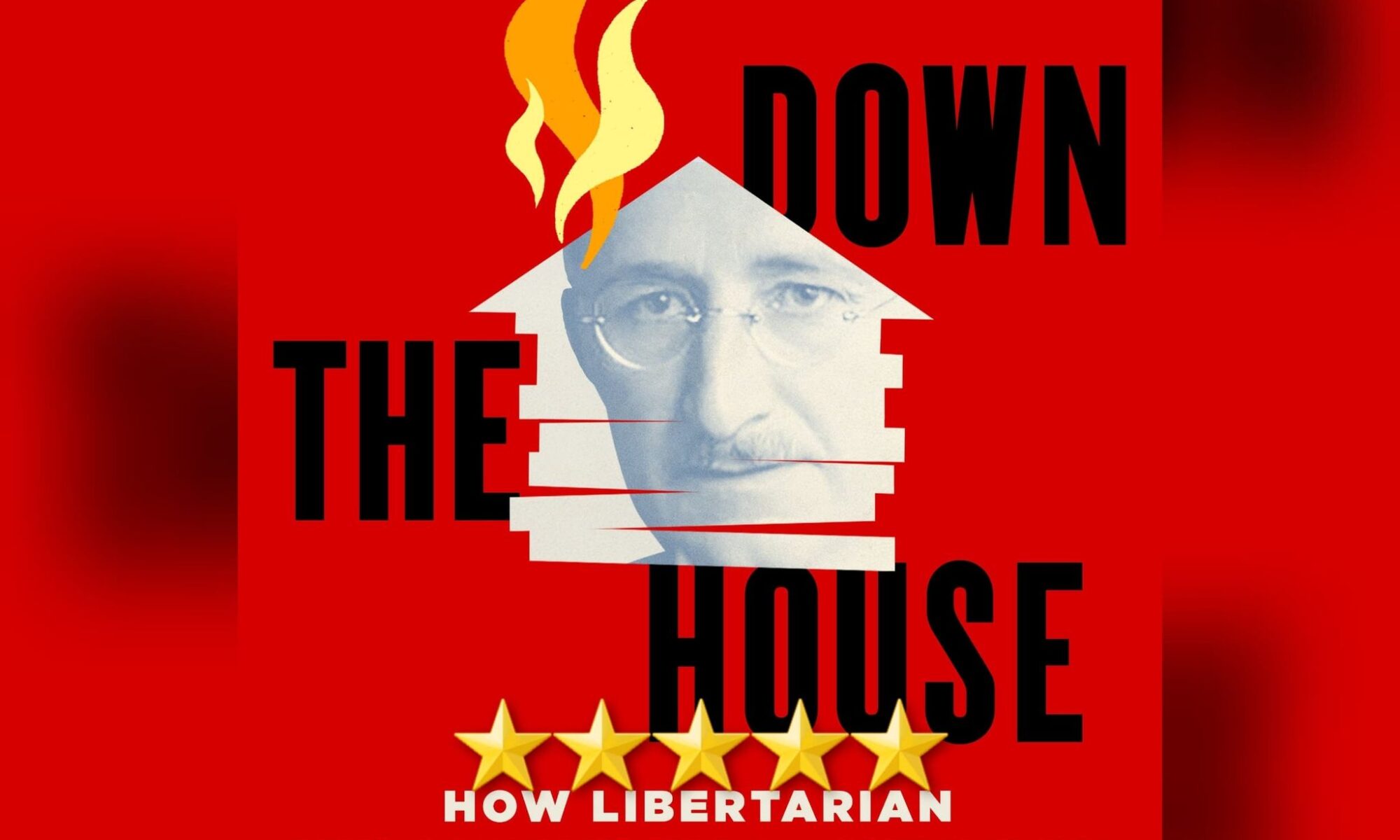
#BookReview: Burning Down The House by Andrew Koppelman

Severely Flawed Overall Reasoning Yet Good Introduction To Left Libertarianism. This is a book whose goal, as the author states near the end of Chapter 1, “is not only a critical description of libertarianism. It aims to marry what is best about libertarianism with the agenda of the left.” Thus, the author makes such radical-to-anyone-who-actually-studies-American-history-and-politics claims as that Rothbardian libertarianism has come to dominate the Republican Party, and the usual and at this point banal attacks on Charles Koch as a standard boogeyman. And yet, despite the rampant strawmen and cherry picked history and analyses, this book truly does serve as a reasonably well argued and written look into the general forms of “left libertarian” philosophy. At 36% documentation, it is actually on the strong side of well-documented (though still not the *best* I’ve ever encountered), so even with its cherry picking, at least it does in fact cite most of its arguments quite well. (Despite several of its more plebian-according-to-leftist-standards comments being undocumented.) Thus, while there is nothing of the structure of the book to hang a star deduction on, it is still one whose arguments should be considered critically and indeed, one should actively study the same philosophers and economists Koppelman often cites – from Hayek, Mises, and Friedman to Locke, Rothbard, Rand, and even Lysander Spooner. Still, for what it is and for the education it could bring (as even reading Mein Kampf is quite educational, in seeing how even the worst thinkers known to man think), this book is very much recommended.

Note exclusive to blog form of this review: While I kept this out of the Goodreads/ Amazon review above, I should probably note that I actually have quite a bit of experience with libertarian philosophy myself, having been a Libertarian Party of Georgia official at both the Statewide and local levels, as well as a former small town City Council candidate and running a libertarian political blog during the days of the Tea Party uprising circa 2009-2010. During that time, I actually had the opportunity to speak directly with at least a couple of Founding Members of the Libertarian Party, including one who happened to be from my own home County. We were never close, mere acquaintances who each knew common friends much more than we ever knew each other, but even that loose association allowed me to participate in some at times deep philosophical discussions with these truly legendary people. Despite all of this, however, I never came to libertarianism (or even volunarism, which is what I really subscribe to – what Koppelman would describe as “Rothbardian libertarianism”, though as you’ll see momentarily, I never even really knew Rothbard or his thinking) from a secular philosophical background. Instead, I came to libertarianism/ voluntarism through my studying of the Bible and Christian ethics/ thinking, ultimately arriving at voluntarism along the lines of the Anabaptist tradition within Christian history. Even here, while I’ve subsequently read *some* writings both historical and modern from such thinkers, much of my own thinking is precisely that- my own, and not necessarily tied to any one philosopher or tradition. Thus, while I intuitively *know* there are many flaws with Koppelman’s reasoning here, I also openly admit that Koppleman has quite a substantial amount of scholarly training and experience that I do not, and thus there are certainly better people to explain more fully what, exactly, Koppelman’s flaws are and offer a more complete rebuttal to them. But still, read his book, no matter your thinking on libertarianism. For what it is and what it does, it actually is quite well written and is a solid exposition from that side of thinking.

This review of Burning Down the House by Andrew Koppelman was originally written on October 13, 2022.

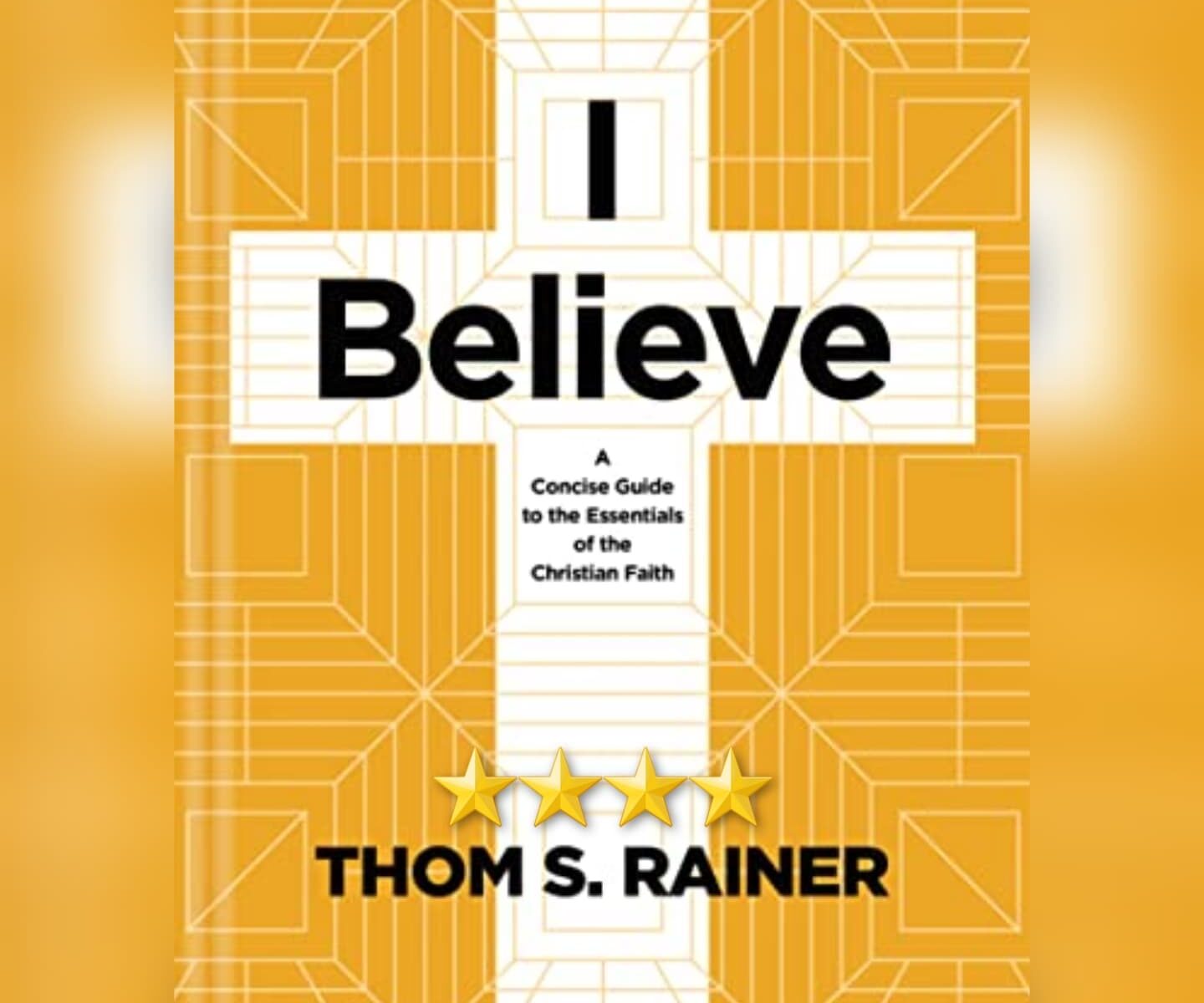
#BookReview: I Believe by Thom S Rainer

Solid (Within Author’s Worldview) Short Guide To Fundamentals Of Christian Faith. This book really does do what it sets out to do – lay out what Christians generally believe and at least some reasoning as to why they believe it. It doesn’t get too heavily into the things that split off the various sects and denominations such as baptism or saints, and even when it touches on End Times discussions, it lays out the basic thinking of each of the different ways of thinking about the topic. And it does it in a fairly concise manner, covering a wide range of topics with fairly short chapters and clocking in as a whole at less than 200 pages – which is truly remarkable given its full breadth of discussion. More extreme liberal Christians may have more issues with the points here, as Rainer explicitly has a chapter about God the *Father*, and a few other quibbles here or there based on that thinking – which Rainer, given his more conservative Baptist background, doesn’t dive into so much. Other potential attacks from Christians could include Rainer’s focus on the Bible as the “Word of God”, despite John 1:1 being quite clear that *Jesus Christ* is the “Word of God”, not the Bible, and Rainer’s frequent references to the Pauline epistles as defense of some of his claims – which anyone familiar with the Parable of Marvin Snurdley (from Frank Viola’s Pagan Christianity) – will likely question.

All of the above noted, the sole reason for the sole star deduction here is the frequent- beginning seemingly literally on Page 1 – use of “proof texting” – citing a Bible verse out of context in defense of some claim or another. I have been quite adamant in waging a one-man war against the practice, and the single star deduction is really the only “weapon” I have with which to wage my war. Thus, I apply it any time a book uses the practice.

Ultimately though, this truly is a solid view of the fundamentals of Christianity, given the caveats of the author’s own worldview, and is truly a solid resource for anyone seeking to understand the basic tenets of the general faith for any reason. Very much recommended.

This review of I Believe by Thom S Rainer was originally written on October 8, 2022.

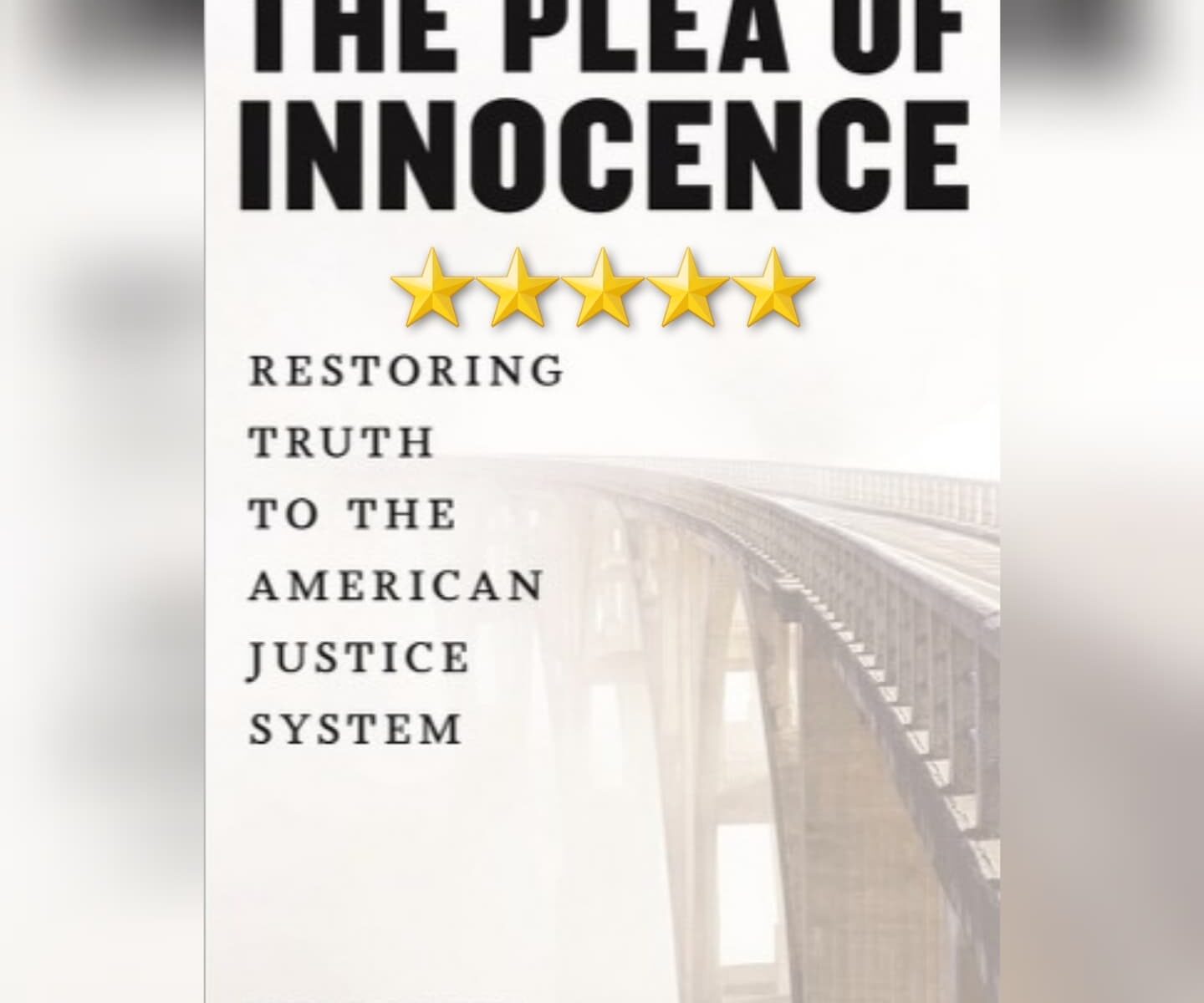
#BookReview: The Plea Of Innocence by Tim Bakken

An Interesting Proposal. Bakken is a clearly knowledgeable and frequent writer of this field, and I’m certainly far from being anywhere near his level – so I’ll not directly debate his points in this review. Instead, this is absolutely a book that I think anyone who is interested in reforming the American legal system should read and consider. While I personally don’t think I would go as far in those reforms as Bakken thinks is necessary, I do agree with him that there needs to be better ways for wrongly convicted genuinely innocent people to reverse their convictions in a timely manner. Overall this is a well documented and seemingly strong argument for his position, and one that is fairly easily approachable even as a non-expert (though college educated) reader. Very much recommended.

This review of The Plea Of Innocence by Tim Bakken was originally written on July 15, 2022.

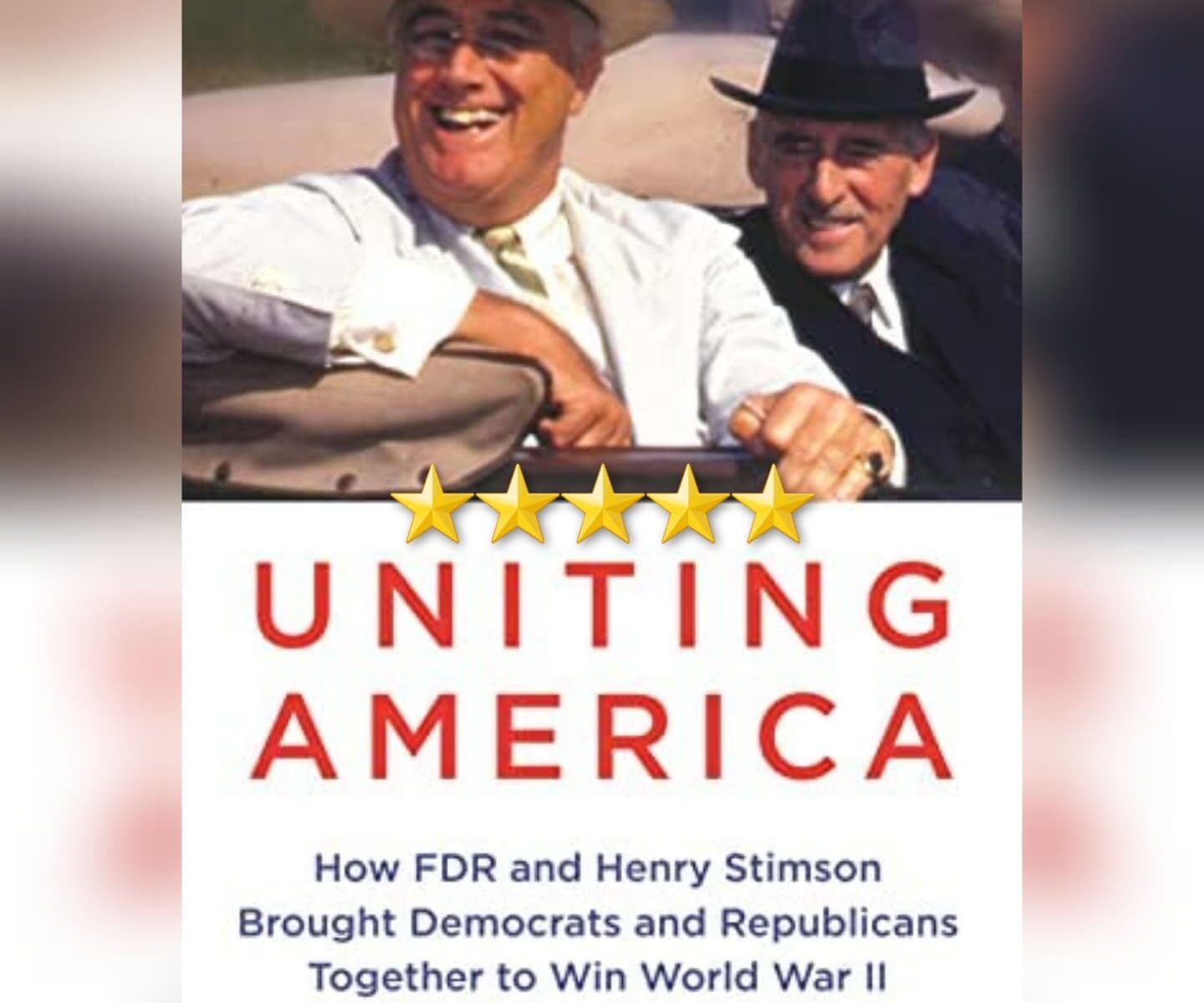
#BookReview: Uniting America by Peter Shinkle

Strong Historical Exposition Marred By Back Half Of Epilogue. This is a book that was an absolute 5* read… until potentially the last few pages. It is well documented at 31% of the text, and even claims to have a handful of previously unreported facts – which given just how *libraries* have been filled with even solely nonfiction tomes on everything to do with WWII, would be quite a feat indeed if accurate. As with most histories of its type, it spends a few chapters both before and after the period directly in question, setting it in its context and showing its aftermath, respectively, with the bulk of the narrative focused on the core thesis. Through all of this, and even through the first half of the epilogue, this book truly is remarkable.

But then… Shinkle just *had* to put his thoughts on more recent events, particularly political events of the last few years, in the same tome, and in its last pages to boot. This is *worse* than being a “Lord of the Rings: Return of the King” scenario where the tale should have ended *shortly* after the coronation of Aragorn, as in this instance it is more akin to ending Return of the King with a few pages discussing the events of Star Wars: Episode VI: Return Of The Jedi and trying to tie the two together. Yes, there are some *very high level* similarities. But if you’ve just spent 300 ish pages discussing the very *minutia* of the one thing, and then you try to zoom out to an International Space Station level to get a view that *might* *maybe* support linking this other thing to that first thing… it ultimately sours the taste of the overall meal.

Still, ultimately this narrative *is* a strong and interesting one that anyone seeking to more fully understand WWII should read. Just ignore the final few pages. You’ll know them when you encounter them. Recommended.

This review of Uniting America by Peter Shinkle was originally written on October 4, 2022.

#BookReview: In Their Names by Lenore Anderson

Timely Conversation Needs Even Better Documentation. The timing of this book, releasing just a week before Election Day in the United States, could perhaps be *slightly* better – a month earlier would have allowed it and its ideas to be discussed more during the final days of the campaign. And to be clear, this book does in fact present a mostly compelling argument and certainly a wrinkle on the American justice system that needs to be more openly examined and more critically debated by those who can actually change things – the various elected officials and bureaucrats who create and implement the very rules in question. The only truly noticeable objective-ish problem with the text here is that while the documentation provided is on the low-ish side of average in my experience (23%, compared to 20-33% being average), there is a *lot* of hand-waving, undocumented claims, that could have used much better documentation. These claims may in fact be accurate – but they needed sources rather than just claims, and for those more ardently opposed to the proposals here, the added documentation to these claims could be crucial in defense of Anderson’s points and proposals. Thus, the one star deduction here. Still, this book truly does add yet another necessary wrinkle into an already truly complicated discussion, and for that reason it is very much recommended.

This review of In Their Names by Lenore Anderson was originally written on October 2, 2022.

#BookReview: The Battle For Your Brain by Nita A Farahany

Well Documented Examination And Discussion. This book is, quite simply, one of the best documented books I’ve ever come across – 48% of the text of the ARC I read months before publication was documentation. Within the narrative itself, Farahany does a great job of using the principles espoused in John Stuart Mill’s 1859 book On Liberty as a recurring touch point on the need for liberty of the mind and brain – the last bastion of true privacy left in this increasingly interconnected world of multiple overlapping surveillance systems. Farahany does an excellent job of showing both the biological and the social side of what is happening when, and the various implications it can have for everything from criminal prosecution to employment, and many other topics as well. Written from a decidedly libertarian, pro-freedom perspective, this is absolutely a book that everyone will need to read and contemplate. Very much recommended.

This review of The Battle For Your Brain by Nita A. Farahany was originally written on October 1, 2022.

#BookReview: Sewer by Jessica Leigh Hester

Fascinating Look At Mostly Current Status Of Sewer Systems. After having read Chelsea Wald’s Pipe Dreams in 2021 about the history and future of toilets, this book seemed a natural progression in my learning on the topic – and at just 200 pages, it was a quick yet seemingly comprehensive look at the current status of the topic. That noted, this book *does* use London as its primary narrative example, though there are also discussions of other locations including Chicago, Cleveland, NYC, and the struggles of the developing world. There are also extensive discussions of fatbergs, wet wipes, and microplastics. (Basically… don’t flush a wet wipe. It doesn’t end well.) Overall a fascinating and short read, pretty well exactly what it was designed to be. Very much recommended.

This review of Sewer by Jessica Leigh Hester was originally written on September 29, 2022.

#BookReview: Force by Henry Petroski

Solid Exposition Of Applied Physics. This book truly is one of the better written, more approachable books on applied physics for the “layman” that I’ve come across. It takes most every easily observed physical force, from a simple push to gravitational to magnetic to torque and beyond, and explains the basics of the known history and science behind them all, and it does this in a very conversational and even, at times, humorous tone. Truly, a great book on the subject for those who either don’t know much or simply want an easy and lighthearted look and things they mostly already know.

The two star deductions are more of a standard form for me, and don’t actually speak to the overall nature of this book *too* harshly: The first is because of the COVID discussions in both the early and late parts of the text. *I DO NOT WANT TO READ ABOUT COVID. PERIOD.* And I am waging a one-man war against the topic everywhere I encounter it in booklandia. The single star deduction is really the only weapon I have in this war, so it is used where applicable. The other deduction is the short-ish bibliography, clocking in at just 14% of the text here when 20-30% is more normal of such texts in my experiences.

Ultimately this really was a great and engaging look at its topic, and it is very much recommended.

This review of Force by Henry Petroski was originally written on September 11, 2022.